Anything else to do when changing a head gasket?

/ Anything else to do when changing a head gasket? #41  
"Hi my head gasket just blown out and the oil just dripping everywhere. Where can I get a very cheap head gasket or can I make it myself? Rockauto is so far away from here.

____________________________
Visit our husqvarna t35 trimmer head at power mower sales."
 
/ Anything else to do when changing a head gasket?
  • Thread Starter
#42  
OK. Got the head off the Kubota mower and the Yanmar tractor. Mower head at machine shop being pressure tested and resurfaced. Should be ready today and I'll take them the Yanmar head when I pick it up.

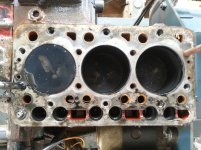
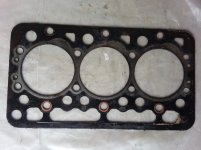
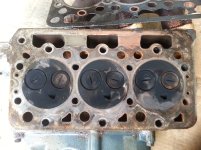
I DID NOT see anything that I could discern as leakage on either head gasket. On the Kubota, there were some random blobs of carbon where I wouldn't think there should be any -- like on the head and block, but not in a piston area -- more into the gasketed area. Here's some pics and videos of the Kubota head.

Anyone see anything that I don't?

Head before cleaning:
KubotaD600HeadBeforeCleaning.jpg

Block before cleaning:
KubotaD600BlockBeforeCleaning.jpg

Head gasket pic (pic a little dark):
KubotaD600OldHeadGasket.jpg

Video of block and head before cleaning (if it doesnt work below, try HERE):

Video of block after cleaning:
(see next post -- it'll only let you have 1 video on a post)
 
Last edited:
/ Anything else to do when changing a head gasket?
  • Thread Starter
#43  
Here is the block after cleaning (held phone sideways for some reason. If video doesn't work, try HERE):


BTW, instead of PB Blaster or Liquid Wrench, I used 50/50 acetone and Dexron AFT as penetrating oil. MAN OH MAN did it work! :shocked: I didn't have any trouble with any bolt I put it on. The exhaust manifold bolts and muffler bolts looked like they were welded on there by the devil himself, but they were some of the easiest bolts/nuts I removed. Just soaked them down periodically throughout the disassembly process and by the time I got to them, they were like butter. Very nice. Doesn't stay mixed well, so you have to keep shaking it.
 
Last edited:
/ Anything else to do when changing a head gasket? #44  
Yes, light oil and a highly volatile carrier to move the oil into the cracks and gaps. The commercial stuff uses a carrier that is much "safer".

The faster the solvent evaporates, the better it moves the oil.
 
/ Anything else to do when changing a head gasket? #45  
I just checked it when it was cold! :thumbsup:

How do you do it?

:rotfl:

How did it have bubbles if you were checking it cold?:confused3:

The videos are hard to read with the camera moving all around. The marking on the pistons are probably just a particular sized, all matched, #1 piston size.

Did you show us both sides of the head gasket?
All I could see is piston 3 seemed to have an area where there was no carbon, which can be a result of a leak blowing water by the gasket and getting burned up or blown out the exhaust.

Lots of leaks, as a result of cracks in head/block can be invisible to the naked eye, which is where magnafluxing can show evidence of hairline cracks, etc. I doubt you have any cracks though, probably just a failed head gasket.

Another possible scenario is when your engine gets hot gases of combustion bypass the head gasket near the combustion chamber and get into the cooling jackets in the head and overheat the coolant, resulting in the bubbles in the radiator. The hot gases of combustion have to escape to atmosphere to reach equilibrium.
 
/ Anything else to do when changing a head gasket?
  • Thread Starter
#46  
How did it have bubbles if you were checking it cold?:confused3:

Yup. Had bubbles. Pretty consistent stream of them. One per second maybe. The Yanmar does have a water pump but not a thermostat. The Kubota does have a thermostat, but there were still bubbles in the radiator just after starting when it was cold -- about 1 per sec or so. The thermostat should be closed at this point, but perhaps air bubbles can still get past it due to pressure building up on the engine side of the thermostat. Dunno. It looked very similar to this video (entitled "Water Bubbling in Radiator - Still Cold"):


Did you show us both sides of the head gasket?

Ooops. Should have taken another pic. I still have it, can take better pics at lunch.

Another possible scenario is when your engine gets hot gases of combustion bypass the head gasket near the combustion chamber and get into the cooling jackets in the head and overheat the coolant, resulting in the bubbles in the radiator. The hot gases of combustion have to escape to atmosphere to reach equilibrium.

This has been my theory all along, except that it also does it when cool. Kinda wish I had access to a compression tester and leak down tester now so I would better know where to look. But it would have been another $150 in tools that I would very rarely used. And I knew I was gonna change the head gasket anyway.

I ordered all new gaskets, hoses, valve seals, fan belt, and a new radiator cap.

Should I go ahead and lap the valves or just leave them be and just change the seals?
 
/ Anything else to do when changing a head gasket?
  • Thread Starter
#47  
Here's a strange symptom. Just before pulling the tractor in to work on it, I wanted to check for bubbles again. It was slightly warm having been driven from the barn to the garage. Took radiator cap off and it was full of white foam. See video below:

 
/ Anything else to do when changing a head gasket? #48  
You're going to have the springs and keepers off so may as well inspect the seats, but if they look good I wouldn't touch them with any lapping compound...........and don't mixing them up. If they or even one looks iffy......time for a valve job. That's machine shop work.
With the amount of coolant it appears to have gone through this engine I'd be somewhat surprised if a valve job wasn't in order.......
 
/ Anything else to do when changing a head gasket? #49  
Yup. Had bubbles. Pretty consistent stream of them. One per second maybe. The Yanmar does have a water pump but not a thermostat. The Kubota does have a thermostat, but there were still bubbles in the radiator just after starting when it was cold -- about 1 per sec or so. The thermostat should be closed at this point, but perhaps air bubbles can still get past it due to pressure building up on the engine side of the thermostat. Dunno. It looked very similar to this video (Deleted for posting purposes.)


If combustion gases are in the cooling system bypassing the head gasket or otherwise, they will present as bubbles or make the coolant overflow the radiator, (once up to temp, thermostat open) and rad cap off.


Ooops. Should have taken another pic. I still have it, can take better pics at lunch.

OK. But at this point it's going to be whatever it is, but you might as well show us the condition for analysis...


This has been my theory all along, except that it also does it when cool. Kinda wish I had access to a compression tester and leak down tester now so I would better know where to look. But it would have been another $150 in tools that I would very rarely used. And I knew I was gonna change the head gasket anyway.

For future reference: some stores, Autozone, etc. will lend out tools for this kind of testing to save their customers $ and to help them get the job done....

I ordered all new gaskets, hoses, valve seals, fan belt, and a new radiator cap.

Should I go ahead and lap the valves or just leave them be and just change the seals?

Might want to consider a water pump if they're not a lot of money. Could have tested it when it was still on the engine by looking for shaft play side to side or in/out. Could still do that by just bolting it up and looking for excess play in the bearing/shaft. Sometimes they will wear the fins as already mentioned, and though your's looks good from my house it's hard to be sure. Decide how long you will keep the tractor to see if a new pump might be worth being safe vs. potential of being sorry. If it fails soon after the head job then all your money may end up down the toilet. On the valve lap, it can't hurt and it gives the valves a once over for any issues. Plus what RSAllen said above...

Here's a strange symptom. Just before pulling the tractor in to work on it, I wanted to check for bubbles again. It was slightly warm having been driven from the barn to the garage. Took radiator cap off and it was full of white foam. See video below:


That's the DEVIL in the details, most likely combustion gasses in the cooling system, hence the bubbles when the t-stat opens and you have reached op temp. You sure you don't live in Georgia?!:laughing:


You're going to have the springs and keepers off so may as well inspect the seats, but if they look good I wouldn't touch them with any lapping compound...........and don't mixing them up. If they or even one looks iffy......time for a valve job. That's machine shop work.
With the amount of coolant it appears to have gone through this engine I'd be somewhat surprised if a valve job wasn't in order.......

What he said ^^^^^^ And when you're all done you'll have a good reliable machine again. I do strongly suggest you find a way to tax you equipment less when it's hot out. JMHO.
 
/ Anything else to do when changing a head gasket? #50  
/ Anything else to do when changing a head gasket? #51  
And when you're all done you'll have a good reliable machine again. I do strongly suggest you find a way to tax you equipment less when it's hot out. JMHO. end quote.

I don't know Coyote, I've got to disagree that sentiment.
No matter what machine one is operating the machine is designed to function as needed. It doesn't matter if it's a car (or truck) cruising down the road or sitting at a traffic light for 1/2 hours at a time, it shouldn't overheat. Like wise with a piece of farm machinery, they should be and are made to work all day long in any weather with no ill effects or worrisome issues.
As this man has two such work machines with the same problem, I suggest that there's something more fundamental going on then 'trying' to over work them during the heat of the day.
 
/ Anything else to do when changing a head gasket?
  • Thread Starter
#52  
No matter what machine one is operating the machine is designed to function as needed. It doesn't matter if it's a car (or truck) cruising down the road or sitting at a traffic light for 1/2 hours at a time, it shouldn't overheat. Like wise with a piece of farm machinery, they should be and are made to work all day long in any weather with no ill effects or worrisome issues.

I tend to agree with this. Should not overheat. Alabama is probably about the same as Georgia. ;)

As this man has two such work machines with the same problem, I suggest that there's something more fundamental going on then 'trying' to over work them during the heat of the day.

I do oil/filter changes every 100 hours and I flushed the coolant on both last season. I use distilled water. Radiator on Kubota tanked last season. Will have the Yanmar tanked before I put it back together. I've owned the tractor for a 3 or 4 years and the mower for 2 or 3. Don't know much about what was done with them before that. If you got any idears, I'm all ears.
 
/ Anything else to do when changing a head gasket? #53  
Hmmm. Guess the first thing I'd do is after getting either tractor back together and running is check just what the running/work temp is. If nothing else it'll give you a true value of what the dash gauge says.
Are the fins of the radiators and any protection screens cleaned regularly? In dry dust conditions and when cutting grass there's fine particles thrown into and suspended in the air we never see that get sucked into the air flow through the rad and sticking to the fins and rodding. Make sure to blow those areas clear of debris often.
Are all the engine shields and fan shrouds in place? Those fan shrouds are there for more than just to keep your hands away from spinning blades. They intensify and concentrate what the fan blades do, pull air through the rad and then blowing air past and over the engine itself. Both are cooling actions. And like wise with the shielding of the engine compartment, those shields aren't there just to make the tractor look slick, they direct the air flow as well as keep foreign matter out. Both those flimsy tin parts are important for the performance of the engine.

Thermostats and radiators. Thermostats always should be used to keep the engine temp up to the running standard. Perhaps step down to a cooler thermo if you like but resist the temptation of going without, something else is wrong. How thick of a core is your radiator/s? 2,3 or 4 rods deep? If the problem persists you may think about having your rad shop put in another row of rods (a thicker core) if the tanks will allow.
Have you talked to any of the dealership mechanics about the issues you've been having (overheating)? Perhaps the troubles you've been having is endemic to one or both of the particular model/year of the tractors you have and you only need a slightly smaller pulley on the water pump that they routinely switch out when working on them. (Ahem, like one of those secret recalls everyone hears about now and then on our cars)

Lastly if you're sure everything is copasetic and you're still having problems this is something I used on some engines and cars I've modified and are driven hard (don't ask me! I still have my license. lol). The stuff really does work as advertised : Red Line Water Wetter (12 oz) - 80204 | FCP Euro

I feel like I've forgotten something, I'll post back again if I think of anything else.
 
/ Anything else to do when changing a head gasket? #54  
CM stated: "And when you're all done you'll have a good reliable machine again. I do strongly suggest you find a way to tax you equipment less when it's hot out. JMHO". end quote.

I don't know Coyote, I've got to disagree that sentiment.
No matter what machine one is operating the machine is designed to function as needed. It doesn't matter if it's a car (or truck) cruising down the road or sitting at a traffic light for 1/2 hours at a time, it shouldn't overheat. Like wise with a piece of farm machinery, they should be and are made to work all day long in any weather with no ill effects or worrisome issues.
As this man has two such work machines with the same problem, I suggest that there's something more fundamental going on then 'trying' to over work them during the heat of the day.

rsallen, We can agree to disagree on this point, as necessary, however let me explain my logic in my thinking. One guy, the OP, says he has two tractors and a mower that all overheat, he says from working the equipment hard, etc. The tractors have unknown history of maintenance, prior to his ownership of the last 3-4 years. He states that he cuts ridiculously high grass in the hottest part of the summer, etc. The machines are not new, have many hours on them and have had the need to remove the radiator(s) to recore or whatever was done on them.
Is it coincidence that ALL machines on this farm are overheating? I would go so far as to say I GUARANTEE NO coincidences. I could be wrong, but I strongly doubt it. If the OP had three low hour machines he'd owned for the past several years, and had maintained by the book would all three have overheating issues? Again, NO.
So the only logical conclusion, Captain, is that operator error and old(er) somewhat worn out, needing to be rebuilt cooling systems is the common link.
Once rebuilt this will breath limited new life back into these machines and the OP could go thrash them as done previously, BUT, Obewan, the story she is a tractor tale; seek answers where questions are not found.
Mr. Spock and the Jedi Master out.:thumbsup:
 
/ Anything else to do when changing a head gasket? #55  
Lastly if you're sure everything is copasetic and you're still having problems this is something I used on some engines and cars I've modified and are driven hard (don't ask me! I still have my license. lol). The stuff really does work as advertised : Red Line Water Wetter (12 oz) - 80204 | FCP Euro
Yup ... I've used it as well ... but if you're sticking it in a diesel ya gotta make sure to get the formulation that's for diesels not gas engines.

IIRC, I think the diesel version is blue, not pink.

It's most effective with straight water (as opposed to water/anti-freeze mixtures) ... which I would not recommend with a diesel (cavitation and liner erosion issues)
 
/ Anything else to do when changing a head gasket? #56  
Well coyote, that's where I am headed and the op has to figure out. What the common denominator is. If it's something the operator is doing or servicing improperly I'm sure he'd like to sort it out....because it isn't right three overheated machines.
You're sure you want to stand by that don't work your machines so hard statement though?
Think about that for a second. What's the point of a tractor?
Gee, I like to do something today but it's too hot for the tractor and that disc is hard work for dear machine.
That grass should be cut but it was too hot for the machine yesterday and now it's too high. Sigh guess I'll just let it grow and get some goats.

New or used, it doesn't make any difference if the machines are running hot it's not because the weather is too hot or that they do demanding work.
Continually operating engines at temps too high will ruin engines and the op needs to figure out what is amiss or he can figure on complete rebuilds or new machines while his tractors eat themselves up. Because it isn't right, the machines are designed for demanding work......day in, day out, all day long, rain or shine. They're designed for some of the most extreme of inhuman weather, both hot and cold and it should be us that call it a day for our own well being not because it too hot for the tractor.

Aye Wyan, I admit I've never used that product in a diesel cooling system. I usually deal with keeping the engine temps up not down with a diesel.
I'm not a fan of additives or quickie magic fixes and only discovered that product after building an engine for someone that produced more than the stock cooling system could quite handle and was running very borderline. The owner didn't want anymore modifications (probably ran out of money) done, so a racing nut I know told me of it and I thought why not, I didn't want to see my work go to the scrap heap. And I'll be darned, it brought the running temps down to acceptable levels. Now any modified engines I do get a treatment of that stuff and all Alfas after a head job.
I think it's usefulness would be marginal on old dirty scaley water jackets though so it's really not my prescription in this case, but hey, thought I give a good product a plug.
 
Last edited:
/ Anything else to do when changing a head gasket? #57  
Your water pump looks fine. It is as important to see if there is an impediment to water flow somewhere as it is to see if the impeller is intact (which it is). So look at your hoses and water passages that you can see and make sure there is nothing blocking any flow. If not, that is not the issue.

Good luck!
 
/ Anything else to do when changing a head gasket?
  • Thread Starter
#58  
Hmmm. Guess the first thing I'd do is after getting either tractor back together and running is check just what the running/work temp is. If nothing else it'll give you a true value of what the dash gauge says.

Yes. We have one of those infrared point and shoot thermometers.

Are the fins of the radiators and any protection screens cleaned regularly? In dry dust conditions and when cutting grass there's fine particles thrown into and suspended in the air we never see that get sucked into the air flow through the rad and sticking to the fins and rodding. Make sure to blow those areas clear of debris often.

We have been blowing them out before we use it. Especially the mower, which gets used more often. We start it up and drive it 50 ft over to the barn and immediately hose off the screen and radiator before it gets warmed up. Seems to help, along with keeping the blades sharp.

Are all the engine shields and fan shrouds in place? Those fan shrouds are there for more than just to keep your hands away from spinning blades. They intensify and concentrate what the fan blades do, pull air through the rad and then blowing air past and over the engine itself. Both are cooling actions. And like wise with the shielding of the engine compartment, those shields aren't there just to make the tractor look slick, they direct the air flow as well as keep foreign matter out. Both those flimsy tin parts are important for the performance of the engine.

I thought that the mower was missing a fan shroud, but I was mistaken. Its there and intact. I want to make sure that all the "weather stripping" around the radiator is sealed and working.

Thermostats and radiators. Thermostats always should be used to keep the engine temp up to the running standard. Perhaps step down to a cooler thermo if you like but resist the temptation of going without, something else is wrong. How thick of a core is your radiator/s? 2,3 or 4 rods deep? If the problem persists you may think about having your rad shop put in another row of rods (a thicker core) if the tanks will allow.

No, I don't run without a thermostat. The Yanmar doesn't have one -- as in designed not to have one. Some of the smaller Yanmars are thermosiphon systems that don't even have a water pump. But this one does have a pump, but doesn't have a thermostat. Strange, but I confirmed it with my parts supplier (Hoye Tractor, which specialized in Yanmars).

Have you talked to any of the dealership mechanics about the issues you've been having (overheating)? Perhaps the troubles you've been having is endemic to one or both of the particular model/year of the tractors you have and you only need a slightly smaller pulley on the water pump that they routinely switch out when working on them. (Ahem, like one of those secret recalls everyone hears about now and then on our cars)

Smaller pulley is a cool idea. Seems hard to implement on this water pump though the way the fan bolts on to it. Seems like lots of people have overheating issues on the Kubota G5200's. I think the radiator my be a little small and/or the air flow path design could have been better.

Lastly if you're sure everything is copasetic and you're still having problems this is something I used on some engines and cars I've modified and are driven hard (don't ask me! I still have my license. lol). The stuff really does work as advertised : Red Line Water Wetter (12 oz) - 80204 | FCP Euro

Yeah. I've been reading about RMI25 also. Sounds similar.

I feel like I've forgotten something, I'll post back again if I think of anything else.

I appreciate everyone's feedback.
 
/ Anything else to do when changing a head gasket?
  • Thread Starter
#59  
rsallen, We can agree to disagree on this point, as necessary, however let me explain my logic in my thinking. One guy, the OP, says he has two tractors and a mower that all overheat, he says from working the equipment hard, etc. The tractors have unknown history of maintenance, prior to his ownership of the last 3-4 years. He states that he cuts ridiculously high grass in the hottest part of the summer, etc. The machines are not new, have many hours on them and have had the need to remove the radiator(s) to recore or whatever was done on them.
Is it coincidence that ALL machines on this farm are overheating? I would go so far as to say I GUARANTEE NO coincidences. I could be wrong, but I strongly doubt it. If the OP had three low hour machines he'd owned for the past several years, and had maintained by the book would all three have overheating issues? Again, NO.
So the only logical conclusion, Captain, is that operator error and old(er) somewhat worn out, needing to be rebuilt cooling systems is the common link.
Once rebuilt this will breath limited new life back into these machines and the OP could go thrash them as done previously, BUT, Obewan, the story she is a tractor tale; seek answers where questions are not found.
Mr. Spock and the Jedi Master out.:thumbsup:

I'm sure many/most of you guys are much more experienced with this engine stuff than I and may even be professional mechanics. I appreciate everyone's feedback. But I don't think that I "thrash" my equipment or abuse it. Bush hogging high grass on a hot day is what the tractor was designed to do. Not abuse. We do mow some high grass with the mower from time to time, but if it's too high, we use the bushhog on the tractor. I don't take off boiling hot radiator caps and I wouldn't run an engine designed with a thermostat without one. I don't turn wrenches for a living, but I'm not an idiot either.
 
/ Anything else to do when changing a head gasket? #60  
Lobanz stated: "Seems like lots of people have overheating issues on the kubota G5200's. I think the radiator my be a little small and/or the air flow path design could have been better."

Assuming the above is accurate would lead me to believe that either correcting the cause/effect OR changing the method of use of this particular tractor in it's particular environment and current uses would remedy the issues of overheating.
These tractors didn't likely start having overheat issues when brand new. I suspect it took many hours and possibly years to have the overheating occur.
By increasing coolant capacity one might solve the problem, or not. Capacity of coolant combined with increased flow of heat away from the engine could likely have a better outcome.
Tractors in a general sense are designed to be workhorses, BUT they do break, overheat and fail like any other machine for a variety of reasons. Some of which are worn bearings, dull cutting blades, slipping belts, poorly maintained engine and or cooling systems, and sometimes prior owner abuse of unknown origins.
I'm not saying keep them out of the rain; but if it's 100 degrees and the grass is four feet tall maybe better planning would be better for both tractor life and owner wallet.

And regarding the water pump's condition: I'd be hard pressed to say looking at it in a picture over the net is any guarantee of it's condition for continued use. It's what one can't SEE that counts; grit in the bearings/seals, etc.
And if the tractor were new off the lot I'd say beat it 'till it wails while under warranty if that's your thing.:confused3:
 

Marketplace Items

2012 International 4300 Reefer Truck (A63689)
2012 International...
2009 Mariah SC23 23ft. Cabin Cruiser with T/A Boat Trailer (A61569)
2009 Mariah SC23...
2018 CHEVROLET SILVERADO 2500HD (A65643)
2018 CHEVROLET...
2004 160 LC John Deere Excavator (A62613)
2004 160 LC John...
John Deere 8370R (A64126)
John Deere 8370R...
2017 FORD F-350 XL 35' NON-INSULATED BUCKET TRK (A59823)
2017 FORD F-350 XL...
 
Top