a burning question

/ a burning question #1  

randy41

Veteran Member
Joined
Jul 2, 2005
Messages
1,803
Location
Linden VA
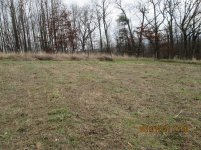
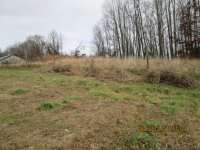
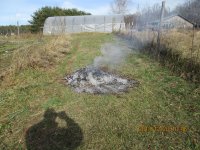
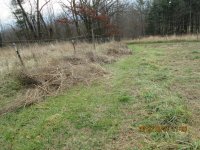
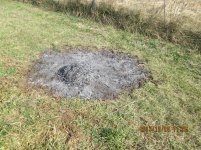
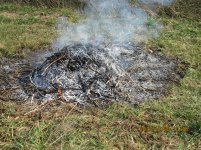
i cleaned up the asparagus patch and ended up with a pile of stuff i want to burn. is there any reason why i shouldn't put it back in the asparagus patch and burn it? it shouldn't effect next years crop under the burning pile...right?
IMG_0065.jpgIMG_0066.jpgIMG_0067.jpg
 
/ a burning question #2  
Why risk it, there would be a chance the roots get dry I would think, but that depends on the size of fire I guess. Burn next to the row and rake it up after it cools if you're looking for the potash.
 
/ a burning question #3  
I think burning on top of asparagus patch will destroy the patch. Where I burn, nothing grows naturally for years. What the heat doesn't destroy, the acidity will.
 
/ a burning question
  • Thread Starter
#4  
i want to burn it to kill insects and eggs (asparagus beetles). sounds like i should find a place where i hate mowing (more than any other) and burn it there.
 
/ a burning question #5  
I can't imagine that the burning is not going to kill the roots. When I do burn in a pasture or annual garden, I always rototill and spread out the ash as much as I can, otherwise like was mentioned, nothing will grow there for 2-3 years. If I am in a pasture, I then re-seed after rototilling to mix in soil that was not burned.
 
/ a burning question #6  
I believe the reason you don't see much growing after burning is that the seeds from weeds and some grasses may be burned by the fire since they are also on top of the ground. Burning wipes out weeds while allowing fresh grass growth from established roots below ground. I think burning will produce very little effect on your asparagus crowns that should be 4"-6" deep in the ground. People even spread salt lightly on the surface to kill weeds and inhibit germination of noxious plant seeds. I see burned areas in the medians of highways that rapidly sprout grasses and look better than any surrounding unburned area. Even forests get prescribed burns to kill off undergrowth and encourage new growth of grasses and tree seedlings.

Also, asparagus beds are very tolerant of light salt treatment. The salt treatment will kill off any seedlings, though. What you may find with the asparagus, if burned, is that you have very few seedlings coming up "volunteer." I have thousands of asparagus plants coming up every year from the seeds that are broadcast over the ground. By letting them grow and adding compost to the beds each year, I assure myself of ever-increasing asparagus beds. I really think your best solution will be to shred your beds using your rotary cutter or mower so that the seeds and tops are spread around over the area and decompose rapidly and naturally. The mature canes will lay there for years without decomposing.

If you want, you can line your fence with the canes to discourage weed growth due to decreased sunlight to the ground in those areas. If I was going to burn the tops, I think I'd do it off to the side in a pile and then spread the ash back over the beds. As you cut the tops, the mature seeds will fall and you won't kill them with your fire. Spreading the ash back over the beds will then not kill off the tiny volunteer seedlings. I just think burning over the beds won't hurt a thing except for seedlings and noxious weeds that have seeds laying on top of the ground. The asparagus crowns and roots should be well below any heat-sensitive zone.
 
/ a burning question
  • Thread Starter
#7  
i try to control the asparagus by removing all the female plants so they don't become overcrowded. this allows more sunlight to reach the ferns and increases the overall strength of the root. that in turn produces a higher yielding crop. the burn is to control pests that overwinter in the debris. i had a bad year with asparagus beetles. if i didn't care about the insects i'd just throw the debris in the woods.
 
/ a burning question #8  
i try to control the asparagus by removing all the female plants so they don't become overcrowded. this allows more sunlight to reach the ferns and increases the overall strength of the root. that in turn produces a higher yielding crop. the burn is to control pests that overwinter in the debris. i had a bad year with asparagus beetles. if i didn't care about the insects i'd just throw the debris in the woods.

So at the risk of sounding stupid......how do you identify the female plants? I've got a bed I put in several years ago and I've heard that the goal is all male plants as the female ones want to reproduce and not give off spears.
 
/ a burning question #9  
The heat won't go very deep.
 
/ a burning question #10  
Why wouldn't you just wet it and till it under?
 
/ a burning question
  • Thread Starter
#11  
So at the risk of sounding stupid......how do you identify the female plants? I've got a bed I put in several years ago and I've heard that the goal is all male plants as the female ones want to reproduce and not give off spears.
the plants with the red 'berries' which are the seeds are the females. you don't sound stupid. you sound inquisitive and smart to ask.
 
/ a burning question #12  
the plants with the red 'berries' which are the seeds are the females. you don't sound stupid. you sound inquisitive and smart to ask.

Hmmm. I have more female plants than I thought. Thanks.
 
/ a burning question #14  
Question about asparagus:

When do the stalks no longer feed the roots in the fall? Is it when all the tiny, fine fronds are gone, or dead, from the tips of the stalk, or is it as long as the stalks themselves are green? I don't know if any significant action is going on between the stalk and roots when they are mostly dead, but not quite.

I usually end up cutting off the stalks in the early spring after snow melt since they stay green so long in the fall. Does it make a difference in a cold climate where the bugs are likely dormant or waiting for warm weather to hatch?
 
/ a burning question
  • Thread Starter
#15  
Question about asparagus:

When do the stalks no longer feed the roots in the fall? Is it when all the tiny, fine fronds are gone, or dead, from the tips of the stalk, or is it as long as the stalks themselves are green? I don't know if any significant action is going on between the stalk and roots when they are mostly dead, but not quite.
I usually end up cutting off the stalks in the early spring after snow melt since they stay green so long in the fall. Does it make a difference in a cold climate where the bugs are likely dormant or waiting for warm weather to hatch?

i think mostly dead is dead enough.
i've read that its best to leave the stalks on to catch the snow which insulates the ground and then cleaning up in early spring. we don't get much of the snow that stays around all winter here (none so far this year at all)so i clean up when i have the time.
 
/ a burning question #16  
i think mostly dead is dead enough.
i've read that its best to leave the stalks on to catch the snow which insulates the ground and then cleaning up in early spring. we don't get much of the snow that stays around all winter here (none so far this year at all)so i clean up when i have the time.

Thanks. I think that makes sense.

Asparagus is fairly frost hardy. By the time they are dead dead :laughing:, it's usually not very nice weather outside to be messing with the garden, or the soil is so wet, tromping around the roots can't be a good thing. They do catch snow and that certainly is a benefit, just like winter mulching of plants that are only marginally hardy for the zone.
 
 
Top