Diabetes

   / Diabetes #681  
That certainly sounds real! I've had readings in the 40s on the CGM, but 30s certainly sounds scary. Hopefully they can figure out what needs to be done to avoid it. I'm wondering if a little protein before bed would help?
No, protein is a poor energy source. Almost no carbs in it.
 
   / Diabetes #682  
No, protein is a poor energy source. Almost no carbs in it.
I suggest protein because it has the SAME energy per gram as carbohydrates, but it's released into the body slower as glucose. This occurs through gluconeogenesis and often prevents low blood sugar.
 
   / Diabetes #683  
Interesting...
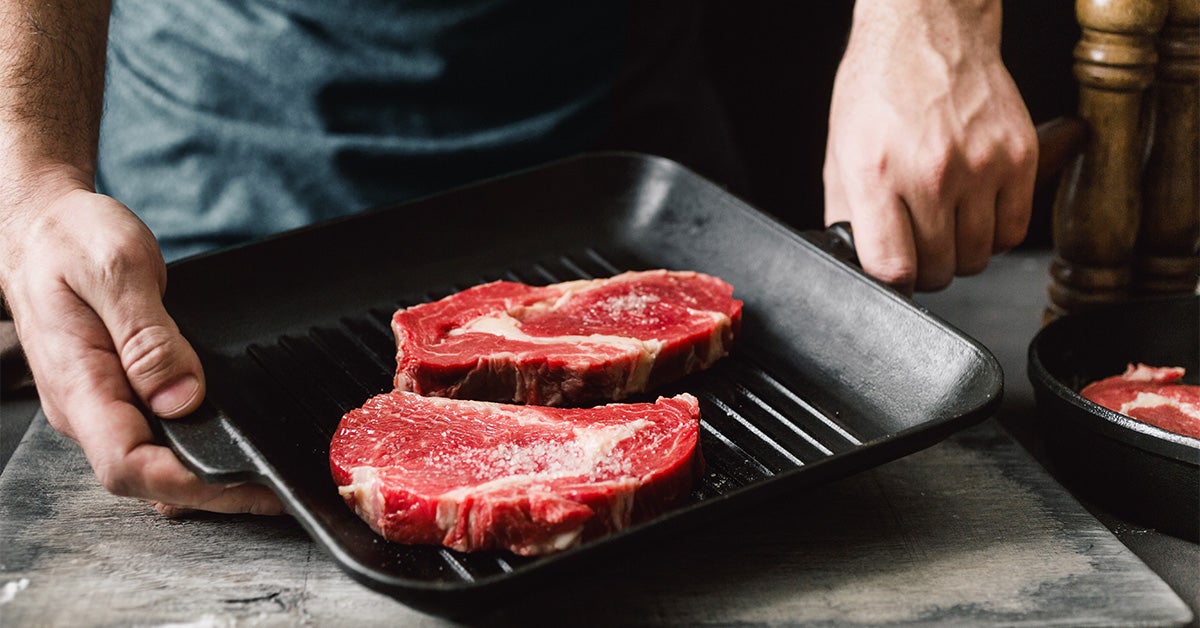
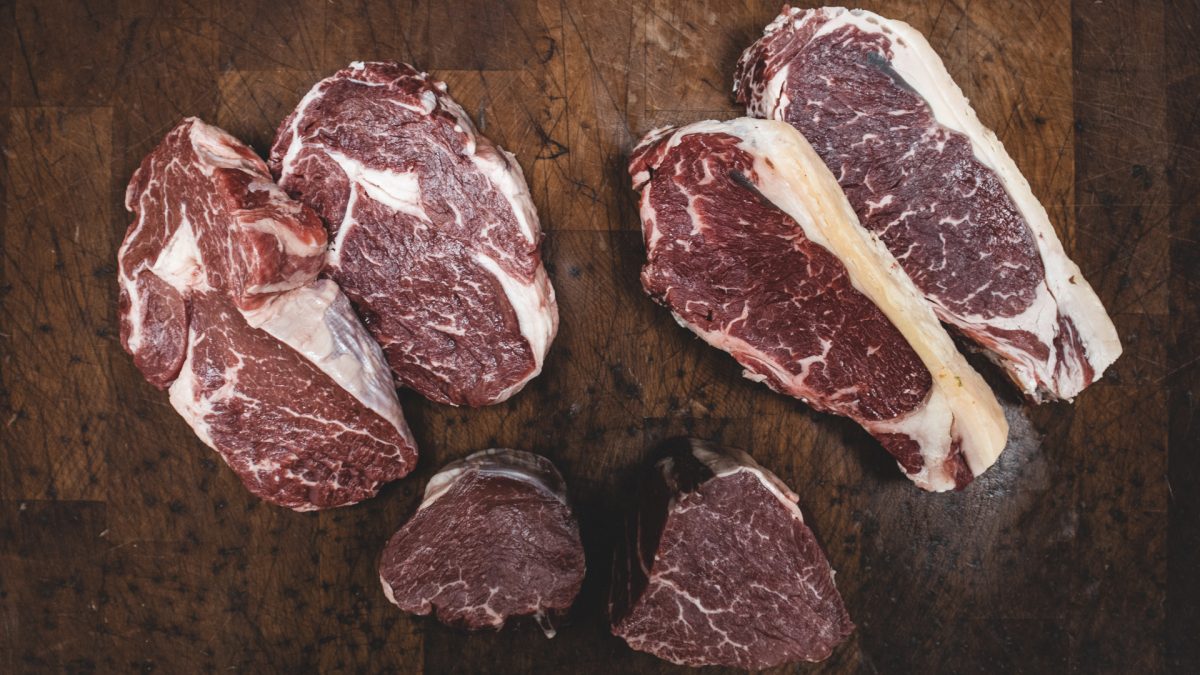
My wife early on went to an endocrinologist who said "now you can eat all the meat you want", which she didn't want to hear. We don't eat that much meat, no pork & very little beef.
Meat has zero carbs. I talked her into keeping a few sugar sodas close, so if her sugar drops to, say, 70 she will have about 3-4 ounces bring it up quickly. Her goal is keeping it at around 100-160 average.
 
Last edited:
   / Diabetes #684  
Interesting...
My wife early on went to an endocrinologist who said "now you can eat all the meat you want", which she didn't want to hear. We don't eat that much meat, no pork & very little beef.
Meat has zero carbs. I talked her into keeping a few sugar sodas close, so if her sugar drops to, say, 70 she will have about 3-4 ounces bring it up quickly. Her goal is keeping it at around 100-160 average.
Our body doesn't need any carbs. That's why many people with auto-immune issues are successfully living on carnivore diets. Our bodies can get energy from carbs, protein, and fat. 4kcal per gram of carbs and protein. Fat is the most energy packed at 9kcals per gram. Has the doctor suggested keeping the BG between 100-160? That's abnormally high for an average. I understand the concern of dangerously low occurrences, but it might be better to find the fix and not bias it in the other direction.
 
   / Diabetes
  • Thread Starter
#685  
My body tells me it needs carbs all the time.
thick loaves of chewy bread, big bowls of ice cream for sure ;)
each time I get out of the supermarket without buying ice cream,
I consider it a score. Or pastries. Or anything sweet except fruit.
I eyed the pastry aisle for a long time this morning, just tasting them
in my imagination, and then walked away with my bag of mini carrots. :cautious:
 
   / Diabetes #686  
My body tells me it needs carbs all the time.
thick loaves of chewy bread, big bowls of ice cream for sure ;)
each time I get out of the supermarket without buying ice cream,
I consider it a score. Or pastries. Or anything sweet except fruit.
I eyed the pastry aisle for a long time this morning, just tasting them
in my imagination, and then walked away with my bag of mini carrots. :cautious:
I'm sure you're old enough to know that you can also be lied to. If you're serious about improving your metabolic health you may want to look into Dr. Rob Cywes.

Before I made changes, I couldn't imagine it, but I QUICKLY realized that I was sick and just use to it. I feel more than 20 years younger. My joint aches are gone! I jump out of bed in the morning. I understand that your post is in jest, but everyone is capable of making the changes if they truly want to. T2D is reversible.
 
   / Diabetes #687  
I was told a sure way too manage your diabetes is to follow this simple rule.

"If it taste good, spit it out".
 
   / Diabetes #689  
I was told a sure way too manage your diabetes is to follow this simple rule.

"If it taste good, spit it out".
What's I've heard is that if it requires sugar for you to eat it, don't eat it.

I've reversed my course to diabetes by eating bacon, eggs, steak, butter, fish, nuts, sausage, heavy cream, berries, and many veggies. I find them all to taste good. OK, so the veggies require some additional ingredients to make them taste good.
 
   / Diabetes #690  
Top Foods Cardiologists Want You to Avoid for Good Heart Health
  • Red meat (including “the other white meat”) ...
  • Bacon, hot dogs, and other processed meats. ...
  • French fries and other fried foods. ...
  • Sugary drinks and cereals. ...
  • Potato chips and snack foods. ...
  • Full-fat dairy products. ...
  • Baked goods, cookies, and pastries.
 
   / Diabetes #691  

 
   / Diabetes
  • Thread Starter
#692  
Mayo is pretty reliable. probably would be more worried about my milk and cheese intake if my
cholesterol wasn't midrange. My recent cardiac stress test showed no heart disease.
I just keep trying to eat more vegetables.
 
   / Diabetes #693  

Who is funding these studies? How were they conducted? What was the comparison diet?

 
Last edited:
   / Diabetes #694  
I am unconvinced for 3 reasons.
1. None of the articles are referenced. They may say "A 2023 study says...", but they do not list what study or where to find it. You cannot verify.

2. The Healthline articles that you referenced is summed up with the following paragraphs:

"The bottom line​


Meat has been a staple of the human diet for thousands of years. It’s a rich source of protein, which provides health benefits for the body.
Yet, processed meats are linked to cancer, with colorectal cancer research revealing the most compelling evidence.
And processing and cooking meat at high temperatures has been associated with the production of cancer-causing chemicals. What effects different cooking methods have on cancer risk is not yet clear.
What’s more, eating meat may be linked to heart disease, diabetes, and weight gain. However, this is primarily based on observational studies.
Finally, the overconsumption of meat has a high environmental impact, along with a connection to viral infections."

3. The Mayo Clinic article starts and ends with this disclaimer:
"Mayo Clinic does not endorse companies or products. Advertising revenue supports our not-for-profit mission."


.
 
   / Diabetes #695  
The link to the one study is provided right in the article. ALL food studies are often weak. Many are based upon small numbers of people over a short time and are VERY expensive. Most are analysis of VERY large groups of people that fill out a food questionnaire a few times a year. Do you remember what you've eaten in the last week? It's VERY difficult to isolate specific foods in large quantities of articles.

The meat article had no major funding source but was a review by many authors reviewing over 38 other studies. You should ALWAYS understand that science is never settled, but you should not be one to put an ideology in front of the facts. I click on the link and the journal allowed comments. Here's an example of that...


Henning Ansorg, MD, FACP, Public Health Officer Public Health Department, Santa Barbara County 1 October 2019

“Unprocessed and Processed Meat Consumption... “This is a disgrace​

For the Annals to publish this article (and for the authors to even write it without concern for the environmental effects of food choices) shows, to what extent we as physicians, are out of touch with the real world. It is a disgrace!
Physicians need to realize that climate deterioration poses the most immediate and grave risk to peoples’ health. In this time and age, not to take effects on global warming into consideration when reviewing “health effects” of a diet, just seems so unworthy of our calling as physicians. We can no longer afford to pretend, as if the way how we present our “scientific” findings, could be neutral. How naive are we really? Any publication will immediately be “selectively”edited and broadcasted by the media onto every phone on the planet and thus strongly influence the publics’ beliefs and behaviors.
To essentially “recommend” a red meat diet for it’s non inferior health effect-and coming to this conclusion by virtue of eliminating any consideration for the profound effects of red meat production on the environment and therefore on human health- is simply unforgivable.
Please let us, as physicians, wake up to the fact, that our climate crisis poses the most profound risk to individual’s and public health and that we have a responsibility in guiding the public on how to confront this threat: in part, with food choices.
Christine Laine Annals of Internal Medicine 2 October 2019

Shane Chilson Fontbonne University 2 October 2019

A Dietetic Perspective​

This article looks legit, although reviewing diet does not work with the GRADE system. I'd love to see all the omitted search keys used for these systematic reviews. With all of the studies linking animal products in general to may diseases, it's ignorant for someone to spend the time to make this article unless they have undisclosed biases (meat industry). Johnston already has a study about challenging the limit of sugar, which was backed by a non-profit sponsored by large SSB companies. If your going to put all this work into a study, make sure it counts, folks. The purpose of this work seems to be confusing uneducated public populations.
Disclosures: Dietetic Student w/ plant based diet.

Response to Chilson​

Readers can view the conflict of interest disclosures for all authors of the systematic reviews and the recommendations by clicking on the link following each article's byline on www.annals.org. None of the authors declared a financial relationship with the meat industry.
Disclosures: Editor in Chief, Annals of Internal Medicine


Don't be a Shane or Christine!
 
   / Diabetes #696  

Food for thought.

A healthy diet and lifestyle can reduce your risk for:
This article makes recommendations that can help prevent heart disease and other conditions that can affect the health of your heart. People who currently have a heart condition such as heart failure or other health problems such as diabetes, should talk with their health care provider about what type of diet is best. You may need to make certain changes to your diet that are not included in these recommendations.

Recommendations​

FRUITS AND VEGETABLES
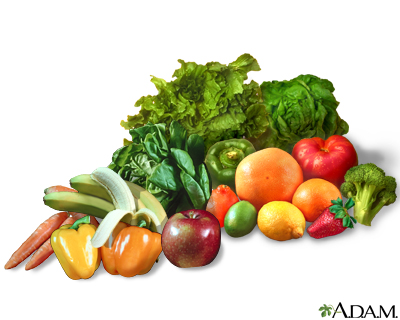
Fruits and vegetables are part of a heart-healthy diet. They are good sources of fiber, vitamins, and minerals. Most are low in fat, calories, sodium, and cholesterol.
Eat 5 or more servings of fruits and vegetables per day.
Get more fiber by eating whole fruits instead of drinking juice.
Fruits and vegetables

GRAINS
Choose whole-grain foods (such as whole-wheat bread, cereal, crackers, and pasta or brown rice) for at least half of your daily grain intake. Grain products provide fiber, vitamins, minerals, and complex carbohydrates. Eating too many grains, especially refined grain foods (such as white bread, pasta, and baked goods) can cause weight gain.
Limit high-fat baked goods such as butter rolls, cheese crackers, and croissants, and cream sauces for pasta. Avoid packaged snacks that contain partially hydrogenated oils or trans fats.
EATING HEALTHY PROTEIN
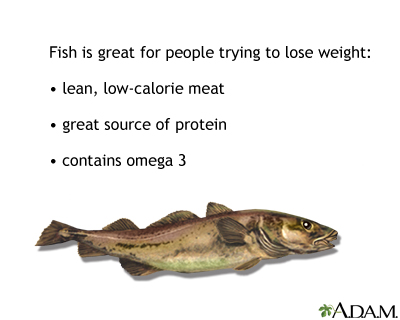
Meat, poultry, seafood, dried peas, lentils, nuts, and eggs are good sources of protein, B vitamins, iron, and other vitamins and minerals.
Fish in diet

You should:
  • Eat at least 2 servings of low-mercury fish per week.
  • Cook by baking, broiling, roasting, steaming, boiling, or microwaving instead of deep frying.
  • For the main entree, use less meat or have meatless meals a few times a week. Get protein from plant-based protein foods instead.
Milk and other dairy products are good sources of protein, calcium, the B vitamins niacin and riboflavin, and vitamins A and D.
FATS, OILS, AND CHOLESTEROL
Some types of fat are healthier than others. A diet high in saturated and trans fats causes cholesterol to build up in your arteries (blood vessels). This puts you at risk for heart attack, stroke, and other major health problems. Avoid or limit foods that are high in these fats. Polyunsaturated and monounsaturated fats that come from vegetable sources have many health benefits.
Obesity and health

You should avoid or limit foods that are high in saturated fats. Here are some examples:
  • Foods with a lot of saturated fats include animal products such as butter, cheese, whole milk, ice cream, sour cream, lard, and fatty meats such as bacon.
  • Some vegetable oils (coconut, palm, and palm kernel oils) also contain saturated fats. These fats are solid at room temperature.
  • Limit trans fats as much as possible by avoiding hydrogenated or partially-hydrogenated fats. These are often found in packaged snacks and solid margarine.
Think about the following when choosing a margarine:
  • Choose soft margarine (tub or liquid) over harder stick forms.
  • Choose margarines with liquid vegetable oil as the first ingredient. Even better, choose "light" margarines that list water as the first ingredient. These are even lower in saturated fat.
  • Read the package label to choose a margarine that does not have trans fats.
Trans fatty acids are unhealthy fats that form when vegetable oil undergoes hydrogenation.
  • Trans fats can raise LDL (bad) cholesterol level in your blood. They can also lower your HDL (good) cholesterol level.
  • To avoid trans fats, limit fried foods, commercial baked goods (donuts, cookies, and crackers), and hard margarines.
 
   / Diabetes
  • Thread Starter
#697  
my understanding is that saturated fats can be natural, like in butter or whole milk.
Makes sense to limit anything fatty, not eliminate. I drink 2 percent milk because I can use it in my coffee as well
as cereal. Keeps me away from 1/2 and 1/2.
But trans fats are not natural and are a result of processing.
many store baked goods do not have any nutritional info given.
and boy do they make that font small on the label

I wish someone made yogurt with the good flavor and fruit
of the caloric fruit on bottom types, but without the sugar
or the fake sugar. Seems best yogurt is stuff you make yourself by blending in
your own fruit. I eat a lot of blueberries by dumping them in yogurt.
Some yogurt is really thick. Other yogurt is suspiciously creamy due to a huge number
of chemicals on the label.
I find most blended yogurt unappealing, would rather have chunks of fruit in there, so
guess I'd better get used to adding more on top.
gotta get my berries in...
 
   / Diabetes #698  
Do you find it interesting that fruit and grains are two of the top three recommendations, yet for those that are preT2D or T2D, they will make things worse? Get a CGM if you're not sure how your body responds. T2D is rampant in this country and is a leading cause of heart disease.
 
   / Diabetes #699  
Do you find it interesting that fruit and grains are two of the top three recommendations, yet for those that are preT2D or T2D, they will make things worse? Get a CGM if you're not sure how your body responds. T2D is rampant in this country and is a leading cause of heart disease.
Wife got a CGM and they've fantastic (Libre).
I will say check/verify accuracy with test strip.
Saturday I bought six sensors from pharmacy ($260 with insurance). First one showed low (50s!) test strip showed 110. Second one high (220!). Third one reads same as test strips. Abbott Labs I called and they're sending replacements.
My neighbor/friend is coming home from hospital after a week with IV picc antibiotics. He's a diabetic but never checks & and doesn't
care about his blood sugar. The doctors want to amputate part of his foot, he said no. He has a terrible diet & no exercise & has neuropathy.
 
   / Diabetes #700  
I used 7 Libre 3s. I found them all to be pretty good. They are supposed to have similar accuracy to the test strips except they are about 15minutes behind. They take an hour to calibrate and start reporting numbers, but I found the first day they always reported a little high, but would come down after that and be close to the strips. Only the last one that I used was consistently off. It was always about 25-30 above the strips. Remember even the strips are only so accurate.
 

Tractor & Equipment Auctions

John Deere 2640 2WD Tractor with 146 Front Loader (A57024)
John Deere 2640...
Toyota SR1-BET35 3,500 LB Stand-On Electric Forklift (A59228)
Toyota SR1-BET35...
2025 GPS Trailer (A56857)
2025 GPS Trailer...
2022 CATERILLAR 303.5 CR EXCAVATOR (A60429)
2022 CATERILLAR...
2011 Ford F450 Diesel with Just 156638 Miles (A56435)
2011 Ford F450...
ALLISON TRANSMISSION (A55745)
ALLISON...
 
Top