OP

dragoneggs
Super Star Member
- Joined
- Jun 9, 2013
- Messages
- 14,548
- Location
- Seabeck, Washington
- Tractor
- Kubota BX-25D, Kubota Z122RKW-42
'Mostly'... by the looks of it, that is an understatement.
'Mostly'... by the looks of it, that is an understatement.
Those don't work. But I think I found it... 4 gauge wire and a 7/16in stud.Yopu need to address this on a welding forum.....
Experience of 38 year of working with power cable and such, get proper size lug, meaning hole for bolt and for cable size, If you don't have proper tools go to good welding supply and they should have repair lugs and proper crimpers....Any place that sells bulk welding cable should have proper lug... Even Tractor Supply...
This close to what you need
Thomas & Betts - 5415 - Lug; One Hole; 1/4"; Blue; 6 AWG; .53" Lug Sz; 1.23" Overall L; .44" W; .31" Cable Sz - Allied Electronics & Automation
Or
Thomas & Betts - 5413 - Copper One-Hole Lug; #8 AWG; 1/4" Bolt Size; Die Code 21; Color Code Red - Allied Electronics & Automation
IF neither of these are correct tell me exact size of cable and hole size you need I can supply information on proper lug...
Sorry, didn't know you lived in a bubble....
Dale


Those don't work. But I think I found it... 4 gauge wire and a 7/16in stud.
4 AWG, 1/2" Stud, Tinned Copper, Crimp or Soldered
A 5 pack for $5.20. Funny thing is that ElectricalHub is a distributor for my company! I think I will pay them a visit and ask for a sample!
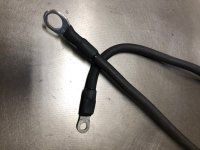
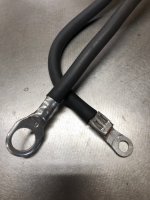

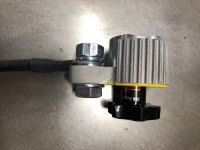
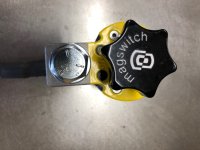

I was thinking about that! Now I am only set up to do mild steel but I do have a spool gun for my MIG that I have yet to use. Probably end up selling that and go with a dedicated TIG if I get serious.Nice work. I use both regular and Mag grounds. I have quick disconnects 5' from the clamp so i can switch between Magnetic and Aluminum/Stainless

I will thinking about that! Now I am only set up to do mild steel but I do have a spool gun for my MIG that I have yet to use. Probably end up selling that and go with a dedicated TIG if I get serious.
What do your quick disconnects look like? Part no's? Didn't know such an animal exists but it doesn't surprise me.
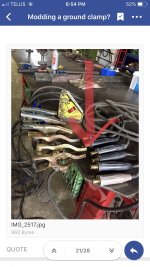
Those are quick disconnects at the machine, no? Mine ground is 'hard wired'. I understood yomax modded his wires for an in-line disconnect like a pin/socket connector.
Those are quick disconnects at the machine, no? Mine ground is 'hard wired'. I understood yomax modded his wires for an in-line disconnect like a pin/socket connector.
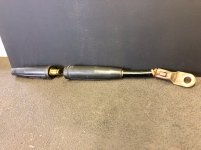
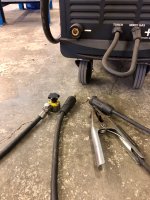
And here I thought my project was done and could cross off the long list! :smiley_aafz:
It is time to revisit my TSC store... I do like poking around there. Just opened mid last year. Never heard of TSC before they opened. Have bought a few things from them, but in general... not great deals. Purchases so far that I remember... 4in mesh grating for my wife's garden (bean, pea, and squash trellises). Also some decent gloves, a couple hummingbird feeders, some cat food for home made shrimp bait (don't have a cat much to my wife's chagrin).You don't understand.... Projects are never done....
And just FYI, I happened to be into a TSC today and they had 11 different sized copper lugs for ends of cables in welding supplies section....
Dale
Thanks for your reply!
Option 1: Didn't find one. If someone wants to point me to where I don't have to buy a pack of 10 or 25 :thumbsup:
Option 2: I could increase the wire gauge to 2/0 and I think it will actually fit the routing and terminal inside the welder. Really didn't want the expense of a 15ft wire. I actually bought a second terminal in case I mangled the first one. See pic.
View attachment 601673
Option 3: What I was planning to do unless someone had a brilliant idea. Thinking at least a tripler.

...Crimping (properly at least) is superior to soldering. As odd as it sounds it's quite true. When you solder stranded wire solder wicks up the strands & fuses them solid....
This may sound logical but in general mobile applications it's simply a falsehood, in static situations there is no vibration or flexing...it doesn't happen with large gauge wire...proven many times over by electric golf cart professionals both soldering and crimping makes the best terminal connection...
There have been several threads (mostly about batteries) where the same points were made...
in general electronic applications it is generally recommended to "tin" the ends of wires before they are soldered to a PCB or a component etc...

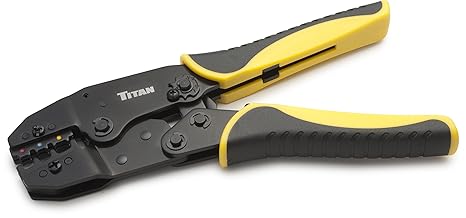
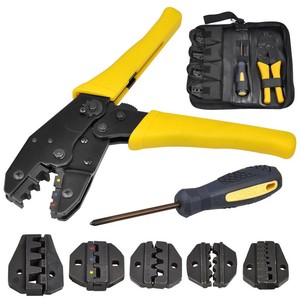


crimped on tinned wire ends...PCB boards are not crimp on style power cable connectors..... In industry I came out of (retired after 38 years) everything than was #14 gauge and larger was a crimp connector and no solder and we went up all the way to 750,000 CM cables.... "PROPER" crimp connector is industry wide standard....
Dale

