Roof Insulation vs. Condensation

/ Roof Insulation vs. Condensation #1  

Welshman

Platinum Member
Joined
May 22, 2009
Messages
533
Location
Northeast Ohio
Tractor
NH T1520
This isn't a tractor project, but since there are a number of other construction threads here, I'll ask my questions.

My sportsmen's clubhouse is 30'x48' and of pole barn construction. Currently there is no insulation and our plan is to finish the inside as funds permit. We shoot year round and need to keep the place warmer in the winter.

We have an opportunity to buy some 4'x8' sheets of 2 1/2" thick polyiso foam board that is faced with a fiberglass layer on both sides, at a very good price. Our plan is to install this on the roof purlins, which are 2x4's on end, that run parallel to the ridge.

One of our members, a former roofer, has concerns that condensation may form in the cavities (24" x 3 1/2") formed by the covering of the purlins. The building is heated as best we can, about 5 hours a week, in the winter.

Should we be concerned about this, and if so, is there a cheap way to mitigate it?

Thanks in advance.
 
/ Roof Insulation vs. Condensation #2  
Your roofer is right.

One way to mitigate this would be to add eave and ridge vents along with 1x or better yet 2x material vertically. Then attach your ridged insulation to that. Another option would be to add a flat ceiling inside- that would save heating costs and a true vented attic would help.
 
/ Roof Insulation vs. Condensation #3  
Your roofer is right.

One way to mitigate this would be to add eave and ridge vents along with 1x or better yet 2x material vertically. Then attach your ridged insulation to that. Another option would be to add a flat ceiling inside- that would save heating costs and a true vented attic would help.
Unless you need the vaulted ceiling space, I would go with putting the panels along the bottom of the trusses, making a flat ceiling (assuming a standard triangle shaped roof truss).
That way, you have less volume to heat so you should be able to heat it with less fuel.
I have a friend who did that in his shop and was very happy with the results. As I recall, he ripped sheets of plywood into 6 in wide strips and attach them to be bottom of the trusses with the strips centered on the trusses.
Then he put the insulation up above the plywood strips so that it is held up on the edges by the plywood strips and sits between the bottom chord of the trusses.

Aaron Z
 
/ Roof Insulation vs. Condensation
  • Thread Starter
#4  
Your roofer is right.

One way to mitigate this would be to add eave and ridge vents along with 1x or better yet 2x material vertically. Then attach your ridged insulation to that. Another option would be to add a flat ceiling inside- that would save heating costs and a true vented attic would help.

I'm not clear on what you mean by "1x or 2x material vertically".
 
/ Roof Insulation vs. Condensation
  • Thread Starter
#5  
Unless you need the vaulted ceiling space, I would go with putting the panels along the bottom of the trusses, making a flat ceiling (assuming a standard triangle shaped roof truss).
That way, you have less volume to heat so you should be able to heat it with less fuel.
I have a friend who did that in his shop and was very happy with the results. As I recall, he ripped sheets of plywood into 6 in wide strips and attach them to be bottom of the trusses with the strips centered on the trusses.
Then he put the insulation up above the plywood strips so that it is held up on the edges by the plywood strips and sits between the bottom chord of the trusses.

Aaron Z

The trusses are on 8' centers and are not rated for attaching any material of any weight. We had originally planned on bat insulation at the roof and a suspended ceiling, but then the "deal" on the foam board came along.
 
/ Roof Insulation vs. Condensation #6  
I'm not clear on what you mean by "1x or 2x material vertically.

Sorry- a 1x4 or 2x4 that runs perpendicular (from eve to ridge) to the existing 2x4s. This would create a vertical air channel that should prevent mold and rot. I’d space them every 2’. You could also do 2x2 or 1x2. The idea is to allow air to move up toward the ridge.
 
/ Roof Insulation vs. Condensation #7  
The trusses are on 8' centers and are not rated for attaching any material of any weight. We had originally planned on bat insulation at the roof and a suspended ceiling, but then the "deal" on the foam board came along.

Couldn't you just drop those 4x8 foam sheets between the trusses. Surely they don't weigh that much. And while it will not look 'downtown', it will look 'Hunting Camp', provide a flat roof and be much much quieter and warmer. Ohh, it has fiberglass mats, so there that covers the deco. Some wood smoke, a couple of Deer Heads, some misc antlers, a stuffed Badger if you can swing it, one or more singing Bass, and pip, Bob's your Uncle. :D
 
/ Roof Insulation vs. Condensation #8  
Couldn't you just drop those 4x8 foam sheets between the trusses. Surely they don't weigh that much. And while it will not look 'downtown', it will look 'Hunting Camp', provide a flat roof and be much much quieter and warmer. Ohh, it has fiberglass mats, so there that covers the deco. Some wood smoke, a couple of Deer Heads, some misc antlers, a stuffed Badger if you can swing it, one or more singing Bass, and pip, Bob's your Uncle. :D

I think I should be offended but I’m laughing to hard. I’ll give you 7 days to apologize.....haha
 
/ Roof Insulation vs. Condensation
  • Thread Starter
#9  
Sorry- a 1x4 or 2x4 that runs perpendicular (from eve to ridge) to the existing 2x4s. This would create a vertical air channel that should prevent mold and rot. I’d space them every 2’. You could also do 2x2 or 1x2. The idea is to allow air to move up toward the ridge.

Thanks. While there is no ridge vent, we do have two powered vents near the ridge that may suffice with some modifications to the duct work.
 
/ Roof Insulation vs. Condensation
  • Thread Starter
#10  
Couldn't you just drop those 4x8 foam sheets between the trusses. Surely they don't weigh that much. And while it will not look 'downtown', it will look 'Hunting Camp', provide a flat roof and be much much quieter and warmer. Ohh, it has fiberglass mats, so there that covers the deco. Some wood smoke, a couple of Deer Heads, some misc antlers, a stuffed Badger if you can swing it, one or more singing Bass, and pip, Bob's your Uncle. :D

I think the foam board would sag too much over time only being supported on the ends, and then we've got a fair amount of electrical that would have to be moved. On the other hand, we already have the wood smoke, one deer head and some antlers. We would have to substitute a bear skin for the badger. Actually, we're trying to get away from the "hunting camp" look. :)
 
/ Roof Insulation vs. Condensation
  • Thread Starter
#11  
I was under the impression that condensation was primarily an issue in cold weather with a heated "living" space. Can it be a problem in our circumstances?
 
/ Roof Insulation vs. Condensation #12  
...We have an opportunity to buy some 4'x8' sheets of 2 1/2" thick polyiso foam board that is faced with a fiberglass layer on both sides, at a very good price. Our plan is to install this on the roof purlins, which are 2x4's on end, that run parallel to the ridge.

One of our members, a former roofer, has concerns that condensation may form in the cavities (24" x 3 1/2") formed by the covering of the purlins. The building is heated as best we can, about 5 hours a week, in the winter.

Should we be concerned about this, and if so, is there a cheap way to mitigate it?

If I understand your question, you are going to install the panels to the bottoms of the purlins, not between them? And since you are installing them to the bottoms of the purlins, you will create a 3 1/2 inch air gap between the panels and the metal roof. This gap will allow condensation to form on the bottom of the metal, and that condensation will have no way to dry out or drain away.

The smaller the air gap that you have, the less condensation you will have. Without removing the metal roof, and doing this as cheaply as possible, I would strongly suggest cutting and fitting the panels in between each purlin. There will still be a small amount of condensation that forms, but I doubt it will be enough to worry about. The best way to deal with that small amount of moisture would be a ridge vent. Home Depot sells a metal ridge vent for a fair price that could easily be installed over your existing ridge. Just drill holes near the peak of every roof panel so air can flow out of there. Cooler air will enter under the roof at the eaves, and rise up along the underside of the metal, drying out the metal, and exiting at the ridge peak.

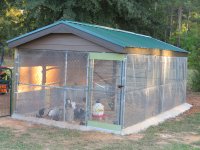
Here is a picture of the Home Depot ridge vent that I put on my chicken coop.

001 (2).JPG
 
/ Roof Insulation vs. Condensation
  • Thread Starter
#13  
If I understand your question, you are going to install the panels to the bottoms of the purlins, not between them? And since you are installing them to the bottoms of the purlins, you will create a 3 1/2 inch air gap between the panels and the metal roof. This gap will allow condensation to form on the bottom of the metal, and that condensation will have no way to dry out or drain away.

The smaller the air gap that you have, the less condensation you will have. Without removing the metal roof, and doing this as cheaply as possible, I would strongly suggest cutting and fitting the panels in between each purlin. There will still be a small amount of condensation that forms, but I doubt it will be enough to worry about. The best way to deal with that small amount of moisture would be a ridge vent. Home Depot sells a metal ridge vent for a fair price that could easily be installed over your existing ridge. Just drill holes near the peak of every roof panel so air can flow out of there. Cooler air will enter under the roof at the eaves, and rise up along the underside of the metal, drying out the metal, and exiting at the ridge peak.

Here is a picture of the Home Depot ridge vent that I put on my chicken coop.

View attachment 598298

Thanks, Eddie. You've pretty well got the picture except that it's a wooden roof with shingles, and a ridge cap. The purlins are about 2" apart at the ridge, one centered, and one on each side of it.
 
/ Roof Insulation vs. Condensation #14  
Thanks, Eddie. You've pretty well got the picture except that it's a wooden roof with shingles, and a ridge cap. The purlins are about 2" apart at the ridge, one centered, and one on each side of it.

WHAT? it's not a metal roof? You won't have any condensation issues with a wood roof and shingles. If there is any, it will be so small that it wont ever matter. Metal roofs are where all the issues come from because they transfer the temperature so well and the difference between under the metal and over the metal is what causes the moisture to appear.
 
/ Roof Insulation vs. Condensation #15  
It has been a long time since I've posted but here's my 2 cents on insulation and condensation at mid-country latitudes or areas with extended cold. I have seen spray foam applied directly to the underside of plywood roof sheathing with no air gap without condensation problems. Doesn't mean I personally would do it, not completely sold on it in my area. I always opt for an air space and 1 1/2 to 2" minimum is preferable IMO. I'll also say that rigid foam won't eliminate the air voids below the plywood sheathing (like spray foam) and that is a potential breeding space for dew point issues, not just with heat on the inside, also when the building is unheated and a spring or fall sun angle is sufficient to heat that roof and plywood notably with a cold shell below.

The recommendation to insulate at the bottom chord would be the best but if you must insulate below the purlins, run 2 x 2's eave to ridge, insulation below, and vent the ridge and soffit. If you were a few states south may be different but think I saw Ohio. Depending the soffit type, metal with some edge voids comes to mind, you may be fine with limited venting there at say 8' intervals. Wood soffits need to be opened up more as they are better sealed generally.

Hope that helps.
 
/ Roof Insulation vs. Condensation
  • Thread Starter
#16  
... and that is a potential breeding space for dew point issues, not just with heat on the inside, also when the building is unheated and a spring or fall sun angle is sufficient to heat that roof and plywood notably with a cold shell below.

I don't understand how this can cause condensation on the inside of the roof.
 
/ Roof Insulation vs. Condensation #17  
I don't understand how this can cause condensation on the inside of the roof.

This tablet just nuked a better response so here is the condensed version. We know warm air suspended more moisture than cold. My old thermopane windows will ice up surprisingly and wet the sills if I drop a tight fitting fabric blind with just 35% RH and a 5-10 degree night. Blinds have to go up in those conditions. Reason that forms ice (water first of course) is because I trap the air there in narrow confines with no air movement. The water is still forming, more of it actually as the air temp in front is the glass is higher with the blind up, but the 35% air moving across the glass allows it to evaporate. So when hot and cold membranes (underside of cold plywood and relatively warm upper insulation surface) are in close proximity and you trap that air, that is a space begging to condensate. No transport air exists to evacuate it.

The reason people get away with spray foam directly applied to roof sheathing is the air is fully removed, so the moisture transport mechanism (air) can't deposit it. Just because someone tightly fits rigid insulation between purlins or trusses does not mean air doesn't get there (in the narrow voids) and change out over time. So moisture is carried in waiting for a temp differential without enough air movement to evaporate it. The reason I don't recommend spray foam directly applied to roof sheathing either, is any minor breach in the roof membrane (and even well installed roofs have this at some place or point in time) traps that moisture in the substrate. Quite the rotted mess mess if you've ever torn one apart.
 
/ Roof Insulation vs. Condensation #18  
This tablet just nuked a better response so here is the condensed version. We know warm air suspended more moisture than cold. My old thermopane windows will ice up surprisingly and wet the sills if I drop a tight fitting fabric blind with just 35% RH and a 5-10 degree night. Blinds have to go up in those conditions. Reason that forms ice (water first of course) is because I trap the air there in narrow confines with no air movement. The water is still forming, more of it actually as the air temp in front is the glass is higher with the blind up, but the 35% air moving across the glass allows it to evaporate. So when hot and cold membranes (underside of cold plywood and relatively warm upper insulation surface) are in close proximity and you trap that air, that is a space begging to condensate. No transport air exists to evacuate it.

The reason people get away with spray foam directly applied to roof sheathing is the air is fully removed, so the moisture transport mechanism (air) can't deposit it. Just because someone tightly fits rigid insulation between purlins or trusses does not mean air doesn't get there (in the narrow voids) and change out over time. So moisture is carried in waiting for a temp differential without enough air movement to evaporate it. The reason I don't recommend spray foam directly applied to roof sheathing either, is any minor breach in the roof membrane (and even well installed roofs have this at some place or point in time) traps that moisture in the substrate. Quite the rotted mess mess if you've ever torn one apart.

You are trying to equate glass with plywood/OSB sheathing. They are not remotely similar. Glass conducts heat around 9 times better than wood. Yes, condensation is based on warm air and a cool/cold surface, but the rest of your explanations are not at all relevant.
 
/ Roof Insulation vs. Condensation #19  
You are trying to equate glass with plywood/OSB sheathing. They are not remotely similar. Glass conducts heat around 9 times better than wood. Yes, condensation is based on warm air and a cool/cold surface, but the rest of your explanations are not at all relevant.

Fair enough. I was trying to put it in lay terms. However, if you think a plywood surface (bottom of the substrate) on a cold night, won't (yes it takes more time to thermally equate) be nearly as cold as that glass, I'd disagree. Granted it may be slightly warmer, not much. And while that plywood is more hygroscopic than glass and the wet layer takes longer to form than on glass (there is zero sponge effect, with glass) the conditions are quite similar. I tore enough poorly vented substrates off as a young man to see what occurs in trapped air environments. The moisture was atmospheric on some and roof failure related on others and is was simple to determine which was in play or dominant when both.

My example is translatable to roofs, just different. Agree or not.
 
/ Roof Insulation vs. Condensation
  • Thread Starter
#20  
This tablet just nuked a better response so here is the condensed version. We know warm air suspended more moisture than cold. My old thermopane windows will ice up surprisingly and wet the sills if I drop a tight fitting fabric blind with just 35% RH and a 5-10 degree night. Blinds have to go up in those conditions. Reason that forms ice (water first of course) is because I trap the air there in narrow confines with no air movement. The water is still forming, more of it actually as the air temp in front is the glass is higher with the blind up, but the 35% air moving across the glass allows it to evaporate. So when hot and cold membranes (underside of cold plywood and relatively warm upper insulation surface) are in close proximity and you trap that air, that is a space begging to condensate. No transport air exists to evacuate it.

The reason people get away with spray foam directly applied to roof sheathing is the air is fully removed, so the moisture transport mechanism (air) can't deposit it. Just because someone tightly fits rigid insulation between purlins or trusses does not mean air doesn't get there (in the narrow voids) and change out over time. So moisture is carried in waiting for a temp differential without enough air movement to evaporate it. The reason I don't recommend spray foam directly applied to roof sheathing either, is any minor breach in the roof membrane (and even well installed roofs have this at some place or point in time) traps that moisture in the substrate. Quite the rotted mess mess if you've ever torn one apart.

Thank you for taking the time for that reply (twice, apparently :) ) Keep in mind that my question was specifically aimed at your "sun on the roof on a cold day" scenario, and how that could cause condensation on the underside of the roof deck.

My questions on this project relate specifically to our application - a building that is only heated for about 5 hours a week in the winter.

Also, some have suggested furring out the purlins to create a full air space above the foam board, but this wouldn't eliminate any condensation unless I can create air flow by means of some venting, right?

My question still gets back to whether or not condensation will be an issue in an unheated building.

Thanks.
 

Marketplace Items

2018 Kubota RTV-X900 4x4 Diesel Utility Cart (A59228)
2018 Kubota...
2021 Allmand Bros Maxi-Lite II 20kW Towable Light Tower (A55973)
2021 Allmand Bros...
2025 JMR 40in Single Cylinder Brush Grapple Mini Skid Steer Attachment (A59228)
2025 JMR 40in...
2004 John Deere 4720 (A60462)
2004 John Deere...
TWO WHEEL BALE BUGGY TRAILER (A60430)
TWO WHEEL BALE...
2014 Ford F-550 (A55973)
2014 Ford F-550...
 
Top