2 wheel or 4 wheel?

/ 2 wheel or 4 wheel? #1  

arrows

New member
Joined
Oct 8, 2016
Messages
22
Location
VA
Tractor
N/A
I'm starting a vegetable market farm this year, and in my original plan, I'd planned 30" beds with a walk behind tractor, Berta rotary plow, power harrow, and Berta flail mower. Then I called EarthTools. I said I'd be cultivating 2 acres. They said to look into 4 wheeled tractors, that the 2-wheelers would take too much time and be pretty hard on the body after all that tilling. So I redesigned everything for 48" beds and started researching tractors. I'm about to make a bunch of calls to craigslist ads, but am having second thoughts.

First of all, the cost will ultimately work out to be the same, because I'm looking at tractors no more than $4000, and I'd be using a cheap chisel plow. A barn is also available for storage of large equipment. For context, the property I'm leasing as a whole is 33 acres, most of which is pasture and forest. If the vegetable operation needs to expand, there is an additional field with about 3 acres of usable land, though currently growing some of the biggest autumn olives I've ever seen. For now that field will be used as pasture, along with a couple other pastures. The stocking rate will be pretty low the first couple years until they start churning out more babies, and I plan on getting Jim Gerrish's book "Kick the Hay Habit" so that I'm not so reliant on haymaking.

Here are some reservations I have about 4 wheel tractors:
- I am not a mechanic. Yes I can change oil and follow maintenance instructions, but whenever I've tried to "fix" things on my truck, I usually end up extremely frustrated and messing up.
- The soil I'm working with is gorgeous alluvial loam, and there's one spot with tractor (or truck?) ruts that are worryingly deep, showing how much compaction can happen. The soil overall is not compacted at all, and I want to keep it that way as much as possible. (This field was worked a few years back, but has otherwise lain fallow essentially for decades)
- Land would not be used as efficiently as it could be. Tractors need a wide turning radius at the end of each bed. On the flipside, I'm skeptical of the current trend towards super-intensive plant spacing. Root competition is a problem with intensive spacing, fixed only by running the irrigation pump daily (which means fuel $ used) and copious amounts of expensive compost and fertilizer. OTOH, weeds may be more of a problem with wider spacings. I'm trying to mitigate weeds by using stale seedbed techniques and (once the weed seedbank is reduced) no till cover crop mulch left on top of the soil. Probably landscape fabric will be used as well.

Here are some reservations I have about 2 wheel tractors:
- My time will not be used efficiently. Because I live in a "foodie" area that is already well-served by vegetable farms, I have to be a marketing guru in order to survive, so most of my time has to be spent marketing and selling, not slowly walking behind a tractor. I guess this is my main concern - so for those of you who have used both kinds of tractors, what difference do you see in time? If you have both kinds of tractors, what jobs do you assign to your BCS/Grillo vs. the 4-wheeler?
- Because I'm also responsible for maintaining fence lines all around the whole property, a bush hog would be more appropriate. And if the livestock can't eat all the pasture, whatever's left over will need to be mown/bushhogged once or twice a year. All the pastures together are about 13 acres (according to GIS, I haven't measured them on the ground yet). This could be hired out if necessary, but I don't know how much that would cost.

Thank you for any advice you may have, and I'll be sure to let you know what I end up doing.
 
/ 2 wheel or 4 wheel? #2  
The biggest need you have for a 4 wheel tractor is primary tillage and pasture mowing (and, you didn't mention it, but pulling wagons, trailers, etc). Seedbed prep and cultivating would be adequately covered with a walk-behind. $4000 is gonna get you a pretty poor 4 wheel tractor for what you want to do. Ideally, the tractor will have live PTO, live hydraulics (preferably dual hydraulics), 3 point hitch, diesel, and be a row-crop utility. Diesel isn't greatly important as far as doing the work, but new gasoline has such a short shelf life that it makes gasoline engines harder to keep running if you aren't fastidious about keeping the fuel fresh. A diesel tractor can sit for quite a long time with old diesel in it and start right up. I'm thinking you'll need to be closer to the $10k range to get these features. There's also a lot of models that appear inexpensive, but are so because they aren't good machines. For example, John Deere 2000 series tractors (you can't break a good one, and you can't fix a bad one), and anything John Deere made after 1995. Also the N Series Fords are way over-hyped. What is the most common market-garden tractor in your area?

So, could you hire the four-wheel tractor work done for the first few years? It shouldn't be hard to find someone who will mow your pasture twice a year and till your garden once a year. You could then buy the walk-behind for usual use, get practice on maintaining and repairing it, and spend more time researching the right four wheel tractor for you to buy in a couple years.
 
/ 2 wheel or 4 wheel?
  • Thread Starter
#3  
For cultivation, some tractors I've seen around here are the AC "G" and Cubs. For smaller market gardens, either BCS or no tractor at all, believe it or not (unless you count rototillers). But for primary tillage, mm, I guess JD or Kubota. You can still find old Fords in use, and that's what I was leaning towards (the 660 has live PTO). If the farmer isn't independently wealthy, they'll typically hire out big tractor work (if it needs to be done at all... some farmers are only working with 1/2 acre or so, so obviously a BCS works for that). I guess that's what I'll end up doing- I'm just so exhausted by whiplash about equipment decisions.
 
/ 2 wheel or 4 wheel? #4  
doing the same here, and I'd say the #1 timesaving tip is transplanting into landscape fabric, it's superior to plastic mulch in that it stops weeds, allows water to pass through, is reusable for many many years, and the spacing only needs to be burned into the fabric once using some sort of wood template, after that the spacing is done for the life of the fabric. Works for anything that can be transplanted, does not work for carrots, radishes, beets, beens, that are typically direct seeded. I realized that 75 percent of the stuff in my 1/3rd of an acre garden was transplanted in this season, so next season I'll be weeding 75 percent less! Take that time and try to sell some of this produce! (and you might want to be careful unless you have buyers lined up, the guy who wrote The Market Gardener sells in the six figure range and has his hands full with 1.5 acres or so, I think they have 4-5 workers as well including he and his wife. it's better to grow to meet market demand, rather than starting big and hoping...it can be a lot of work for nothing when nothing sells. 2 acres fully cultivated could easily produce hundreds of thousands of dollars worth of produce)

you can do 2 or 4 wheel tractor, but in the beds, the 2 wheel will be easier to handle. heck joel even sells a little cultivator for weeding several rows at once. rotary plow is better than any 4 wheel tool for maintaining the raised beds. After seeing several youtube vids of it in action, I'm sure it could break up all the sod you need. If it's a little slower than a tractor pulled plow and disc it makes up for a lot of it with the fact you don't have to disc it as it's pretty much ready to go. And then realize, that while I did find some small rototillers and even the rinaldi power harrow in a 3 pt tractor version, the fact was they cost more than the versions for the bcs, the 2 wheel tractor gets you implements sized perfectly for 30" raised beds, which is what you want, any bigger than that and you can't easily reach to the center of the bed by hand and it makes it harder to jump across the beds etc.

If you have to do a lot of field mowing or haying, then you'll want a 4 wheel tractor on top of the 2 wheel, or else you'll want a 4 wheel only operation. But frankly I think you could find an older tractor up to the job that will cost you less than the two wheel tractor. Farmall H? 1000-1500 bucks. Farmall M? Same. People seem to like the cute cubs and they seem to go for 2500-3000. No insult tho, it is quite capable and probably the best small scale cultivating tractor. Allis chalmers B is very similar to Cub and a bit cheaper. Old ford utility tractor 1500-3000. I can tell you straight off the Cub, B and even N series tractors (Ford N series just barely, not a lot of wiggle room) will straddle a 30" raised bed with 18" walkways as long as it's early in the season (when plants start growing partially into the walkways that's another issue) . Soil compaction is really not an issue as long as you have the wheels in the walkway and not driving on the planting bed. The used haymaking/mowing equpment will be vastly cheaper for a 4 wheel tractor because of all the decades of good used stuff out there, plus way faster than the bcs. Here's a used bcs haymaking package:

BCS 852 walk-behind tractor with 13hp Honda engine, manual start, 5x10x20" wheels, with quick-coupling PTO mount.......Price (for tractor only): $3300
71" Double-Action Sickle Bar Mower with quick coupling.....Price (for sickle only): $2000
60" MOLON Hayrake/Tedder with quick-coupling mount.....Price (for rake only): $2000
CAEB Round Haybaler with Gathering wheels and quick-coupling mount....Price (for baler only): $7900

PRICE FOR ALL ITEMS TOGETHER: $14,400 (CURRENT Earth Tools sale price for all items, with associated accessories: $18,019)

In my area, I could get you a more capable 4 wheel tractor haymaking package for 3-5 thousand dollars, including tractor and hay equipment.
 
Last edited:
/ 2 wheel or 4 wheel? #5  
Arrow,

I don't know Ford tractors, but the little bit of searching I did on the 660 seems like it'd be a capable machine with everything I mentioned, except for the diesel engine. There's one on CL in Morganton NC for $3500.

But, it sounds to me like you aren't really convinced you want a four-wheel tractor. I still say you might be best off to hire primary work done (especially when it comes to mowing the autumn olive), then own a two wheel for close-in work. If you're going to work in permanent raised beds, you aren't really going to be doing 2 acres. It's going to be a full-time job, and then some. But all farming is. I doubt I work less than 60 hours on a light week. I'm picking eggs every Sunday, on Christmas, on Thanksgiving and on Easter. Yesterday, I shelled 10 acres of corn, and have 30 to go, then 40 acres of beans, then plant 40 acres each of rye and wheat. And it goes on.

If you really want to do this at a low cost, look for a used walk-behind. You'll likely have to buy the power harrow (ask me my opinion of walk behind tractor power harrows, if you want to) and the rotary plow new, but you might be able to snag a good used BCS 830, 850, 852, 853, 900 series or Grillo 107d or 131 for around half of new. Better yet, maybe work out an agreement with a neighbor or two to share a machine. The biggest mistake I see people who are new to market gardening do is spend too much on the front side. You drop 6 -10 grand on this machine, and you're starting out in a hole. FSA offers low interest microloans to beginning farmers, but it's a bit of a pain to get in, and you still have to pay it back. I'm not saying don't buy it, I'm just saying you should have a plan on how you're gonna pay for it.

Don't always believe the "experts" on how much you can make. Some of them spent years building a customer base, and now have it easy because they have the name and customers search them out. Some make more money selling books on how to market garden than they make market gardening.
 
/ 2 wheel or 4 wheel? #6  
We don't want to get stuck inside the 2/4 wheel tractor box. We need to think OUTSIDE the box! Yes, that's right. ONE WHEEL TRACTOR!!:

 
/ 2 wheel or 4 wheel?
  • Thread Starter
#7  
We don't want to get stuck inside the 2/4 wheel tractor box. We need to think OUTSIDE the box! Yes, that's right. ONE WHEEL TRACTOR!!:

Haha! That reminds me of Brushy One String. Who needs 6 strings on their guitar?
 
/ 2 wheel or 4 wheel? #8  
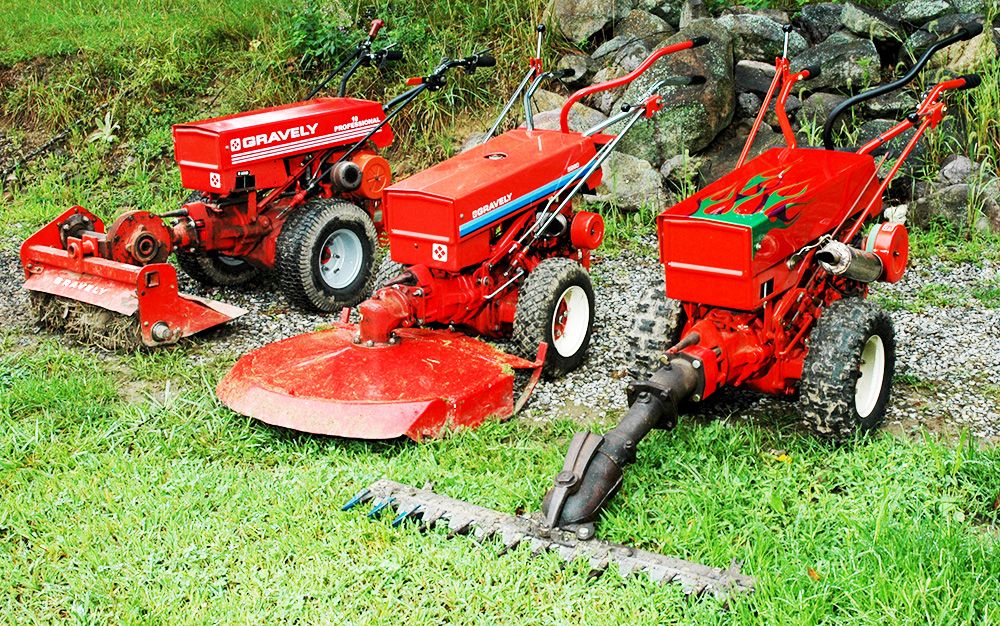
You can guess my vote on 2 or 4 wheel tractors,,, I have $1,500 total invested in all of the machines,

5260h_zpsc3df8fe8.jpg
 
/ 2 wheel or 4 wheel? #9  
Hey those hoods look like they'd take a straw bale ok! Let's strap a bale to each and go for a hay ride! We'll need 3 riders and 3 drivers!


You can guess my vote on 2 or 4 wheel tractors,,, I have $1,500 total invested in all of the machines,

5260h_zpsc3df8fe8.jpg
 
/ 2 wheel or 4 wheel? #10  
Hey those hoods look like they'd take a straw bale ok! Let's strap a bale to each and go for a hay ride! We'll need 3 riders and 3 drivers!

That is OK with the two on the left,,,
the one on the right has a problem,, the flames would set the bale on fire!! :eek:

:laughing:
 
/ 2 wheel or 4 wheel? #11  
I'm a vegetable grower also. My dad farmed veggies with a Troy-bilt Horse and a Ford 8N for almost 40 years. He built a successful business with very little capital investment. When my wife and I moved back to the farm and bought the business, we bought a Kubota mx4700. I grew up on the 8n, and i wanted something better. All I can say is that a 4wd hydrostatic tractor with a loader is the best thing I can imagine for vegetable farming.

Being able to constantly, instantly, and infinitely adjust your ground speed relative to your PTO speed is invaluable for rototilling. Having a loader with forks makes moving materials and heavy produce around the farm super easy.

4 wheel tractors aren't cheap, but they do so much. They also don't really lose value. Not much anyway. If I were buying now, I'd go to my Kubota dealer and buy a hydrostatic L2501 with a loader, forks, ag tires, a tiller, and a bush hog. Out the door under $23k with 0% financing for 84 months. The Kioti ck2610 would do the job also. I bought a bigger tractor mostly for the loader capacity (for lifting logs and pallets of feed), but the next size down would actually be better for growing veggies in most cases.

2 wheel tractors are great, don't get me wrong. I'd love to have a nice BCS or Grillo, but they're expensive. They're also loud. Our Troy bilt is just about the loudest machine on the farm. No way I'd want to tackle bush hogging pastures with a 2 wheeler. I'm sure it can be done, but I'd much rather have a seat and a steering wheel. Add a sun shade and a cup holder and now it's relaxing instead of a chore. That's my two cents. If you would like to chat more about veggie growing or the equipment we use on our operation, I'd be happy to chat. Shoot me a PM and I'll send you my phone number.
 
/ 2 wheel or 4 wheel? #12  
"2 wheel tractors are great, don't get me wrong. I'd love to have a nice BCS or Grillo, but they're expensive." - They're not cheap, but whether used or new, they're not as expensive as a kubota or kioti!

Call me old fashioned, but imo the farm should pay for the equipment based on profits. If we were in a location where used tractors and implements aren't really available then loans and buying new might be the only option. But I'm with Bill...don't go into debt to finance it, and it's better not to even go out of pocket. This was my 2nd year market gardening, but I've got my beds established, and at the end of this season I was able to buy a used BCS, 2 mower attachments, and now I have a 20" bcs tiller and joel just made me an offer I couldn't refuse on a grillo 30" tiller attachment (one for walkways, one for the raised beds). No loans, and my equipment is getting better every season. Patience is a virtue. I'd love a kubota, but I love my 9n too and it's paid for lol.
 
/ 2 wheel or 4 wheel? #13  
"2 wheel tractors are great, don't get me wrong. I'd love to have a nice BCS or Grillo, but they're expensive." - They're not cheap, but whether used or new, they're not as expensive as a kubota or kioti!

Call me old fashioned, but imo the farm should pay for the equipment based on profits. If we were in a location where used tractors and implements aren't really available then loans and buying new might be the only option. But I'm with Bill...don't go into debt to finance it, and it's better not to even go out of pocket. This was my 2nd year market gardening, but I've got my beds established, and at the end of this season I was able to buy a used BCS, 2 mower attachments, and now I have a 20" bcs tiller and joel just made me an offer I couldn't refuse on a grillo 30" tiller attachment (one for walkways, one for the raised beds). No loans, and my equipment is getting better every season. Patience is a virtue. I'd love a kubota, but I love my 9n too and it's paid for lol.

I certainly get what you are saying. We bought our tractor with cash. It was a bit of a stretch, but we made it work. One thing to consider, though, is that most farms require a debt load at the beginning. Almost everyone goes into debt to start farming.

I just feel like tractors, and some other farm equipment is such a safe investment. In my area it is anyway. If you go buy a new tractor, even with fake money (credit), and in the years you stop farming, that tractor should be worth a beer good percentage of what you paid. And during that time, tractors are a vital tool on the farm.

Most beginning vegetable farmers will buy a tractor. Unless you're a decent mechanic, and a careful operator, i think a 15-20k compact is a safer, more reliable, and better suited machine for the money than a 5-10k piece of old American iron. Just my .02, though.
 
/ 2 wheel or 4 wheel? #14  
I certainly get what you are saying. We bought our tractor with cash. It was a bit of a stretch, but we made it work. One thing to consider, though, is that most farms require a debt load at the beginning. Almost everyone goes into debt to start farming.

I just feel like tractors, and some other farm equipment is such a safe investment. In my area it is anyway. If you go buy a new tractor, even with fake money (credit), and in the years you stop farming, that tractor should be worth a beer good percentage of what you paid. And during that time, tractors are a vital tool on the farm.

Most beginning vegetable farmers will buy a tractor. Unless you're a decent mechanic, and a careful operator, i think a 15-20k compact is a safer, more reliable, and better suited machine for the money than a 5-10k piece of old American iron. Just my .02, though.

For any kind of grain or field crop farming, you either inherit it, or you go into big debt. But for vegetable farming you don't have to go into debt, or it can be quite minor. you don't need a lot of land to produce lots of veggies...I just point to jean martin fortier in quebec, he works 1.5 acres, all with a BCS and hand tools, and he grosses in the six figure range, even after he pays his hired help they keep like 70 grand, so it's a middle class lifestyle for him and they never really had any debt to speak of. Eliot Coleman says that's the one nice thing about vegetable farming, that you don't need to go into debt to do it. It's unlike field crop farming or big cattle ranching in that regard, where they say "get big, or get out!"

I find the old utility tractors are usually in the 2-5K range, but 9n are out there for 1500. They don't have hydrostatic or 4wd, but in many cases they are equal or more powerful than machines costing 10 times or more money. Hydro robs power. I mean a 9n is close to 30 hp, what does a kubota 30 hp of the same weight class cost? 15-20K? Or more depending on options?!? A ford 861 is not a lot bigger footprint than an 8N but it's around 60hp, that's just nuts! Power steering, live hydraulics, live PTO. They sell for 3-5K. Probably 30-40K for something like that from Deere or Kubota I'll bet. Lots of retired farmers restore old tractors as a hobby, and there are some great running machines out there. Just don't buy one that's beat all to **** and left outside all year for 50 years, heck for the money you save you can buy two so you won't be lacking the use of it when one of them needs repairs.

I'm actually envious of the people in Wisconsin. The farm density is higher or has been higher due to all the dairy farms, and it's like a utility tractor paradise over there! I wonder if it isn't the best place in the USA to buy old american tractors. Close to Michigan too where they made a lot of that stuff! When I get bored I look on craigslist tractor ads and think "if only that beauty was here and not 500-700 mi away in Wisconsin!"

Look at this beautiful piece of old American Iron!

105_0523.jpg
 

Attachments

  • 105_0523.jpg
    105_0523.jpg
    852.5 KB · Views: 216
Last edited:
/ 2 wheel or 4 wheel? #16  
For any kind of grain or field crop farming, you either inherit it, or you go into big debt. But for vegetable farming you don't have to go into debt, or it can be quite minor. you don't need a lot of land to produce lots of veggies...I just point to jean martin fortier in quebec, he works 1.5 acres, all with a BCS and hand tools, and he grosses in the six figure range, even after he pays his hired help they keep like 70 grand, so it's a middle class lifestyle for him and they never really had any debt to speak of. Eliot Coleman says that's the one nice thing about vegetable farming, that you don't need to go into debt to do it. It's unlike field crop farming or big cattle ranching in that regard, where they say "get big, or get out!"

I find the old utility tractors are usually in the 2-5K range, but 9n are out there for 1500. They don't have hydrostatic or 4wd, but in many cases they are equal or more powerful than machines costing 10 times or more money. Hydro robs power. I mean a 9n is close to 30 hp, what does a kubota 30 hp of the same weight class cost? 15-20K? Or more depending on options?!? A ford 861 is not a lot bigger footprint than an 8N but it's around 60hp, that's just nuts! Power steering, live hydraulics, live PTO. They sell for 3-5K. Probably 30-40K for something like that from Deere or Kubota I'll bet. Lots of retired farmers restore old tractors as a hobby, and there are some great running machines out there. Just don't buy one that's beat all to **** and left outside all year for 50 years, heck for the money you save you can buy two so you won't be lacking the use of it when one of them needs repairs.

I'm actually envious of the people in Wisconsin. The farm density is higher or has been higher due to all the dairy farms, and it's like a utility tractor paradise over there! I wonder if it isn't the best place in the USA to buy old american tractors. Close to Michigan too where they made a lot of that stuff! When I get bored I look on craigslist tractor ads and think "if only that beauty was here and not 500-700 mi away in Wisconsin!"

Look at this beautiful piece of old American Iron!

105_0523.jpg


This is a great discussion. Hopefully the OP is getting something from it. Don't get me wrong on old tractors, I love the way they look, their simplicity, and how much machine you can get for the money. There's some truly great machines out there.

I'll agree with Bill here (fun how we can take turns agreeing with Bill) about the N series, though. They just aren't worth buying. Yes, an N has it's place, but in my opinion, that's limited to pulling around a firewood trailer, driving in parades, and maybe some draft stuff, pulling a plow etc. They are unsuited for tilling with a tiller and dangerous for bush hogging. Actually, they are dangerous for just about everything, especially in the hands of a beginning operator. Also, I'm not sure how much time you've spent on a CUT, but there are just not any situations where a 9n is equal to or better than a Kubota. Your argument that they have good HP is fine, but their gears are unsuited for vegetable production, and there aren't many applications for stationary belt power on a veggie farm. Also, a 9n might have had 30 HP at the engine in 1940, but I don't think you'll find many making that on a dyno today.

Remember, I both love old tractors, and grew up farming veggies with N tractors, so my advice is not computer jockey advice. My dad farmed veggies with an 8n from 1974-2013. I've spent countless hours tilling, mowing, discing, etc with an N.

Now, that said, there's plenty of other tractors but much newer that are much better suited. Unfortunately, if you want to run three point equipment, which is a huge plus, we have to skip most of the farmalls. There's great machines there, just not as a first or only tractor (if you've got other tasks around the property anyway). There's good Fords, internationals, and Deeres in the sub-10k price range. Lots of good machines that'll farm veggies just fine. BUT you better know how to fix them or be prepared to learn fast. You'd also better have an "oh-*****" plan in place for when you NEED your tractor today and it won't run. If your neighbor is a friendly retired mechanic, with three tractors he'll lend out, then maybe old tractors are for you. Otherwise, newer machines have a serious benefit.

I'm familiar with Jean Martin also. Perhaps you'll recall his reason for purchasing a brand new (albeit 2 wheel tractor). They bought new because they aren't mechanically inclined and wanted a reliable machine. Their advice, and Coleman's is great stuff, but one cool thing about veggie growing is that there's so many different ways of doing it. If a guy owns three acres and grows veggies one or two acres, then a two wheel machine is probably perfect. If a guy owns 20 acres, grows veggies on 2-5 access, heats with wood, has pastures to clean up, and neighbors down the street who will pay him to bush hog their pastures, then a 2 wheeler is the wrong choice.

Jcraftenworth, I'm happy that you're finding success with your equipment. I wish you nothing but the best. I think this is a great discussion. It's nice to have some conversations on here that apply to what i do instead of the same old "which tractor should I buy" threads. I hope can keep this one going.
 
/ 2 wheel or 4 wheel? #17  
Well the N's can't be that bad for veggie production if your dad ran one for nearly 40 years, but the series really includes the NAA, 600 and 800 series tractors as well. I'd say they hit their height of performance and capabilities around 1960. once things got into the 2000,3000,4000,5000 series the designs had changed a lot. What was it they had on those old N machines a sherman step up add on that added hi and lo ranges? I suppose that gave more usable speeds.

On an 50-75 yr old tractor, it's possible that any number of things could require fixing. But the two wheel tractors are from about the 1980s until now and most just don't have the hours, if something is wrong it is probably the engine 95 percent of the time. Now if that was an 8N you've got serious problems and possibly an outrageous repair bill, if it's a BCS, worst case you can pop on a new engine for 500-800 dollars and feel pretty good about things running well after that.

It's interesting that from my own pricing, buying a new italian 2 wheel machine or a used 4 wheel utility tractor, the price could be cheaper for the utility tractor or else a wash. The cost savings for the 2 wheel starts to come when you price similar implements. For example, 30" power harrow 2 grand for 2 wheel, 36" from same company is 3500 for a 3 pt. 30" tiller $680 for 2 wheel, it took some searching but a 3 pt in the range of 32-48 inches is like $1200-1500. And for a lot of people, closer to 30" is ideal anyway. Flail mowers are in the same boat if buying new. Used 3 pt equipment is a lot easier to find than used 2 wheel equipment though. But price discounts on used 3 pt equipment often aren't that great vs new. Repairs on a 2 wheel machine are probably always gonna be cheaper than on a larger 4 wheel tractor.

Can't prove it, but I think if you take an 8N or NAA and hook a pulling chain between it and a kubota B3030...send them each in the opposite direction, my money says the Kubota gets pulled!
 
/ 2 wheel or 4 wheel?
  • Thread Starter
#18  
Great discussion, everyone!

I spoke with EarthTools again, and they seem to get nervous about anyone trying to use their tractors on much more than 1/2 acre. I told them I'd hire out the plowing with a 4 wheel tractor and use the 2 wheeler for everything else, but even with 1 acre they said that's a "mega-farm" for a 2 wheeler. I know of people (and not just Jean-Martin) using BCS on an acre or more, so I know it's doable. But according to Earthtools at least, that's people who have no problem with working crazy hours. For a 4 wheel tractor, an acre can be plowed/cultivated in a matter of hours. For 2 wheels, 1 acre means dawn to dusk plowing (or harrowing or whatever) for 2 whole days. Presumably this is precisely what Jean-Martin does. So the question here becomes "Is it worth it?"

That's where we get back into the discussion of bed spacing. Many vegetable growers appreciate being able to straddle rows or jump over rows easily, which has led to the popularity of the 30" bed. The minimum tread spacing on most 4 wheel tractors is 48", which is slightly too wide to straddle (I'm 6'4" so I'm able to do it just barely, but there's nothing wrong with staying on one side of the path, harvesting down the row, then coming back up the other side to harvest the other half). On the other hand, many growers working with 4 wheel tractors plow rows "on the flat" or use some kind of bed shaper to make narrow single rows. It's not really a permanent bed system, but the plowing is more efficient so that doesn't matter so much. However, this tends to leave more open bare soil, which gets weedy and can erode away on the wind if kept well-weeded. This can be mitigated with mulch (whether plastic or organic matter).

There is the question of row-feet per acre. The land I'm working with is about 540' x 150', which is just shy of 2 acres. With 60" strips (4 wheel tractor spacing) and 100' beds, I get 30 rows of beds with 5 beds per row (10 feet head on the end of each bed for turnaround). That's 150 beds and 15,000 row feet. If I use 42" strips (2 wheel tractor spacing), I get 43 rows, but still 5 beds per row. You don't magically get more beds per row if you don't need 10 feet of turnaround, because the beds are still 100 feet long. If the width was 100' instead of 150', I could easily rearrange so that some beds on the end run perpendicular, but in this case there's simply going to be wasted space no matter what. Anyway, that gives 215 beds total, which means 21,500 row feet. Now, on the surface, it looks like "more row feet = more vegetables = more money per acre", right? Well, the devil is in the details. With 48" beds, I can plant more rows of carrots and beets and spinach and all the small vegetables. Then, for large vegetables, like say tomatoes... so tomatoes are going to be trellised up, and the leaves below the lowest fruits will be removed, creating light and space for small vegetables like more carrots to be interplanted directly beneath the tomatoes. With 30" beds I'd worry about root competition and available light, with 48" I'm not as worried. Then there's the bed hogs like melons and squash. If you do 30" beds, you're sacrificing a lot of beds to let them sprawl. With 48" beds (plus paths), you're only sacrificing one adjacent bed for sprawl.

And then we get to the heart of it all: is it truly feasible to use BCS/Grillo on the whole 2 acres? Those machines force you to stay small, because if you try to do too much with them you get burnout. In all likelihood I wouldn't cultivate more than 1 acre with the 2 wheel, which would be something closer to 11,000 row feet. Certainly you can still make a living off of that. But I happen to have extra land.

Of course there are more considerations. Commercial grade rowcovers and landscape fabrics are more common in 4 foot widths than 30". High tunnels are usually 14 feet wide, which is just enough for 3 4' beds plus two paths. (Granted, it's also the right size for 4 30" beds plus paths). And then there's the issue of breakdowns and repairs, which was one of my main concerns about using an old 4 wheeler. I'm not sure that I have an answer, except to say that because (used) implement prices are so much cheaper for 4 wheel tractors, I can buy 2 tractors and still come out ahead of buying all new gear for 2 wheelers (I can't wait for years scouring classified ads in a 500 mile radius for a used BCS). I'm not yet convinced that I need a 48" version of the Rinaldi power harrow when a disc can do almost as good a job for a fraction of the price. I acknowledge that repair bills for 4 wheel tractors could be hefty. In the "Organic Farmer's Business Handbook", Wiswall estimates (from experience) that the average annual repair bill for a Ford 4000 is $300.

So, all in all, I think I'm finally convinced to go the 4 wheel tractor route. Maybe in 2 years I'll look back at this post and think "Ha! What a fool!" Oh well, that's life.

I bookmarked an article in I think Yesterday's Tractors about "What to look for in a used tractor" which went over some of the mechanical stuff to look at. Does anyone have any other resources like that?
 
/ 2 wheel or 4 wheel? #19  
Actually, Jean's attitude is that big tractor work needs to be done only once, he recommends hiring that work out, after that he thinks the BCS can handle it year after year, no sweat, and since he maxes out his landspace, it lets him plant it more densely than if he had a larger 4 wheel tractor. But even then, with the rotary plow you could take a couple days and bust up 2 acres, so what if it takes longer than a larger tractor and plow, as long as you aren't breaking sod every year, if it's a one time deal like Jean says. I've got 1/3rd an acre in and I haven't found any need to disc or plow my rows after the sod was initially broken. When I'm transplanting everything in, tilling isn't even necessary. For crops with big root development needs I use a broadfork like Jean (and the best 2 or 4 wheel equivalent to that is a subsoiler/spike ripper). If you use plastic mulch or landscape fabric, tilling becomes something you do to work in fertilizer or green manure, maybe reshape a rootcrop row after you bust it up by harvesting it, and that's about it! Here's a pic of a subsoiler for a 2 wheel tractor:

ripper-2.jpg
ripper-1.jpg


This is one of his vids, so I guess this is how he does it on a yearly basis (although in his book I think he said he only reshapes/maintains the raised beds with the rotary plow ever 3 years or so, probably does about 1/3rd every year or something):


I will say this. A rototiller is a lot cheaper, and that's the way I'm going right now for cost reasons (and it does a better job working in fertilizer and green manures) but nothing sets up a perfect planting bed like that power harrow. PERFECTO!!


Of course there are more considerations. Commercial grade rowcovers and landscape fabrics are more common in 4 foot widths than 30".

Actually 4 foot landscape is better for the 30 inch beds, because you want to cover the walkway area, too. If you're raised bed you've also got the side burms to cover and that starts adding up to more than 30". Same with rowcovers, the fabric must be a lot more than 30" wide because it's going up across and down some sort of hoop supports, or even if the plants are supporting it temporarily to save it from frost, it's still gotta be more than 30" wide.
 
Last edited:
/ 2 wheel or 4 wheel? #20  
Well the N's can't be that bad for veggie production if your dad ran one for nearly 40 years, but the series really includes the NAA, 600 and 800 series tractors as well. I'd say they hit their height of performance and capabilities around 1960. once things got into the 2000,3000,4000,5000 series the designs had changed a lot. What was it they had on those old N machines a sherman step up add on that added hi and lo ranges? I suppose that gave more usable speeds.

On an 50-75 yr old tractor, it's possible that any number of things could require fixing. But the two wheel tractors are from about the 1980s until now and most just don't have the hours, if something is wrong it is probably the engine 95 percent of the time. Now if that was an 8N you've got serious problems and possibly an outrageous repair bill, if it's a BCS, worst case you can pop on a new engine for 500-800 dollars and feel pretty good about things running well after that.

It's interesting that from my own pricing, buying a new italian 2 wheel machine or a used 4 wheel utility tractor, the price could be cheaper for the utility tractor or else a wash. The cost savings for the 2 wheel starts to come when you price similar implements. For example, 30" power harrow 2 grand for 2 wheel, 36" from same company is 3500 for a 3 pt. 30" tiller $680 for 2 wheel, it took some searching but a 3 pt in the range of 32-48 inches is like $1200-1500. And for a lot of people, closer to 30" is ideal anyway. Flail mowers are in the same boat if buying new. Used 3 pt equipment is a lot easier to find than used 2 wheel equipment though. But price discounts on used 3 pt equipment often aren't that great vs new. Repairs on a 2 wheel machine are probably always gonna be cheaper than on a larger 4 wheel tractor.

Can't prove it, but I think if you take an 8N or NAA and hook a pulling chain between it and a kubota B3030...send them each in the opposite direction, my money says the Kubota gets pulled!

You're right on the repairs. I've been through quite a bit of that Troy bilt, and it's pretty darned simple. Relatively cheap parts, too, although the company that bought them out went and changed all the part numbers, so my parts manual is much less helpful. :confused: Of course, the N's are cheap to fix too, especially with the availability parts tractors.

You're right about the N's not being "that bad" also. Compared to a wheel hoe or a spade fork, I'll take an 8n any day of the week. The Sherman transmission is great, yes. I had one on my '52. It engages between the motor and transmission, though, so the PTO gets slowed down too. If you could put it in low range and still have 540 PTO RPM, that'd be great, but you can't. Makes life easier backing up that firewood wagon, though. I don't know what the **** they were thinking making reverse so fast. Also, when I'm talking about N's, I'm not including the jubilees or the hundred series. They aren't in the same series or class of tractors. Overhead valves, live hydraulics, optional live power, power steering, and different gear options make the hundred series MUCH MUCH better machines!

You mentioned this, but three point equipment is available used. It's also available to be rented or borrowed. That's much less likely for two wheel machine. Our farm has only bought two brand new implements. A tiller and a Patz bale chopper for making mulch. Everything else is used and was cheap.

As far as a head to head pull off, lots of variables, but i think we'd have a good time! I will say, though that while I think the B series is super cute, and I'd love to own one, the L series is a better size for veggie growers. Better clearance, more weight, not much more $, more versatile, etc. My new Holland is the same size as a 2501, and very close to an N. I can spin three tires before I lose traction, the N is done once you spin one.
 

Marketplace Items

Iranch IRGC40 (A60463)
2019 International WorkStar 7300 4x4 Altec AA55 56ft. Insulated Bucket Truck (A60352)
2019 International...
2019 FORD F-250 (INOPERABLE) (A60736)
2019 FORD F-250...
WANCO LIGHT TOWER (A60736)
WANCO LIGHT TOWER...
2022 CATERPILLAR 299D3 SKID STEER (A62129)
2022 CATERPILLAR...
2012 International Prostar (A61307)
2012 International...
 
Top