Jinma Hydraulic Pump - Failures

/ Jinma Hydraulic Pump - Failures #1  

doxford jim

Veteran Member
Joined
Mar 29, 2007
Messages
1,006
Location
British Columbia, Canada
Tractor
1959 MF-65 sold, 2007 Jinma 554 diesel.
Hi Guys,

I just had a new high output E-320 hydraulic pump fail (2007 Jinma 554 tractor). It was installed just a few days ago and worked fine when installed.
Today I was using the tractor and the FEL to clear some snow - and, because of the new pump, I was being very careful with my FEL.
With no warning or noise the pump failed - the casing split along the length of the pump and oil just sprayed out the casing :mad::mad::mad:
The pump was checked by hand before it was installed and the pump drive shaft turned fine - needed to use a small 6" crescent across the splines as there was just a small resistance as expected. There is no strain on the pump casing as the inlet steel pipe pretty much floats to where it is bolted on. The upper discharge connection flange is connected to a hydraulic hose which is flexible.
I have no idea of why the casing cracked unless the new pump had a faulty casing. At no time have I touched the pressure relief valve - it is the same as when I got the tractor new. I will take the releif valve apart and see if anything is amiss. That is the only thing I can think of is a faulty pump casing - the old pump I replaced was the original and I changed the pumps as the shaft seal had gone and I had the spare new pump sitting in the workshop.
Looks like another new pump is to be ordered.

Anyone else have the same failure with their alum. body hydraulic pump ? Will post a picture tomorrow after I get some taken.

Jim
 
/ Jinma Hydraulic Pump - Failures #2  
Split pump housing screams overpressure... What was the hydraulic pressure running(relief pressure on all relief valves) on the new pump after the installation? This is a commonly missed step when shadetree troubleshooting or replacing a failed component. A hydraulic shop will always test pressures as they do not want to be liable for the followon parts and repair when the real cause of the failure kills a second pump.

What I am getting at is that pumps rarely just fail on their own. There is usually some other cause or contributing factor. A "T" fitting and a high pressure gauge installed into the pump outlet line are relatively inexpensive compared to the cost of a second pump... The information they provide is invaluable in troubleshooting the root cause of issues, and insuring that all the relief pressures are set within specifications...

If you have Quick connect fittings to the front end loader valve, it is a relatively simple matter to make up a pressure gauge installation using a set of quick connects, a high pressure T fitting and a 0-5000 PSI gauge. Or with the right type of T, one of the QC connections can be removed from the hose end, the T and gauge connected and the QC fitting re-installed onto the T fitting. Install this in the line running from pump to FEL and confirm peak pressures are within limits when operating ALL the valves in the system(FEL, 3PH, ECT)...

Good luck with your next pump.
 
/ Jinma Hydraulic Pump - Failures #3  
One of the most commonly reported causes of pumps blowing up like that is faulty quick connects on the loader lines. If one isn't connected properly or if the check ball gets jammed, the pump will deadhead and blow up.
 
/ Jinma Hydraulic Pump - Failures
  • Thread Starter
#4  
Thanks guys for the comments.
This was totally unexpected and I was stumped as to the cause. I emailed Tommy at Affordable and was told that the two main causes are quick disconnect and the FEL controls. So this morning I will have a good look at it - after I have cleared up the oil from the shop floor.Kitty litter used as an absorbent and usually works well.
Not having worked on the Jinma disconnects, what is involved with removing the centres so I won't have a future problem with the balls ?
I will also get into the FEL control valve to see what may have happened - seized or broken valves, disconnected returns springs etc.
Any other thoughts on cause ?
Fortunately I had both the loader and the TPH in the raised position (snowblower on the back) and was able to drive down to the workshop spewing hydraulic oil en route ( will stop the grass rusting).
It is a real pain as I took real care installing the pump only to have this happen. I had no idea that I might have a problem with "dead heading" though have read about it over the years.
Thx
Jim
 
/ Jinma Hydraulic Pump - Failures #5  
I installed a Prince relief valve and pressure gage right at the pump outlet and it returns to sump. It protects the entire system.
 
/ Jinma Hydraulic Pump - Failures
  • Thread Starter
#7  
Well, I have just got back from the shop after checking over the FEL control valve - all looked good. I also looked at the pump I removed (E-314), the original pump that came with the tractor. This pump was leaking a little oil and as I had the new E-320 sitting on a shelf, thought I would put the new pump in and see what difference it made. It worked fine for a couple of days and then without warning, the casing failed.
Since the FEL control valve looked and operated good, that pretty much leaves the "quick disconnects" as being the culprit. The FEL and the TPH were working just fine just prior to the failure.
While in the shop I looked at the old pump that I took off, to see where the oil leak was coming from. The casing is good with no cracks evident. I checked the four nuts on the end of the pump, that clamp the parts together, and found two nuts finger tight and the other two just a little tighter. So it now looks like the oil leak was due to the slack nuts not clamping properly. I turned the drive shaft with a small crescent and found that it turned with about the right amount of resistance and was not binding at all. It looks very much like I might be able to put the old pump back and get up and running again.
There is still the problem with the new pump casing failing and I suspect the cause being the quick disconnects.
Any other thoughts would be appreciated.
Will look at the quick disconnects tomorrow.

Thx
Jim
 
/ Jinma Hydraulic Pump - Failures #8  
Jim,

Based on recommendations, I replaced my QDs with ones from Ronald at RanchHand Supply. Much better quality and no failure reports.

You an replace them, remove the check balls from them or remove them altogether and hard plumb the FEL if you don't pan on removing it much. Any one of those solution will work, I would think.
 
/ Jinma Hydraulic Pump - Failures #9  
Thanks guys for the comments.
Not having worked on the Jinma disconnects, what is involved with removing the centres so I won't have a future problem with the balls ?
Jim

Unscrew the QC from the end of the hose. Up in where the hose threaded into the QC, you will find a circlip that holds a star shaped plate in place. Remove the circlip, the starplate will come out, as will a spring and the check ball located behind it. You must repeat this process 3 more times, untill both tractor end QC's, and both FEL QC fittings have the balls removed. Also if you plan on connecting anything else up to the QC fittings, the balls will have to be removed from those fittings also. The balls push against each other when conected, so if you conect a fitting that still has a ball to one that does not, there will be no accompanying ball to push it open. This will result in an instant deadhead when the engine gets started...

Another good practice when dealing with QC's is to put a large ty-wrap/ziptie onto the female fitting behind the sliding collar. This will prevent the collar from inadvertently being retracted and relasing the QC.

You can inspect all the components untill you are blue in the face, but unless you put a pressure gauge in there to confirm what the reliefs are set at, you will not know for sure that you have found what blew up the new pump...
 
/ Jinma Hydraulic Pump - Failures #10  
One of the most commonly reported causes of pumps blowing up like that is faulty quick connects on the loader lines. If one isn't connected properly or if the check ball gets jammed, the pump will deadhead and blow up.

Spot on Rich - we've had it happen a few times on customers tractors. Often the Yangcheng factory change their quick coupling types from ball to pin, then back to ball again! This means that the quickies on the loader will fit the pump, but may not let the full flow though causing the pump to overheat and crack. We only found out a few years ago when fitting a fel to a customers brand new 254E tractor - we started it up and started the checks, but as soon as we lifted the revs the pump cracked. On close inspection the quickies on the pump were the pin type, but the loader had ball type fittings - you can't tell without actually looking down into the fitting as they are identical from the "outside".

Another time we had a customer who's pressure relief bypass valve on the fel failed. Because the Jinma loaders are generally in series (ie: the oil has to pass through them from the pump before servicing the back of the tractor) it overheated and cracked...

Jinma (or Siromer as we sell) are excellent tractors - but you do need to keep a close eye on detail and do regular checks to ensure everything is as should be... :thumbsup:
 
/ Jinma Hydraulic Pump - Failures #11  
Could it be a case of just to much pump?
 
/ Jinma Hydraulic Pump - Failures #12  
Could it be a case of just to much pump?

Good thought Leejohn - but if that was the case the pressure relief should have let the oil go before damaging the pump. Unless the bore of the pump "out" pipe is much greater than the tractors existing pipework, the extra pressure shouldn't be an issue.

Just be aware if you are stripping down the relief valves, you will definitely need a pressure gauge to re-set them - in my opinion it's too risky to simply rely on counting the number of turns...

On the same subject does anyone know who supplies off the shelf pressure regulators to fit the Jimna FEL's? We have a nightmare trying to get the replacements from China, and haven't so far had any joy getting matching parts locally...
 
/ Jinma Hydraulic Pump - Failures #13  
Another time we had a customer who's pressure relief bypass valve on the fel failed. Because the Jinma loaders are generally in series (ie: the oil has to pass through them from the pump before servicing the back of the tractor) it overheated and cracked...

:

"Fortunately I had both the loader and the TPH in the raised position "

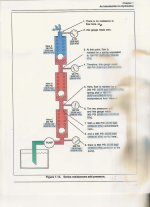
If indeed the FEL control valve is hooked up in series (with no power beyond) and the 3ph lever is maxed in full up position, then that hyd pump can see pressures of BOTH PRV pressures added together

having multiple relief valves in series with no reservoir drain, is pressure additive.....meaning if the FEL PRV is set at 2000 psi and the 3ph PRV is set at 1500 psi, then with both levers stroking the cyls to max that pump will see the 3500 psi

The OP needs to check to make sure there is a power beyond.......NOT in series direct to the 3ph
 
/ Jinma Hydraulic Pump - Failures #14  
"Fortunately I had both the loader and the TPH in the raised position "

If indeed the FEL control valve is hooked up in series (with no power beyond) and the 3ph lever is maxed in full up position, then that hyd pump can see pressures of BOTH PRV pressures added together

having multiple relief valves in series with no reservoir drain, is pressure additive.....meaning if the FEL PRV is set at 2000 psi and the 3ph PRV is set at 1500 psi, then with both levers stroking the cyls to max that pump will see the 3500 psi

The OP needs to check to make sure there is a power beyond.......NOT in series direct to the 3ph

Maybe we're at cross purposes, as I'm not quite understanding your point...

The Jinma hydraulic circuit is as follows:

Reservoir - Pump - FEL - Spool Valves (if fitted) - 3pt Linkage - Reservoir...

There are pressure relief bypass valves fitted to the fel spool block, spool valve block (which is basically identical to the loader spool block) and 3pt linkage. If noting is being used (ie. the fel is not being tilted / crowded / lifted / dropped) then the oil passes through the relief valve onto the next item (spool block) and so on. A prime example is that the 3pt hitch will not normally lift on a Jinma if the fel is being used - however if the fel is static (even in the air) then there will then be pressure available to the 3pt. Likewise if using a spool, the 3pt will not work effectively until the spool is returned to neutral. This is not usually a problem - as any item will hold it's height / position if left in neutral while another item is being used.

This is a series circuit. If there was a separate supply from the pump to each item (fel, spool, 3pt) then it would be a parallel (or as you call it "direct") circuit - just like electricity.

:thumbsup:
 
/ Jinma Hydraulic Pump - Failures #15  
hyd-1-0-1.jpghyd-1-0-1__b.jpg

assuming there is no power beyond (with no reservoir drain line), the valves are connected together in series

this only applies if the fel control valve is activated and going into full pressure relief (cyl at end of stroke) and the 3ph lever is in the full up position also in the full pressure relief
 
/ Jinma Hydraulic Pump - Failures #16  
Remember, the fluid must always flow. The Jinma does not have discreet return lines. The return/relief outflow passes down the main line to the next device till it gets to the 3PH and can pass thru that valve to the reservoir. The 3PH will work while the FEL is in operation. The system does it's best to maintain a constant flow. Since the fluid sent to one side of a cylinder also causes fluid to be pushed back from the other side of the cylinder, the FEL valve exhausts nearly the same ammount of fluid wether it is in operation or not. This fluid can then be used by devices downstream such as the 3PH. As Wdchyd stated, the loads on the pump are additive. This means that the work performed is divided by the two things being operated. This is usually not a good idea because as wdchyd mentioned, the pressures attained are additive and can exceed max pressure ratings if more than one device at a time is placed into relief/bypass...

This is rarely an issue as the controls are usually all on one side. I know I have to go out of my way to activate the FEL and the 3PH at the same time:)
 
/ Jinma Hydraulic Pump - Failures #17  
"Fortunately I had both the loader and the TPH in the raised position "

If indeed the FEL control valve is hooked up in series (with no power beyond) and the 3ph lever is maxed in full up position, then that hyd pump can see pressures of BOTH PRV pressures added together

having multiple relief valves in series with no reservoir drain, is pressure additive.....meaning if the FEL PRV is set at 2000 psi and the 3ph PRV is set at 1500 psi, then with both levers stroking the cyls to max that pump will see the 3500 psi

The OP needs to check to make sure there is a power beyond.......NOT in series direct to the 3ph

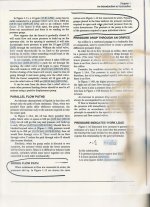
I am not a hydraulics expert but do know a thing or two about multiple PRV in a closed system like steam boilers which in our case lets say the boiler represents the hydraulic pump. All boilers have safety relief valves (yes multiple valves) and each one is set at a different pressure. The lowest one goes off first then if pressure continues to build then the next lowest set one goes off and continues till the system design pressure is met at which time the last one goes off. Normally the lowest setting is the smaller valve and the size goes up incrementally till the biggest one relieves. At no time will the system see more pressure than the largest set valve and not the combination of adding the pressures of each. If properly designed this valve will relieve the maximum amount of steam that the boiler will generate. The tractors main hydraulic valve should be set to a design pressure, usually around 2200-2400 PSI at which time the relieve valve will open and circulate all the oil that the pump is capable of producing. If you have FEL and it has its on relieve the it must be set lower or same as the tractors main relief valve. At no time can the two pressures be added together to have the pump see more than the set pressures for each UNLESS the PRV fails to open and you dead head the output line. If that happens something is going to blow up because the pump is a positive displacement pump, if it turns then it is pumping oil and being a liquid it wont compress so if the pump keeps pumping and you dead head the system without a PRV or with a defective PRV either the pump or a weaker link like a hose but most times it is a pump that will blow.
 
/ Jinma Hydraulic Pump - Failures #18  
I am not a hydraulics expert but do know a thing or two about multiple PRV in a closed system like steam boilers which in our case lets say the boiler represents the hydraulic pump. All boilers have safety relief valves (yes multiple valves) and each one is set at a different pressure. The lowest one goes off first then if pressure continues to build then the next lowest set one goes off and continues till the system design pressure is met at which time the last one goes off. Normally the lowest setting is the smaller valve and the size goes up incrementally till the biggest one relieves. At no time will the system see more pressure than the largest set valve and not the combination of adding the pressures of each.

IT would add up if the outlet of the first boiler PRV fed into the inlet of the second PRV and so on...:)

The Jinma does NOT have dedicated relief/return ports. The combined outlet of one valve(relief and normal return) are fed to the input port on the next device... This is not normally an issue as only one device typically gets used at a time...
 
/ Jinma Hydraulic Pump - Failures #19  
I did away with my quick connects for this very reason. My Jinma 284 uses 1/2 fittings so I just put in swivel unions.

Chris
 
/ Jinma Hydraulic Pump - Failures #20  
IT would add up if the outlet of the first boiler PRV fed into the inlet of the second PRV and so on...:)

The Jinma does NOT have dedicated relief/return ports. The combined outlet of one valve(relief and normal return) are fed to the input port on the next device... This is not normally an issue as only one device typically gets used at a time...

Exactly.....the boiler normally vents into the atmoshere right? not into the next boiler
 

Marketplace Items

2018 Bell B30E 30 Ton Articulated Dump Truck (A60352)
2018 Bell B30E 30...
LandHonor LHR-AIW1 1in Air Impact Wrench (A60352)
LandHonor LHR-AIW1...
Toro z turn (A56859)
2013 Kenworth T800 T/A Wet Kit Sleeper Cab Truck Tractor (A60352)
2013 Kenworth T800...
2002 BMW 325Cic Convertible Coupe (A61569)
2002 BMW 325Cic...
Ford Tailgate Themed Wall Decoration (A61569)
Ford Tailgate...
 
Top