difference btwn '07 2520 and '11 model

/ difference btwn '07 2520 and '11 model #2  
I think the only major change is the linkage for the MMM is very narrow at the rear of the 3PT on the new models.

Greg
 
/ difference btwn '07 2520 and '11 model #3  
There are a number of differences.

The engines are different versions of the same model, but there are both internal and external differences, including different oil pump arrangements and glow plugs on the newer engine.

The electrical systems are different. The older 2520 came standard with a 20A alternator that couldn't always keep the battery charged and run all the lighting. The optional 40A alternator became standard on the newer models, which also added a cigar plug accessory power outlet.

The earlier 2520 had 3PH arms that were known to make contact with the tires, which could lead to tire damage or severe mechanical failure of the final drives under the right circumstances. The later arms are designed to eliminate that problem. Some of the earlier 2520's had their's replaced by Deere.

I think those are the major differences. I wouldn't be scared off from an earlier model by any means. But I might factor in the cost of replacing the 3PH arms if they are not of the newer style.
 
/ difference btwn '07 2520 and '11 model
  • Thread Starter
#4  
thanks pdp.. I have an 07, I was one of the 1st here to have the new 3pt arms installed. it has been a great tractor, although I only have 126hrs on it!
 
/ difference btwn '07 2520 and '11 model
  • Thread Starter
#5  
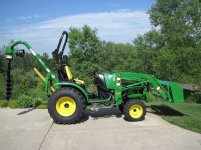
DSC_0067.jpg
 
/ difference btwn '07 2520 and '11 model #8  
Not a difference on the 2520, but I do like the decals better on your 200CX than on the new ones.
 

Attachments

  • 2520 w PHD I.jpg
    2520 w PHD I.jpg
    635.3 KB · Views: 235
/ difference btwn '07 2520 and '11 model #9  
The electrical systems are different. The older 2520 came standard with a 20A alternator that couldn't always keep the battery charged and run all the lighting. The optional 40A alternator became standard on the newer models, which also added a cigar plug accessory power outlet.

The earlier 2520 had 3PH arms that were known to make contact with the tires, which could lead to tire damage or severe mechanical failure of the final drives under the right circumstances. The later arms are designed to eliminate that problem. Some of the earlier 2520's had their's replaced by Deere.


I've never had an issue with keeping the battery on mine charged. That's the first time I have heard of a 20A alternator not being sufficiant to keep the battery topped off.

I also don't remember seeing anything about lower 3pt arms causing failure of the final drive. I would think the tire would yield before metal parts would. The most damage I have seen caused by the bad 3pt arm design was worn off lugs on the tires.

Tom
 
/ difference btwn '07 2520 and '11 model #10  
tomd999 said:
I've never had an issue with keeping the battery on mine charged. That's the first time I have heard of a 20A alternator not being sufficiant to keep the battery topped off.

I also don't remember seeing anything about lower 3pt arms causing failure of the final drive. I would think the tire would yield before metal parts would. The most damage I have seen caused by the bad 3pt arm design was worn off lugs on the tires.

Tom

When I was first researching the 2520, I had read a number of comments from others about the 20A alternator not keeping up and advising that the 40A alternator was worth adding. Clearly Deere/Yanmar thought it really needed the 40A alternator as standard, especially with the cigar outlet.

There was quite a long thread here about an owner that had repeated final drive failures. Based on the pictures he took of the damage, it seemed to point to the 3PH arm getting tangled with the rear tire to the point of causing the final drive to rip itself apart.
 
/ difference btwn '07 2520 and '11 model #11  
When I was first researching the 2520, I had read a number of comments from others about the 20A alternator not keeping up and advising that the 40A alternator was worth adding. Clearly Deere/Yanmar thought it really needed the 40A alternator as standard, especially with the cigar outlet.

There was quite a long thread here about an owner that had repeated final drive failures. Based on the pictures he took of the damage, it seemed to point to the 3PH arm getting tangled with the rear tire to the point of causing the final drive to rip itself apart.

I saw that, it looks like he didn't tighten the lateral turnbuckles so the implement was swing back and forth too.
 
/ difference btwn '07 2520 and '11 model #12  
BethesdaEC said:
I saw that, it looks like he didn't tighten the lateral turnbuckles so the implement was swing back and forth too.

Yes, and if he had the diff locked, which seems likely, that 3PH arm was jammed against the tire and holding it from turning against all the power of the tractor.
 
/ difference btwn '07 2520 and '11 model #13  
Hiya,

The 20A alternator I can see as a consolidation of SKU's as I believe the 2305/23/2520's were the only CUTs with the 20A. I could see the 20A not replenishing the battery if the usage was multiple starts with minimum run time at low RPM between them. (I sold a big block/4spd chevy PU years ago and 2 days later the new owner called and said I sold him a truck with bad alternator and battery because he needed to get jump started all the time. Turns out he would stall it 3 or 4 times every time he took off from a stop, he wasn't running it long enough between stalls to recharge the battery even with a 65A Delcotron.

As far as final drive failures, I remember that thread. I would suspect there was far more going on with that persons machine and his usage habits than 3pt arms hitting the lugs. The arm/tire interferance on the 2520 is just not severe enough to cause a final drive failure. If there was a case of the arm catching the tire lug to the point of something giving way, in my experence the tire is going to be the object that yields first because by design, it's flexable and conforms to uneven conditions. In all the cases I have seen with 3pt arm and tire interference, the tire is the loser. (Implement/tire interference is far more damaging) If the final drive couldn't hold up to that type of stress I have no doubt that we would have seen a lot more than 1 case of final drive failure on the 2520's noted here since '06.

(I remember the pictures in that thread, I would suspect, with the sway set improperly, and what looked like a high rate of ground speed, the implement drifted to one side, caught the tire as it was rotating, the tire then lifted the implement up on one side, as the tire rotated more, the implement twisted and was forced into the tire harder, the tire now acting as a lever lifting one side of the implement more and more, effectivly pushing the axle stub forward and the 3pt arm, being attached to the mounting point on the implement, now pulling back on the stub axle case, stressed the case to the point of failure. but that's just my take on what could have happened. I have seen a tow style York rake with the draw bar set too short on a Farmall cub catch a tire while turning and twist up like I described, even at low speeds, it twisted up the hitch fork on the rake and draw bar pretty good. )

My 2 cents,

Tom
 
 
Top