Need Help Understanding Theory and usage of Valves on Rear Hydraulic Lift

   / Need Help Understanding Theory and usage of Valves on Rear Hydraulic Lift #1  

tjc1989

Silver Member
Joined
Oct 3, 2006
Messages
106
Location
East Texas
Tractor
2006 Branson 4220i with FEL
Hey guys,

I hate to sound like a dummy, but can someone explain in terms I understand what several of the valves are designed to do and why, on my Branson 4220i rear hydraulic lift?:confused: I know somebody out there is knowledgeable enough to help on this.

Specifically the control valve, safety valve, relief valve and stop valve.

And also the draft control.

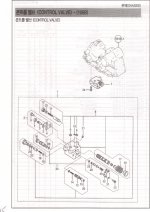
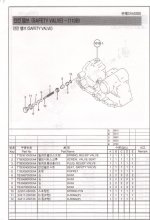
I am enclosing Branson schematics of each valve.

Mine has a front end loader, which is working OK as it should, BUT, the rear hydraulic lift bleeds off and jerks up and down. Or as some have referred to as hiccups. Its worse when cold, with more rapid jerking, and gets better somewhat when fluid is warm. But even when warm, does not go away. It shakes the whole tractor, if I have a heavy load on the lift , such as an 800 pound tiller.

I took it in to the dealer I bought it from when it was in warranty, and the mechanic advised me he didn't find much wrong with it, but did replace a piston o-ring on the hydraulic piston, and fine sandpapered a small spot on the cylinder. When I got it home, and lifted something , it still did it. I didn't take it back, though I should have. But after having my tractor for 10 days, I was very reluctant to take it back in. PLus the inconvenience, and my lack of confidence in them. Now its out of warranty, and I am going to try and fix it myself.

But I have some lingering doubts on it.

Number one: While rear lift is hiccuping and trying to sustain lift height, if I slightly use my FEL, and slowly lift it up, the jerking nearly subsides all the way, with no loss of rear lift height. When I stop the FEL lifting, it goes back to the jerking. It seems that somehow, the use of the FEL lessens the effect of the jerking, and does not cause the rear lift to drop in height.:confused:

A little history:

Tractor has 338 hours.

I have changed fluids and filters twice. I am using Shell universal tractor fluid, and Branson filter. Fluids or filters made no change.

I have tried changing settings on the valve that controls the rate of rear lift drop, by tightening the knob tighter or looser. No effect.

I have tried changing the draft setting by moving the draft control lever to high number and low number. No effect.

So, I am preparing to pull this unit off my tractor and get into it. My fear is that if I can't find anything wrong with the piston or cylinder, then what. I have a very good mechanical background, but don't know what the fluid valves are designed to do.

Thats why I am asking for theory behind the various valves used on the hydraulic lift. I'm pretty sure the Branson dealer mechanic did not touch any of the hydraulic valves when he had it apart.

So is it possible a pressure relief valve could be malfunctioning, or another valve? Could a misadjusted draft control cause this?

I would really appreciate some help on this. Thanks, in advance.
 

Attachments

  • Branson 4220i Rear Hydraulic Cylinder Control Valve Schematic Page 85.jpg
    Branson 4220i Rear Hydraulic Cylinder Control Valve Schematic Page 85.jpg
    176.5 KB · Views: 1,168
  • Branson 4220i Rear Hydraulic Cylinder Relief Valve Schematic Page 87.jpg
    Branson 4220i Rear Hydraulic Cylinder Relief Valve Schematic Page 87.jpg
    206.4 KB · Views: 1,171
  • Branson 4220i Rear Hydraulic Cylinder Stop Valve Schematic Page 88.jpg
    Branson 4220i Rear Hydraulic Cylinder Stop Valve Schematic Page 88.jpg
    185.4 KB · Views: 924
  • Branson 4220i Rear Hydraulic Cylinder Safety Valve Schematic Page 89.jpg
    Branson 4220i Rear Hydraulic Cylinder Safety Valve Schematic Page 89.jpg
    194.1 KB · Views: 1,132
   / Need Help Understanding Theory and usage of Valves on Rear Hydraulic Lift #2  
Hey guys,

I hate to sound like a dummy, but can someone explain in terms I understand what several of the valves are designed to do and why, on my Branson 4220i rear hydraulic lift?:confused: I know somebody out there is knowledgeable enough to help on this.

Specifically the control valve, safety valve, relief valve and stop valve.

And also the draft control.

I can give you a general idea of what the various valves do but without the hydraulic circuit diagrams it's pretty hard to be more accurate .

The control valve controls the up and down movemnet of the three point hitch. Depending on the setting, it usually also controls the mode of operation of the hitch; draft mode or position mode. Draft mode is made for ground engaging implements( i.e. a plow or mounted disk). Draft is sensed either through the top link compression ro the lower links and if the draft force increases above the set value, the lift will raise the implement and if it lowers below the set value, the control will lower the lift.

Likewise position control will try to hold position of the 3 pt. If there is a leakdown of pressure in the lift cylinder, the hitch will lower and the position control will activate and cause the lift to raise to its set position. this is probably what is causing your hitch to hiccup.( My Ford 4610 does this with a 1250# bale on the hitch.)

The relief valve limits the hyraulic system mak pressure to some preset value that is the limiting normal applied force for the lift cylinder. If you try to pik up a rally heavy loadthe relief valve will protect the system by opening and discharging the fluid back to the reservior.

I'm not sure that i know what the safety valve is for. It might be similar t the relief valve and protects the system in the event of a failed relief valve or it may have a higher setting to protect from some sort of overpressurization of th the system due to dynamic effects. I really don't know.

I don't know what the "stop valve" is for.

Hope this is helpful to you.
 
   / Need Help Understanding Theory and usage of Valves on Rear Hydraulic Lift #3  
My Branson 3510 had the same hiccup, it didn't affect the ability of the tractor. It was very annoying though.
 
   / Need Help Understanding Theory and usage of Valves on Rear Hydraulic Lift #4  
TJC,
I agree with JerryMT some where in your lift circuit there is a leak that is causing the arm to "bleed down" and then the position sensor raises the arms back up. I.e. the hiccups.

I would look first at what oil is under pressure when the arms are raised and where are the potential leak points?

Lift cylinder and main control valve would both be seeing pressure. Not sure sure about other components.

A thought: Since using your loader slows or stops this I would look for the main control valve not returning to center position properly. Reason for my thinking is that the only logoical reason using the FEL would stop this is that you are either adding flow to replace the leak or plugging the leak with the increased inlet pressure. Both point towards the main control valve.

NOTE: I know nothing of how this valve is configured and the diagram you posted does not give any parts break downs.

Dumb question but simple test.

With no load on the 3pt arms and the arms lowered, do they move/ raise when using the FEL under load? Again would point towards main control valve.

Best of luck

Roy
 
   / Need Help Understanding Theory and usage of Valves on Rear Hydraulic Lift #5  
The safety valve is a relief valve, and I believe it relieves if the load is to big. I believe that the stop valve is a knob adjust to vary the speed of lift or close off all hyd fluid to the 3pt.
 
   / Need Help Understanding Theory and usage of Valves on Rear Hydraulic Lift
  • Thread Starter
#6  
Jerry/MT , oldnslo, and J_J,

Thanks for taking the time to read and respond. To clarify, Control Valve,
Position Control, Main control. If you look at the schematics I posted, does the control valve under the bottom do all three of your answers?

In other words, is this the valve that holds position control? And regulates flow to the cylinder?

And J_J, IF the safety valve is another relief valve, Do you know how either the relief valve or safety valve could be affecting the pressure on the lift piston?

I guess I am just trying to get a good pointer to try and zero in on the correct valve to clean and inspect. Of course, I will probably do all of them.

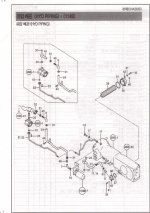
I am going to post another schematic, showing an overview of the system.

Its another story, but the dealer jerked me around horribly on some other minor warranty work, and who knows, maybe the mechanic never even put in a new piston o-ring. But assuming he did what he said, thats always led me to believe that some sediment , cuttings or trash is interfering with one of the other valves. That would explain why he did not fix it.

Obviously, pressure is bleeding down somewhere, either past the piston, or another valve.

On my tractor, high pressure fluid goes to the FEL joystick valve, then on to the rear lift through a hose. Is there any reason to suspect trash in the FEL valve?
 

Attachments

  • Branson 4220i Rear Hydraulic Cylinder Hydraulic Controls Schematic Page 92.jpg
    Branson 4220i Rear Hydraulic Cylinder Hydraulic Controls Schematic Page 92.jpg
    184.8 KB · Views: 1,959
  • Branson 4220i Rear Hydraulic Cylinder Hydraulic Piping Schematic Page 96.jpg
    Branson 4220i Rear Hydraulic Cylinder Hydraulic Piping Schematic Page 96.jpg
    196.3 KB · Views: 1,531
   / Need Help Understanding Theory and usage of Valves on Rear Hydraulic Lift #7  
Do you have the hydraulics schematics available.

If the 3pt does better when using the FEL, it is probably because the only fluid going to the back is the fluid not used by the FEL. If the FEL is only using a few GPM , then the rest of the pump volume is gong to the back, and you might not be getting the relief pressure.

Have you put a gage in the circuit and wrote down all the readings?

There are two relief valves, why exactly, I don't know. One might be for input pressure relief. and the other for draft relief.
 
Last edited:
   / Need Help Understanding Theory and usage of Valves on Rear Hydraulic Lift #8  
TJC,
in looking at the diagrams you posted I would have to say the "Control Valve" would be the first place I would look. Be very careful taking this apart because it looks like there could be lots of parts to loose from spring loading.

Do you have a part description to go with the exploded views? If yes this might help narrow down potential problem areas.

Roy
 
   / Need Help Understanding Theory and usage of Valves on Rear Hydraulic Lift
  • Thread Starter
#9  
J_J,

No, sorry. It would sure make life easier if I had something better. The Branson manual supplied with purchase leaves a lot to be desired. I have gone through every page to try and determine fluid flow through this thing, and what I posted is as good as it gets. The little manual that came with the loader is no help either. If I knew where to purchase a comprehensive repair manual , I would.

I used to be an automatic transmission mechanic in an earlier life. It was nice to have manuals that showed color coded fluid flow through each band servo, and clutch pack, torque converter, pump, and planetary gear pack lubrication, etc. Plus testing procedures and points, etc.

In research, I ran across others having similar problems. Nice to know its not unique to Branson brand. One user, bdblount made a post on 9-21-2008 in repair section of the forum, complaining on a John Deere for problems similar to mine, where he noticed issues with his loader and rear hydraulic lift. Not exactly like mine, but similar. You might check it out. I noticed several other posts where users had similar rear hydraulic issues, but it seems none ever got resolved.

The answers he got were like you guys" answers, pointing to position control valve.

For me, its way too annoying. Mine doesn't just bump back up every minute or so, it does it 2 or 3 times a second, jerking the whole tractor. This can't be good for that much force to be banging so frequently.
 
   / Need Help Understanding Theory and usage of Valves on Rear Hydraulic Lift
  • Thread Starter
#10  
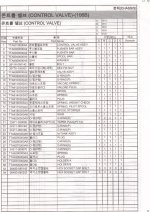
Oldnslo, thanks. Here is the parts list.
 

Attachments

  • Branson 4220i Rear Hydraulic Cylinder Control Valve Parts List Page 86.jpg
    Branson 4220i Rear Hydraulic Cylinder Control Valve Parts List Page 86.jpg
    297.7 KB · Views: 394
   / Need Help Understanding Theory and usage of Valves on Rear Hydraulic Lift #11  
Turn the stop knob about half way out and play with it to see if there is any change. Fully closed, I believe youwill have no c ontrol. and full out, you will have fast raise and lower.
 
   / Need Help Understanding Theory and usage of Valves on Rear Hydraulic Lift #12  
Jerry/MT , oldnslo, and J_J,

Thanks for taking the time to read and respond. To clarify, Control Valve,
Position Control, Main control. If you look at the schematics I posted, does the control valve under the bottom do all three of your answers?

In other words, is this the valve that holds position control? And regulates flow to the cylinder?

And J_J, IF the safety valve is another relief valve, Do you know how either the relief valve or safety valve could be affecting the pressure on the lift piston?

I guess I am just trying to get a good pointer to try and zero in on the correct valve to clean and inspect. Of course, I will probably do all of them.

I am going to post another schematic, showing an overview of the system.

Its another story, but the dealer jerked me around horribly on some other minor warranty work, and who knows, maybe the mechanic never even put in a new piston o-ring. But assuming he did what he said, thats always led me to believe that some sediment , cuttings or trash is interfering with one of the other valves. That would explain why he did not fix it.

Obviously, pressure is bleeding down somewhere, either past the piston, or another valve.

On my tractor, high pressure fluid goes to the FEL joystick valve, then on to the rear lift through a hose. Is there any reason to suspect trash in the FEL valve?

I would assume the problem is with a leak somewhere that is allowing your lift cylinder to leakdown and the causing the position control to respond to the resulting position change.

If you have a draft control lever, use that to raise the lift with your position control lever in the full down position.(I can do this on my Ford 4610) If the hiccup goes away but the lift drifts down, you'll verify that you have an internal leak. I'm not sure it's worth the effort to tear into the hydraulics for this problem unless you get to the point where you continually cycle the lift. The time to fix it was when it was under warranty.
 
   / Need Help Understanding Theory and usage of Valves on Rear Hydraulic Lift
  • Thread Starter
#13  
Jerry/MT , oldnslo, and J_J,

OK, lets address these.

First Jerry/MT, my tractor draft control has no effect on raising or lowering the rear lift. I thought trhat it wouldn't, but went out and tried it anyway. With lift control lever in full down, draft control lever has no effect whatsoever.

As far as how much trouble its going to be, I would agree if it was like some have decribed on the site, such as a correction every minute or two. But mine is like 2 or 3 times a second. If I am transporting my brush hog down the road to my field, and have my front bucket on, the bucket is even popping from the rear lift rapidly correcting. Its really annoying.

Second J_J, I have previously tried the knob, full out, and full in, and everything in between. No real change.

Third oldnslo, I am tending to agree with you. Mostly because there is a change in the rear lift correcting if using the loader slightly. It seems to me that if it was just the piston in the lift letting fluid pass by, causing the lift position to activate and correct, that using the loader and creating less pressure would serve to cause the lift position to correct more rapidly because the downward load on the lift is constant, and with less pressure to keep the hydraulic piston extended, it seems it should try and correct more often. But instead its the opposite, which leads me to suspect something else, such as the control valve body or a pressure relief valve.

And that gets me back to my original question. Of what exactly the various valves are designed to do.

A couple more questions, if I may. When not using the lift or loader, what serves as a pressure relief valve in the hydraulic system? Is there something in the pump itself?

And I know this will make all of you snicker. :D How does the rear lift know its went down a little for the lift position to sense a change and correct it? Is there some sort of sensing device, either mechanical or electrical that senses this change? I'm just not visualizing how this can sense a change in load height.

No matter what , thanks for all the input. Believe, it helps.
 
   / Need Help Understanding Theory and usage of Valves on Rear Hydraulic Lift #14  
tjc1989

A couple more questions, if I may. When not using the lift or loader, what serves as a pressure relief valve in the hydraulic system? Is there something in the pump itself?


When not using any hyd function, the fluid is just passing through the open center valves and returning to tank. You only get pressure when the fluid has some resistance, such as a cyl or hyd motor, and if you try and do to much, the pressure will build up and the relief valve will operate until the pressure is below the relief valve setting.

The relief could be by the pump.
 
Last edited:
   / Need Help Understanding Theory and usage of Valves on Rear Hydraulic Lift #15  
.


Third oldnslo, I am tending to agree with you. Mostly because there is a change in the rear lift correcting if using the loader slightly. It seems to me that if it was just the piston in the lift letting fluid pass by, causing the lift position to activate and correct, that using the loader and creating less pressure would serve to cause the lift position to correct more rapidly because the downward load on the lift is constant, and with less pressure to keep the hydraulic piston extended, it seems it should try and correct more often. But instead its the opposite, which leads me to suspect something else, such as the control valve body or a pressure relief valve.

And that gets me back to my original question. Of what exactly the various valves are designed to do.

A couple more questions, if I may. When not using the lift or loader, what serves as a pressure relief valve in the hydraulic system? Is there something in the pump itself?

Not knowing how your tractor is plumbed I would hazard a guess and say that the relief in your control valve is the system relief for your loader. If your loader is plumbed before the 3PH then it should have a relief valve in its control valve also.

And I know this will make all of you snicker. :D How does the rear lift know its went down a little for the lift position to sense a change and correct it? Is there some sort of sensing device, either mechanical or electrical that senses this change? I'm just not visualizing how this can sense a change in load height.

Not sure exactly how the linkage works but it either internally or externally looks at the valve input position Vs the lift arm position. Again I can't determine how this linkage would connect to the control valve.

No matter what , thanks for all the input. Believe, it helps.


I looked at the parts description for your control valve and like most the descriptions leave some thing to be desired. What I could not determine is which spool is the main input from your control lever. One of the other spools would then be the position control. If your are a retired tranny mechanic I suspect you could carefully remove this valve package and then follow the flow paths through the casting and probably make some sense out of which spool controls what. ALL Spool valves leak, how much depends on the casting, spool bore clearances, overlap of spool and other factors. Cycling every two to three seconds is a fairly big leak. Can you get a rough idea on how much the arms move each time it cycles. I.e how far does it drift down before it corrects itself?

Compared to an automatic this should be simple.

Best of luck

Roy
 
   / Need Help Understanding Theory and usage of Valves on Rear Hydraulic Lift #16  
Jerry/MT , oldnslo, and J_J,

OK, lets address these.

First Jerry/MT, my tractor draft control has no effect on raising or lowering the rear lift. I thought trhat it wouldn't, but went out and tried it anyway. With lift control lever in full down, draft control lever has no effect whatsoever.

As far as how much trouble its going to be, I would agree if it was like some have decribed on the site, such as a correction every minute or two. But mine is like 2 or 3 times a second. If I am transporting my brush hog down the road to my field, and have my front bucket on, the bucket is even popping from the rear lift rapidly correcting. Its really annoying.

Second J_J, I have previously tried the knob, full out, and full in, and everything in between. No real change.

Third oldnslo, I am tending to agree with you. Mostly because there is a change in the rear lift correcting if using the loader slightly. It seems to me that if it was just the piston in the lift letting fluid pass by, causing the lift position to activate and correct, that using the loader and creating less pressure would serve to cause the lift position to correct more rapidly because the downward load on the lift is constant, and with less pressure to keep the hydraulic piston extended, it seems it should try and correct more often. But instead its the opposite, which leads me to suspect something else, such as the control valve body or a pressure relief valve.

And that gets me back to my original question. Of what exactly the various valves are designed to do.

A couple more questions, if I may. When not using the lift or loader, what serves as a pressure relief valve in the hydraulic system? Is there something in the pump itself?

And I know this will make all of you snicker. :D How does the rear lift know its went down a little for the lift position to sense a change and correct it? Is there some sort of sensing device, either mechanical or electrical that senses this change? I'm just not visualizing how this can sense a change in load height.

No matter what , thanks for all the input. Believe, it helps.

SO your tractor does not have combined position and draft control.

If you are getting the position reset 2-3 time per sec you have a major leak or whatever signals the position feedback to the control valve s giving an erroneous feedback signal. I take it you don't have a service manual, is that correct? If you don't you are in the hurt locker!

Is there any way you can observe the goings on in the hydraulic compartment with the system operating? If so you can visually see the leak. If not, I suspect the lift cylinder is leaking, the exhaust from the lift cylinder has a leak ahead of the exhaust portion of the valve OR the relief valve is stuck open because some trash is stuck in it. That's just intuition on my part. Do you have hydraulic circuit diagrams? They can help to pinpoint possible sources of the leak.

Put something heavy on the three point lift it all the way up, leave the control lever in the full up position, and then shutdown the tractor and time how fast it drops. This can give you an idea of the magnitude of the leak. Unfortunately it still doen't tell what's leaking it just verifies the leak.

If the leak is rather slow (<15 minutes to fall completely is a guess) the other possibility is that the feedback device that denotes that there has been a position change maybe the problem. It's most likely driven off the rockshaft. It could be a cam or ?. if you don't have a quick leak down of the three point hitch, that could imply it's not a leak but some erroneous feedback is going to the valve that's causing it to reset the position.

Whatever you do, don't take the liftcover off until you have an idea what the problem is becausse you'll lose the ability to trouble shoot the system.
 
   / Need Help Understanding Theory and usage of Valves on Rear Hydraulic Lift
  • Thread Starter
#17  
Thanks for all the input, guys. I didn't really have a good understanding how the thing worked before this post. I mean, I knew how hydraulics worked in general, but had a hard time grasping what went on when something was lifted, and the how system could hold it in place, and correct itself if it leaked off and changed position.

I went ahead and tore it down. Every piece was inspected, measured, thought on extensively, photographed, and questioned what it did and why.

Since I had no manual, along with help from this site, I had to self teach. I'm the sort that can't really fix anything if I can't visualize it working.

So, here is what I found. The 4 rings on the hydraulic piston had some wear, and the lip seal or u-packing was the worst. It didn't appear wore out, but I replaced all of them anyway. The stop valve, control valve, safety valve and relief valve were cleaned and inspected. Oil passages were air pressure checked. Of all the valves, only the relief valve was a problem. It was stuck in its bore, and had to blown out with air pressure.

Because I had read several references on this forum about cautioning operating at full lift for very long, I wanted to know why. I rolled the lift arms full open until the crank hit the case inside. I then indexed this externally on the lift arms for reference, then while the crank was against the case wall, I inserted the piston, and examined where the piston was in relation to the cylinder bore. It extended out past the cylinder bore nearly an inch. Then I rolled the lift arms down until the bottom of the piston was even with the cylinder bore, and made index marks for that also, so that I would know where the ideal max lift spot was.

I thoroughly examined how the position control and draft control were designed to work, mad drawings and thought some more.

I installed the new piston seals and put it all back together. Cranked her up and watched where the index marks lined up, and felt that it was lifting too far, because it was going past my index marks, and I knew the piston was protruding out past the cylinder bore. I adjusted the position control to force the lift to stop at my index marks. I lose about 2 inches of lift this way, but feel that the damage people say happens to the seals should be considerably less, since piston does not now protrude out past the cylinder bore. Without taking it apart, I would never have been able to know where the piston was located at what lift position.

So my hiccuping problem was caused in my opinion by 3 things. Worn piston seals, stuck pressure relief valve, and hydraulic piston pushed too far out of cylinder.

Even though I haven't checked it with an implement, it lifted my weight while standing on the hitch as smooth as a baby's butt. Up and down several times, really great. No bumps or hiccups. When I shut it off, I left the lift in a near full up position. I went out to the shop a little while ago, to see if it had bled off any, and does not appear to have moved any at all, after 6 hours. That's the first time since right after I bought the thing new that it would do that. :thumbsup: Time will tell I guess, if my fix is a long one.
 
   / Need Help Understanding Theory and usage of Valves on Rear Hydraulic Lift #18  
tjc1989, thanks for letting the guys know how it went, in the long run it helps everybody. I am sure you probably got it fixed, and now I seen another guy who was having same problem will know what to do.
 
   / Need Help Understanding Theory and usage of Valves on Rear Hydraulic Lift #19  
Great story, great fix! Any possibility of posting those pics? My 2310 doesn't even have draft control (at least I don't think so), but I still love learning about this stuff! Thanks very much for sharing your troubleshooting experience.
 
   / Need Help Understanding Theory and usage of Valves on Rear Hydraulic Lift #20  
Thanks for all the input, guys. I didn't really have
I then indexed this externally on the lift arms for reference, then while the crank was against the case wall, I inserted the piston, and examined where the piston was in relation to the cylinder bore. It extended out past the cylinder bore nearly an inch. were designed to work, mad drawings and thought some more.


When I shut it off, I left the lift in a near full up position. I went out to the shop a little while ago, to see if it had bled off any, and does not appear to have moved any at all, after 6 hours. That's the first time since right after I bought the thing new that it would do that. :thumbsup: Time will tell I guess, if my fix is a long one.

There's not nececessarily any harm in having part of the piston come out of the cylinder as long as it doesn't cock or hit anything that it's not supposed to. On my Ferguson TO-30, the end of the piston goes past the end of the lift cylinder and pushes on the linkage that puts the control valve into the neutral position so in that case it is designed to do that. As long as your system works properly, I doubt that there is any harm in doing what you did.

A better test for leak down would be to put a heavy implement on the three point and then shut down with the lift lever full up and time the leak down.

You're very persistent and analytic and I applaud the fact that you systematically looked at everything and deduced the possible causes of your problem. Unfortunately, as perverse as these systems are, you will probably never have any further personal use for the knowledge you gained in this process(Grin). However, you will be able to advise others.
Great job!
 

Tractor & Equipment Auctions

CATERPILLAR 627K SCRAPER (A52707)
CATERPILLAR 627K...
2015 Freightliner M2 106 AWD Altec AT37G 37ft. Insulated Bucket Truck (A60460)
2015 Freightliner...
2011 FORD F350 SERVICE TRUCK (A52707)
2011 FORD F350...
2016 Dodge Grand Caravan Van (A59231)
2016 Dodge Grand...
2022 Ford F-450 Liftmoore 5000W Crane Service Truck (A59230)
2022 Ford F-450...
2003 UTILITY TRAILER MANUFACTURER UTILITY TRAILER MANUFACTURER (A55745)
2003 UTILITY...
 
Top