Thistle epidemic... how to handle?

/ Thistle epidemic... how to handle? #1  

dragoneggs

Super Star Member
Joined
Jun 9, 2013
Messages
14,548
Location
Seabeck, Washington
Tractor
Kubota BX-25D, Kubota Z122RKW-42
I cleared my property earlier this year and am in the midst of a multi-year landscaping project. I have about an acre of sloped property that I am building retaining walls, vegetable garden, orchard, and berry patch and maybe even some grape vines. Problem is that my clearing has been taken over by blackberries... expected, but also thousands of thistles. Many are now about 3ft tall and a pain in the (whatever comes in contact with them) arse. Weird that I have seen zero of these nasty weeds until now. They must have somehow got stirred up after being dormant for 30 years or so.

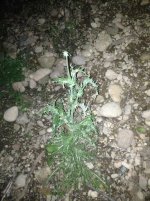
Okay, who has ideas of how to address these buggers? Other than scorched earth policy (which might have to be considered), is there something to control these things? I was contemplating this as I watched the remnants of my burn pile tonight so I apologize for the night shot of my latest nemesis.

IMG_3645.jpg
 
/ Thistle epidemic... how to handle? #2  
Although it may not be a help Mate, my horses love to eat thistles! Right down to the ground and it's not because they're hungry. It's some sort of wierd 'treat' for them.

And, no, you can't send your thistles down to me. Tassie Quarantine would stop them at the port of entry. (Sorry)
 
/ Thistle epidemic... how to handle?
  • Thread Starter
#3  
Although it may not be a help Mate, my horses love to eat thistles! Right down to the ground and it's not because they're hungry. It's some sort of wierd 'treat' for them.

And, no, you can't send your thistles down to me. Tassie Quarantine would stop them at the port of entry. (Sorry)
Now I wouldn't wish these on you or any other friendly... but if I could send them a long ways and never see them again, I would do it. :D
Horse is out of the question but it might call for a rental goat or two. Now if they eat the thistles, do the seeds just get replanted via their digestive system?
 
/ Thistle epidemic... how to handle? #4  
I can't tell if that is a Canada thistle but if it is, there is not much you can do other than herbicides given your hillside. Those spread by seed and lateral root systems. Both Blackberries and Canada Thistle can be treated with Crossbow if you go that route. It does not kill grass.
 
/ Thistle epidemic... how to handle? #5  
Spray, round up works great on them. For us in zone 5 i spray spring and then later summer. I just spot spray them.
 
/ Thistle epidemic... how to handle? #6  
I've never had an outbreak as large as yours. I only get a few thistles throughput the year. The only way that I can get rid of an individual thistle is to get a shovel and pull the entire root system. If I don't get the roots, the thistle comes back. Since you have so many, this would be labor intensive. Best wishes.
 
/ Thistle epidemic... how to handle? #7  
There are several chemicals that could work on the thistles and not hurt the grass. Crossbow is just one. I would check with your local Extension agent, he would know best for your area and conditions. Roundup would work, but kills most everything else too. And don't expect one treatment to solve the problem, especially with the blackberry, you are looking at 2+ years of treating, and since thistles are typically biannual, the tall ones you are seeing now are the mature plants from last year, you just didn't notice them, and since they reproduce from seeds, think about how many are just waiting. (cheerful thought :) )
 
/ Thistle epidemic... how to handle? #8  
Only an acre of thistle? Consider yourself blessed.

I've spent 3 years working to clear 88 acres of thistle. It was no help that several neighbors made no effort at all - until I turned them in to the Department of Agriculture. Thistle is considered a noxious weed and land-owners are required, at least here, to keep it eradicated.

My primary method of control is "one plant at a time." Rather than pulling the root, because you can never know if you got it all, I cut the plant close to the ground and spray the stub with RoundUp. Yes, this is LABOR INTENSIVE - but effective. Only last year did I spray the entire pastures with GrazonNext as an additional control.

I have removed THOUSANDS of thistle. Although I will probably always have this as a fun spring activity, it is much easier now. I found 3 plants about a month ago but the place is essentially a thistle free zone - for now. NEVER NEVER NEVER let these plants go to seed. If you don't have time to take down the plant - pull off the heads and go back later.

You can also take the lazy way out and just mow the crxp out of them - BEFORE they turn to seed.
 
/ Thistle epidemic... how to handle? #9  
We have thistles here, I pull them or spray them.
 
/ Thistle epidemic... how to handle? #10  
/ Thistle epidemic... how to handle? #11  
If you hit a thistle in bloom with a wiper you are going to create a thistle theme park. Each head can drop over 10,000 seeds.
 
/ Thistle epidemic... how to handle? #12  
I need to turn my neighbor in, he is upwind from our property and each year, he has large patches of Canadian thistle bloom and spread over our property. I mow and spot spray.
 
/ Thistle epidemic... how to handle? #13  
If you hit a thistle in bloom with a wiper you are going to create a thistle theme park. Each head can drop over 10,000 seeds.

NOT applying herbicide and permitting thistle seed to blow in the wind would be better?

At any rate, wipe the thistles two times, or as necessary, before they seed.
 
Last edited:
/ Thistle epidemic... how to handle? #14  
Roundup, maybe maybe not, 2,4-D is a better choice IF you use crop oil or a "sticker" with it. Crossbow is even better but still use a "sticker" like "Preference", "Cimarron" is your best choice. It's very expensive but you use very little. This coming from practicial experience of using the previous products.
 
/ Thistle epidemic... how to handle? #15  
Mow the thistles before they go to seed. For now they are just doing the job they were created for; covering barren soil, protecting it from the hot sun, and erosive rain, and wind. The condition is one of a temporary nature, and the thistles will go away in large part once the grasses take over. Weeds are the Guardians of the Soil.

Weeds, Guardians of the Soil
Weeds
Guardians of the Soil

by

Joseph A. Cocannouer

Contents

1. Weeds and Youth
2. Weeds and Weeds
3. Weeds and the Soil World
4. The Fertility Chain and Soil Balance
5. Plant Roots
6. Weeds as Mother Crops
7. Weeds in the Rotation
8. Weeds and Pasture Improvement
9. Weeds in the Compost
10. Weeds as Food
11. Weeds and Wildlife
12. Sponge Structure versus Dams
13. Here and Yon
14. Nature's Togetherness Law


Publisher's Preface

SO FAR as we are able to determine this is the first book to be written in praise of weeds. Many are the books which treat weeds as pests, and each season sees an advance in anti-weed campaigns and techniques; a host of chemicals, mechanical eradicators and even flame throwers are making life increasingly hard for nature's greatest and most widely dispersed group of plants -- the plants which stand condemned because they are deemed "out-of-place."

That the ordinary garden and roadside weed might have a vital function in the scheme of things and be of inestimable value to mankind seems not to have occurred to most agriculturists, whether in the classroom, the departments of agriculture or on the farm.

The author of this book has been teaching conservation and biology for close to fifty years. But he has been a student as well and a keen field man who has specialized in the ways of weeds, not only in his home state of Oklahoma where he has spent much time learning from the Indians, but in other parts of the world -- in Europe, India and the Philippines, particularly.

According to Joseph Cocannouer, weeds -- the common ragweeds, pigweeds, pusleys and nettles, to mention four -- perform the following valuable services among others:

1. They bring minerals, especially those which have been depleted, up from the subsoil to the topsoil and make them available to crops. This is particularly important with regard to trace elements.

2.When used in crop rotation they break up hardpans and allow subsequent crop roots to feed deeply.

3. They fiberize and condition the soil and provide a good environment for the minute but important animal and plant .life that make any soil productive.

4. They are good indicators of soil condition, both as to variety of weed present and to condition of the individual plant. Certain weeds appear when certain deficiencies occur.

5. Weeds are deep divers and feeders and through soil capillarity they enable the less hardy, surface feeding crops to withstand drought better than the crop alone could.

6. As companion crops they enable our domesticated plants to get their roots to otherwise unavailable food.

7. Weeds store up minerals and nutrients that would be washed, blown or leached away from bare ground and keep them readily available.

8. Weeds make good eating -- for man as well as for livestock. The publisher can vouch for the superiority of lamb's quarter -- a favorite of the author -- over any other domestic form of spinach or cooked greens.

No, Professor Cocannouer does not believe that weeds should be allowed to go rampant and take over our farms and gardens. The function of this book, a pioneering work, is to demonstrate how the controlled use of weeds can be sound ccology, good conservation and a boon to the average farmer or gardener.

D. A. G.
 
/ Thistle epidemic... how to handle? #16  
/ Thistle epidemic... how to handle? #17  
Thistle is illegal in Iowa. We had several acres infested with it. Since it didn't bother us we didn't pay much attention to it. Well until "weed police" showed up and educated us about legality of having them. He said it will take about three years of work to get them under control. We used pull and burn them method. They are easy to pull after rain when the soil is soft. I think if all put together the pile would be double garage size the first season. Once the ground cover such as grass takes over the thistle more or less disappears. We still have some that I pull and burn. Mowing work only till early summer. Once they bloom and start developing seed mowing them makes the matter worse.
 
/ Thistle epidemic... how to handle? #18  
"The condition is one of a temporary nature, and the thistles will go away in large part once the grasses take over."

Good luck with that plan - LOL.
 
/ Thistle epidemic... how to handle? #20  
Weed Wiper dispensing Roundup/Glycophosphate or a specialty version of same, might be a good bet. No wind drift of herbicide with a Weed Wiper properly used.

http://www.caes.uga.edu/commodities/spray/pubs/documents/Monsantohowtobuildpipewickapp.pdf

Garden Center Roundup is about 18% Glycophosphate.

Tractor Supply Company sells house brand 41% Glycophosphate relatively cheaply.

There is a pre-made one of those for about $110. Also Smucker makes one

http://www.agrisupply.com/rope-wick-string-wing/p/71934/

http://www.smuckermfg.net/Pages/WeedWipers.aspx
 
 
Top