Speeding up hydraulics?

   / Speeding up hydraulics? #1  

fordtrucknut

New member
Joined
May 17, 2020
Messages
11
Tractor
LS xr3037
I've got an xr3037, the loader hydraulics are extremely slow, always have been since new, is there a way to up the speed on these?
 
   / Speeding up hydraulics? #2  
Running higher RPM is only way to speed up loader. I have the same tractor
 
   / Speeding up hydraulics? #4  
I've got an xr3037, the loader hydraulics are extremely slow, always have been since new, is there a way to up the speed on these?

There is a way thats has been discussed on I think on this web site on adjusting the relief valve to increase the pressure from the pump, this could be your problem from new a faulty adjusted relief valve or the valve it self. Sorry i cant give you the procedure.
 
   / Speeding up hydraulics? #5  
   / Speeding up hydraulics? #6  
Are you running the tractor at sufficient RPMs?
 
   / Speeding up hydraulics? #7  
I got 3 years left on my warranty, when that is up, I might be going with that pump.
Same here. I love my LS but they can definitely speed up the hydraulics a bit.
 
   / Speeding up hydraulics?
  • Thread Starter
#8  
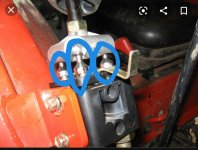
Was messing around with the controls to see if I could get some more speed. Found these in the controller had backed out from the cables inside the housing. Tightened them back down and the hydraulics are considerably quicker then before. These tractors are still a lot slower than the Kubotas and Mahindras I've ran in the past.

*** note this is just a picture off the web not of my LS, but it is the same control handle as the LS, the parts circles are what had backed out. 20200605_100226.jpeg
 
   / Speeding up hydraulics? #9  
There is a way thats has been discussed on I think on this web site on adjusting the relief valve to increase the pressure from the pump, this could be your problem from new a faulty adjusted relief valve or the valve it self. Sorry i cant give you the procedure.

Making changes to the relief valve will in NO way speed up the hydraulics. The hydraulic pump in your open center system on your tractor DOES NOT put out pressure. Pumps put out flow. Pressure rises when the flow meets an obstruction. In an open center system the pump has a continuous flow thru the control valves and back to the "tank". The pressure in the system is usually less than 100 PSI and that is because of the resistance of the piping and control valves that any pressure is formed. When you throw for instance the control valve to direct the fluid flow to look into the hydraulic cylinder/cylinders of a FEL for instance then and only then does the pressure in the system rise. It rises because the cylinders are an obstruction to the flow. The pressure continues to rise until either the hydraulic cylinder begins to move or the relief valve opens. Again the relief valve has nothing to do with the flow rate that your pump puts out or the rate in which the hydraulic cylinders fill with the fluid on one end and release fluid out the other side of the cylinder.

What DOES affect your hydraulic speed is the flow rate of the pump and the size of the displacement of the cylinders. The setting of the relief valve has NOTHING to do with this. The setting of the relief valve ONLY set the point that the fluid will be diverted back to the tank when that preset pressure is exceeded.

If you want your hydraulics to work faster you must have a pump with a higher flow rate (new pump) or cylinders with smaller dimensions so that the pressure will build quicker in the cylinders and will move them faster. If you have cylinders with smaller displacements then you will have less lift . You trade speed for lift ability. You could just as well as asked, "how do I increase the lift ability of my FEL"? The essayist way is increase the size of the cylinders. What are the downsides? Now the FEL will be much slower to lift. Of course the geometry of the FEL frame also figures into the lift ability

Key takeaways of this informative rant:

Pumps DO NOT make pressure. Period.
There are trade off's of design. YOU NEVER GET SOMETHING FOR NOTHING. Period.
If you want to have faster hydraulics, you trade off lift ability for a given pump flow rate.
Test a tractor before you buy it. If you don't like the speed, don't buy it. If you don't like the lift ability, don't buy it.
There is no good, cheap and easy way to change these things.
 
   / Speeding up hydraulics? #10  
The next question some of you might have is "why do people adjust their relief valves"? Because they want to increase the total weight that their FEL will lift. Note, this has nothing to do with the speed that their FEL will lift. The speed is still governed by the flow rate of their pump and the displacement of the cylinders.

One poster managed to increase his speed of lift by adjusting (taking out the slop) of the remote control cables to valve interface. If he could not fully open the control valve, then this would indeed "increase the speed" as now the flow rate going into the cylinders would be increased as the valve is now fully opened. Also don't forget that the fluid going into the cap end of the cylinder to lift must also have the fluid going OUT of the rod end of the cylinder back to tank for the cylinder to move up and lift. Likewise when you reverse that flow path to apply flow to the rod end of the cylinder and open the valve on the cap end to return its fluid to the tank. The cylinders on your FEL are double acting.
 
   / Speeding up hydraulics? #11  
In any discussion like this, it would be wise to always "think like an engineer". Engineers work towards a set of goals. Whatever those goals are they are constrained by many factors. One of the major constraints is the marketing department. Cost control has to be foremost on their minds as well as making a product that is sturdy and long lasting and constrained by competition and marketing forces. For instance they may have had as a constraint that their FEL "must lift more than brand A" in this size class. How do they achieve that? By putting on larger cylinders and designing the geometry of the FEL. What are the downsides (because ALL actions have upsides and downsides). The downside is the slow lift speed. How would we solve that? Put on a pump with more flow rate. What are the downsides? More cost, more heat generated for the "tank" to dissipate and more drag on the engine, and possible larger flow lines needed too. End result, too cost prohibitive in this model and model would no longer be competitive in market segment. So the committee decided to live with the slow lift speed because the goal of a greater lift ability over brand A was deemed more important to sales in this segment.

Every action we take as engineers or just consumers have upsides and downsides. There is no getting around it.
 
   / Speeding up hydraulics? #12  
In any discussion like this, it would be wise to always "think like an engineer". Engineers work towards a set of goals. Whatever those goals are they are constrained by many factors. One of the major constraints is the marketing department. Cost control has to be foremost on their minds as well as making a product that is sturdy and long lasting and constrained by competition and marketing forces. For instance they may have had as a constraint that their FEL "must lift more than brand A" in this size class. How do they achieve that? By putting on larger cylinders and designing the geometry of the FEL. What are the downsides (because ALL actions have upsides and downsides). The downside is the slow lift speed. How would we solve that? Put on a pump with more flow rate. What are the downsides? More cost, more heat generated for the "tank" to dissipate and more drag on the engine, and possible larger flow lines needed too. End result, too cost prohibitive in this model and model would no longer be competitive in market segment. So the committee decided to live with the slow lift speed because the goal of a greater lift ability over brand A was deemed more important to sales in this segment.

Every action we take as engineers or just consumers have upsides and downsides. There is no getting around it.

I believe another factor here is the engineers figured out they could use the same power plant across several different model tractors. The engine/hydraulic pump/alternator... they use in the XG3135 is the same one used in the XR4155. The only difference is computer software and the XR4100 series has a larger air cleaner. This makes it much easier for them to stock parts but I think it forced them to make some compromises on the hydraulic system.
 
   / Speeding up hydraulics? #14  
Power beyond is part of the system fluid flow path in an open center system. Lets start with Tank. Tank, Suction filter, Pump, FEL control valve at idle (centered), out the Power beyond port, to First SCV (rear remote) to Second SCV (if equipped, if there are no Selective Control Valves at all then it will go to 3 Point Valve) then to 3 Point control valve and then to Tank to start the flow process all over again.

The pressure in the system will be somewhere around 100 PSI because of the restrictions encountered along the way of the valves and piping/hoses that the fluid encounters. Ideally it would be 0 PSI, but this is not possible as each restriction retards the flow slightly. Also the temprature of the fluid is raised by flowing along the path, and each of the components also show a temprature rise as time goes on from the restrictive effect.

Now lets pull the joystick fully back from center to apply fluid to the cap ends of the two FEL lift cylinders. Fluid flows from Tank, Suction filter, Pump, to Input of FEL valve, to the port hooked to the two cap ends of the lift cylinders. Pressure builds. Lets say the lift is chained to an immovable object or say the bucket if full of gold bullion and weighs 4 tons :) Now the fluid pressure builds to the set point of the relief valve. Lets say that point is 2400 pounds. Now the relief valve spring is compressed and the fluid path is diverted to Tank. Engine is under some strain, you can hear the fluid escaping over the relief valve, the fluid temprature is rising fast now, due to fighting the spring pressure and opening the relief valve, the load is still not moving.

You get out and unload enough of the gold bars so that the load is under the point of the relieve valve opening. You climb back on and yank the stick back fully. Pressure builds in the cap end of the lift cylinders, the load starts to move, The rod end of the cylinders starts pushing fluid out back to the control valve on the rod end ports, Since the control valve is yanked fully back, that escaping fluid in the rod end of the cylinders continues to flow back to the control valve, which now had configured the porting so that this fluid is allowed to escape directly to the Tank. As the cap end continues to fill with fluid, and as the piston continues to move the load is lifted. Now the cap end has fully filled with fluid, and the piston has ended its stroke toward the rod end. BUT you are a MORON and continue to pull back on the control valve even though you have lifted to full height. Now the pressure on the cap end continues to rise until the relief pressure is reached and the relief valve opens, the engine is under some strain, the sound of the fluid escaping over the relief valve is heard, the fluid heats up fast etc.

Finally it occurs to you that perhaps you should center the FEL control valve, Now the relief valve closes, the engine is under less strain, and the fluid flow from the pump is now directed to the power beyond port and thru the SCV valves (if equipped) and thru the 3PT valve and back to tank. The pressure in the system is now about 100 PSI, but the pressure in the now closed off cap end port feeding the cap ends of the lift cylinders is still enough to over come the load weight. The load cannot fall because the piston cannot move towards the cap end because the cap end back thru the hoses and then toward the cap end port on the FEL valve is closed off. Now the hose breaks. and the weight of your gold comes crashing down. Hopefully you weren't under the bucket. :)

*Note, these are generalizations, and some systems may have some variances in how they work, especially older cobbled up homemade installations.

Things we have learned:

1: pumps don't make pressure, they make flow, obstructions to that flow will cause pressure rises.
2: Your tractor was carefully engineered to operate under a certain set of parameters, as to lift speed, height, and load ability.
3: You can make changes in how your tractor works, and act as the "final engineer", but you will have to give up something, to make positive changes. Often that something is money.
4: TANSTAAFL "There Ain't No Such Thing As A Free Lunch"
 
   / Speeding up hydraulics? #15  
I am having a similar problem with my new 4145. I took one of the hydraulic lines off of the bucket and looked at the internal diameter of the hose. Right at the fitting, there is an obstruction or necking down of the hose diameter to 5/32 (on 1/4" hose). That, I would think, could reduce the flow of the fluid by about 50%. What are your thoughts on that, James? Could larger hoses help the problem?
 
   / Speeding up hydraulics? #16  
Pumps are designed for a maximum head pressure. Without the pump there will be no head pressure, no matter the restriction presented in The system and no flow of course. But the pump is an integral part of what pressure the system can maintain.
 
   / Speeding up hydraulics? #17  
The restriction in a system controls the differential between the low side and high side, along with the volume being pumped. Pressure can also be limited by a restriction in the low side of a pump.
 
   / Speeding up hydraulics? #18  
If the head pressure is 0 psi and the suction pressure is 0 psi the pump ain't doin ****
 
   / Speeding up hydraulics? #19  
Besides waisting a little energy
 
   / Speeding up hydraulics? #20  
I am having a similar problem with my new 4145. I took one of the hydraulic lines off of the bucket and looked at the internal diameter of the hose. Right at the fitting, there is an obstruction or necking down of the hose diameter to 5/32 (on 1/4" hose). That, I would think, could reduce the flow of the fluid by about 50%. What are your thoughts on that, James? Could larger hoses help the problem?

Nothing is going to help the problem but buying and fitting a pump with a higher flow rate or reducing the size of the lift cylinders in which case your maximum lift ability will be reduced.

The slow lift rate that some of you are complaining about is NOT a problem. It is a design feature. This is the way the system was designed by the engineering department. Another way of looking at this is to say " I would like a tractor that lifted less weight" The amount of weight that your FEL will lift to full height is designed in to the machine by engineering. If you want a FEL that will lift less, you are going to need to change out your lift cylinders to ones with less cross sectional area of the piston, or reduce the setting of the relief valve. If you keep the original pump flow rate with these new smaller cylinders you will find that not only does the FEL lift less weight, but ALSO now those smaller cylinders fill with fluid faster making the lift speed increase. So there now, we have achieved your goal of a faster lift speed.

What started me off on these explanations was a poster saying that "somehow", he didn't know how, you could adjust the relief valve to increase lift speed. And I refuted that premise. As the only way I know of to increase lift speed is to increase the flow rate of the pump, or decrease the size of the lift cylinders so they fully extend quicker as the volume of fluid need to fill them will be less than the larger ones you now have installed. It is as simple as that.
 

Tractor & Equipment Auctions

2020 CATERPILLAR D6 LGP HIGH TRACK CRAWLER DOZER (A60429)
2020 CATERPILLAR...
2025 CFG Industrial QK18R Mini Excavator (A59228)
2025 CFG...
78" ROCK BUCKET (A52706)
78" ROCK BUCKET...
2015 AMERITRAIL MANIFOLD TRAILER (A58214)
2015 AMERITRAIL...
2000 Sterling L9513 Winch Truck (A56438)
2000 Sterling...
2009 Ford Econoline Wagon Van, 101,671 Miles (A56438)
2009 Ford...
 
Top