IPA and Blonde

/ IPA and Blonde #1  

RobertN

Super Member
Joined
Apr 6, 2000
Messages
8,898
Location
Shingle Springs California
Tractor
New Holland TC40D
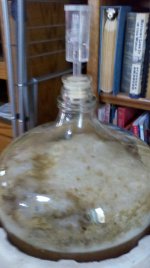
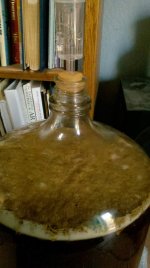
Brewed for first time in three years. Friend got a pound of Citra hops, so we put them to use. Did a 10 gallon all grain IPA, and a 10 gallon extract blonde ale. we split the two batches. Another buddy, did his own 10 gallon extract IPA.

2013-01-13_12-01-28_273.jpg2013-01-13_12-02-29_899.jpg
 
/ IPA and Blonde #3  
Yum:licking:

When is the tasting? :drink:
 
/ IPA and Blonde #4  
It's all Greek to me, but I bet it tastes good. :laughing: It seems like a microbrew IPA is usually a good choice.
 
/ IPA and Blonde #5  
The krausen fell on the IPA already. Time to move to secondary...

That doesn't sound good.
What does it mean?
Who is krausen and why did he fall on your beer?
I would make him stay outside from now on.
 
/ IPA and Blonde #6  
That doesn't sound good.
What does it mean?
Who is krausen and why did he fall on your beer?
I would make him stay outside from now on.

He didn't say "Loose the Kraken!" You can sleep well. :laughing:
 
/ IPA and Blonde
  • Thread Starter
#7  
During primary fermentation, a foamy layer forms on top of the wort(unfinished beer). When that foamy layer(krausen) falls or dissolves, the main part of the fermentation process is done. It is mostly yeast, and proteins from the wort.
Here is a basic explanation with a couple pictures.
How to Brew - By John Palmer - Primary or Attenuative Phase

That doesn't sound good.
What does it mean?
Who is krausen and why did he fall on your beer?
I would make him stay outside from now on.
 
/ IPA and Blonde #8  
During primary fermentation, a foamy layer forms on top of the wort(unfinished beer). When that foamy layer(krausen) falls or dissolves, the main part of the fermentation process is done. It is mostly yeast, and proteins from the wort.
Here is a basic explanation with a couple pictures.
How to Brew - By John Palmer - Primary or Attenuative Phase

Thanks for that...very informative, although I will need a glossary to fully understand it. I have no experience with brewing but I have had some that was very good. It was a long time ago and it was stored or brewed in old glass quart (beer) bottles with stoppers when I poured it. You wanted to be careful to avoid the stuff in the bottom of the bottle, so leaving an inch or of beer in the bottom was smart.....sad.. but smart.
After glancing at few chapters, brewing seems more complex than I had imagined. Sounds like it would be hard to get consistancy and it could pose a health risk.
Are you going to fement it twice?
Why did you stop for three years?
How long before you are enjoying a chilled glass?
 
/ IPA and Blonde #9  
Thanks for that...very informative, although I will need a glossary to fully understand it. I have no experience with brewing but I have had some that was very good. It was a long time ago and it was stored or brewed in old glass quart (beer) bottles with stoppers when I poured it. You wanted to be careful to avoid the stuff in the bottom of the bottle, so leaving an inch or of beer in the bottom was smart.....sad.. but smart.
After glancing at few chapters, brewing seems more complex than I had imagined. Sounds like it would be hard to get consistancy and it could pose a health risk.
Are you going to fement it twice?
Why did you stop for three years?
How long before you are enjoying a chilled glass?

I don't know why home brew would be a health risk other than drinking the yeast in the bottle which can lead to rather explosive events. :shocked::laughing::laughing::laughing:

I just ferment in a five gallon plastic bucket for 3-4 weeks. Most of the fermentation is done within 5-7 days though. After 3-4 weeks I bottle the beer and one week later I drink. After one week, there should the beer should be carbonated. Basically 4-5 weeks from brewing to glass.

Funny thing is that I saw a note on a local mailing list this morning that our community college is having beer making classes. :drink:

Making beer is not hard but you can get a bit worried about contamination which is really easy to avoid. Palmer's book is excellent but one really only needs to read a few chapters to start. His book gets real helpful as one brews more and more. There are quite a few videos on YouTube about brewing. There is on Canadian brewing in his basement with quite a few videos. After watching what this guy was doing I figured if he could to it without making bad beer so could I.

Later,
Dan
 
/ IPA and Blonde
  • Thread Starter
#10  
Beer can range from easy to very involved. Beginning to intermediate brewing on the stovetop is fairly simple. I've found the ingredients are pretty consistant. The big variable for most home brewers is temperature; that can affect batch to batch convsistancy. Some folks put a special thermostat on refridgerators to get the specific temps they want.

Health risk is weight gain...

Both of these beers will go in a secondary fermentor tomorrow eve.

I brew a few times, get busy, brew and wonder why I took so long between batches, get busy/distracted...

probably another 4-6 weeks to the glass. Will age it in kegs(I put the beer in 5 gallon soda "Corny" or "Cornielius"(sp?) kegs)

After glancing at few chapters, brewing seems more complex than I had imagined. Sounds like it would be hard to get consistancy and it could pose a health risk.
Are you going to fement it twice?
Why did you stop for three years?
How long before you are enjoying a chilled glass?
 
/ IPA and Blonde #11  
I don't know why home brew would be a health risk
What is this contamination you speak of?
Seems to me that fermintation is an incubator. The wrong bacteria should enter the mix and things could get toxic.
I really don't know. I did notice that one of the chapters mention fish bladders to mellow the taste. I imediatly thought of botulism.
I have no idea why. Perhaps I missed the sterilization process?
 
/ IPA and Blonde
  • Thread Starter
#12  
Never heard of a "bad" batch that was that bad. Usually, they just foam, or taste bad. I had one that was funky. Tasted great, but started foaming as soon as popped the cap. Was something in the fermentation.

What is this contamination you speak of?
Seems to me that fermintation is an incubator. The wrong bacteria should enter the mix and things could get toxic.
I really don't know. I did notice that one of the chapters mention fish bladders to mellow the taste. I imediatly thought of botulism.
I have no idea why. Perhaps I missed the sterilization process?
 
/ IPA and Blonde #13  
Never heard of a "bad" batch that was that bad. Usually, they just foam, or taste bad. I had one that was funky. Tasted great, but started foaming as soon as popped the cap. Was something in the fermentation.
When things do go awry, is it usually apparent why? How much are you throwing away (in terms of cash) when a batch goes bad? What is the optimum temperature for this fermentation process?
What are the start up costs?
You mentioned 10 gallons, that is 80 pints.....are you going to wind up with 80 pints? (In time for the superbowl, hopefully the 9ers will win this weekend eh? That's my pick anyway).
 
/ IPA and Blonde
  • Thread Starter
#14  
I have only had one batch go bad years ago. As I mentioned, it tasted good, but foamed after opening the bottle. Thru brew books, tracked it to the fermenter did not get cleaned well enough. The other folks I know of that had sour batches, were either foamy, or just tasted/smelled bad.

My batch years back was 5 gallons; at the time is was about $20

The optimum temperature is highly variable; it depends on the strain of yeast, the beer style and type. Most ales like around 65-70F. That is one reason they are popular; pretty much anyone can ferment at that temperature without fancy equipment. Lagers and Pilsners like fermentation in much colder; that is Lagering, to hold the beer at a cold temp.

For a beginner, cooking on the stovetop(that is how I started, as do most others), you would want a 20qt stock pot. Most people have one, and they are inexpensive if not.

- large (20qt) stock pot
- 2-1/2 cases 12oz bottles
- ingredients for 5 gallon batch
- Fermenting and bottling "kit"(fermenting bucket, lid, airlock, siphon hoses, bottle capper)

Ingredients for a 5 gallon batch run $25-35 nowdays. A fermenting and bottling "kit" can be put together from pieces or a kit, for $50-75 from most brew stores.

What I recommend, is hooking up with someone who brews, and sharing. This last weekend, my buddy had not brewed before. I have everything to brew 20 gallons. We split the cost, brewed 20 gallons. He just had to round up a bunch of bottles; free from friends etc. So his investment to try this out, was just the cost of ingredients($54 dollars each in this case). So for no investment, in this case he gets 5 cases of beer for $54, that he made himself.

The setup I use now is much fancier and expensive than stovetop, but I still use some of my original equipment; the system evolved over time.
When things do go awry, is it usually apparent why? How much are you throwing away (in terms of cash) when a batch goes bad? What is the optimum temperature for this fermentation process?
What are the start up costs?
You mentioned 10 gallons, that is 80 pints.....are you going to wind up with 80 pints? (In time for the superbowl, hopefully the 9ers will win this weekend eh? That's my pick anyway).
 
/ IPA and Blonde #15  
When things do go awry, is it usually apparent why? How much are you throwing away (in terms of cash) when a batch goes bad? What is the optimum temperature for this fermentation process?
What are the start up costs?
You mentioned 10 gallons, that is 80 pints.....are you going to wind up with 80 pints? (In time for the superbowl, hopefully the 9ers will win this weekend eh? That's my pick anyway).

Keeping things sanitized is important so a batch does not get ruined but it is really easy. There are food safe sanitizers sold in the brew stores that are easy to use. I keep some of my brewing equipment submerged in a container of sanitizer. We now keep a spray bottle of the sanitizer for everyday use in the kitchen. When brewing you just spray the equipment, like the fermenting bucket and you are good to go.

My biggest expense in starting up brewing was bottles. :shocked: I ended up buying 22 ounce bottles because they take up less space and you don't have to fill as many compared to a 12 ounce bottles. I ended up buying a boxed kit to make sure that I had everything I needed which included a five gallon glass carboy that I don't think I will ever use. That kit was $75-90 I think. I am brewing from kits that are somewhere around $30-50 depending on the beer style. These brew five gallons. Prices have gone up because of the increase in grain prices.

RobertN has a good list of what one needs to start. I would add a bottle filling bucket and bottle filling tube. The tube makes it easier to fill the bottles.

If you can't find another home brew, well, even if you can, watch home brew video's on YouTube.

Later,
Dan
 
/ IPA and Blonde
  • Thread Starter
#16  
I guess I would relate making beer on the stovetop to making a good soup. Boil a couple gallons of water, with additions of onion, garlic, potatoes etc over a period of an hour. Only difference is, beer is allowed to cool, is placed in a container, and yeast is added.

It really is very simple in the beginning to intermediate stages.

Some of the kits can go to the $50 range. I seldom use kits though; mostly recipes from Pappazian or some I have made up. Just like any other cookbook recipes, there are tons of beer recipes out there.
 
/ IPA and Blonde #17  
For what it's worth the Mr. Beer kits actually make a pretty good tasting brew...you can buy them at Wal-Mart, Bed Bath and Beyond, or order on line at Mr. Beer . com...I've been making wine for years and the process between the two is very similar...Mr. Beer kits are a good way to get introduced to the art of handcrafting beer...and, you end up with with what you put in, ie...no artificial goop, just the grain, hops, (maybe sugar) and water...about two gallons of finished product, fresh and very tasty ! I will eventually round up the equipment to brew beer totally from scratch, like I currently brew wine...would love to be able to distill, however with the current laws I'm not willing to risk a 10 federal felony over a tumbler of distilled spirits !!

Just my :2cents:

Rich
 
/ IPA and Blonde #18  
Sounds like the biggest expense would be the extra refrigerator to store the beer in after it is brewed. I'm thinking it needs refrigeration....
I spend 10$ a bottle for my favorite beer (I think it's 750ml). I don't mind spending money on it if it taste good and I enjoy it.
It seems that maintaining the proper temerature here is only feasible during the winter months and even then the range might vary too much as we have seen 85 degree days this January already (very unusual).
Since people have been making beer or somthing similar for about 5 thousand years....how hard can it be?...and now that I know I can't poison myself.....I just might give it a shot, maybe I'll become the next Jim koch...without the start up capitol.
I have often thought about brewing beer but never really did enough research. I'm the type to learn everything, work out every last detail..... before I start.
I memorized the budweiser can not long after I was old enough to drink legally, so I know about the "exculsive beechwood aging process...." :D "produces a taste, a smoothness, and a drinkability you will find in no other beer at any price" :rolleyes:

I also remember that Anhauser Busch used rice to make the beer.
Ever use rice in the wort?
 
/ IPA and Blonde
  • Thread Starter
#19  
There are tricks to keeping the unfinished beer warm or cool as necessary, without a lot of expense. For instance, if it is cool, wrap a sleeping bag around it. If it is hot, place it in a tub of water a couple inches deep, put a tshirt over it, and let the tshirt bottom go in the water(evap cooling). Not exact, but cheaper than a modified fridge or freezer...

Budweiser is a rice beer; rice and it's sugars are cheaper than barley. Coors is a corn beer; corn and its sugars are cheaper than barley...

Have to be careful using rice or corn sugar; it can lend a "cidery" flavor.
 
/ IPA and Blonde #20  
At what point do you add the hops?
 

Marketplace Items

2017 CAT TL1055 (A60462)
2017 CAT TL1055...
Clark CGP40 Forklift (A61166)
Clark CGP40...
2023 Titan Trailers 48ft. T/A Walking Floor Trailer (A61568)
2023 Titan...
New/Unused 7ft Fork Extension (A61166)
New/Unused 7ft...
2013 Jeep Grand Cherokee AWD SUV (A61569)
2013 Jeep Grand...
New/ Unused Plate Compactor (A61166)
New/ Unused Plate...
 
Top