Hydraulic winch advice

   / Hydraulic winch advice #1  

PreacherM

Silver Member
Joined
Mar 19, 2022
Messages
146
Location
NW Ohio
Tractor
Branson 2610h
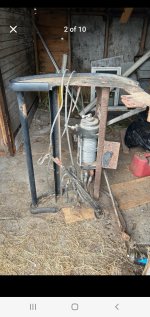
I found a hydraulic winch locally that I can purchase for cheap. Not sure on brand, but the motor is White made in US.

I'm thinking about building a log skidding winch. My question us how fast are these winches? Assuming it's a typical 9000 lb winch and my tractor puts out 4.3 gpm flow.

I also have access to a 12000lb electric winch, would this be a better option? I would use a deep cycle battery out of my boat. Would this be a better option than the hydraulic winch?

I can't justify 3-5k for a real logging winch. I'm well aware of those options.
 

Attachments

  • Screenshot_20251224-163517_Facebook.jpg
    Screenshot_20251224-163517_Facebook.jpg
    1.4 MB · Views: 36
   / Hydraulic winch advice #2  
Electric wires don't leak or cripple your tractor if you tear one up.
 
   / Hydraulic winch advice
  • Thread Starter
#3  
Here's a pic of the hydraulic motor. Does the cc293.07 mean that's the displacement? If so there's no way this will work. That's 17.9cubic inch. With 4.3gpm that would only be like 55rpm BEFORE reduction.
 

Attachments

  • Screenshot_20251224-173120_Facebook.jpg
    Screenshot_20251224-173120_Facebook.jpg
    832.5 KB · Views: 18
   / Hydraulic winch advice #4  
It will work but it would be very slow. There is usually a planetary gearbox involved too albeit, from the pictures, I'm not entirely sure in this model.

Between hydraulic and electric, I would go hydraulic without a doubt, as you can pretty much run it forever without worrying about discharging the battery, overheating the alternator or the motor in the winch.

Keep in mind these smaller tractors have a 30 to 40 Amp alternator, barely enough to charge the battery and power a couple of lights.

I built an hydraulic winch for my tractor shortly after I bought it. It's mounted in the front of the tractor, tied to the loader frame and it's always there, ready to be used.

The main purpose was to be used as a recovery winch as I was working on some very steep hills at the time. Turns out I've used it for everything but an actual recovery. It has pulled trees, canes, rocks, used as a crane with a snatch block on the loader and more. It doesn't have any crazy pulling power at about 7 or 8k lbs if I recall correctly, but it's also much faster than an electric winch.

IMG_20240713_163616_resize.jpg
 
   / Hydraulic winch advice
  • Thread Starter
#5  
Upon searching some more it appears this winch may be an older Mile Marker 10,500lb.
 
   / Hydraulic winch advice #6  
Electric wires don't leak or cripple your tractor if you tear one up.
BUT a electric winch will destroy your battery and alternator if used continuously..... Electric winches are primarily a recovery winch not a continuous working winch..... My 10,000lb winch on my jeep with 900 CCA battery and 100 amp alternator can pull enough amperage from electrical system to draw down system low enough that it causes ECM to go into dead mode (about 8.5 volts) and completely shut down jeep and I have to wait till its natural recovery of battery chemistry is enough to start jeep again..... Anything that is of continual usage needs either PTO or hydraulic because power is generated by a source that can run continuous..... This is where a hydraulic system is far superiors to electric....

Her is what Chat GPT has to say...

**** QUOTE ****

Why are hydraulic winches superior to electric winches?

Hydraulic winches are often considered superior to electric winches in heavy-duty and professional applications, mainly because of how they generate and sustain power. Here’s a clear breakdown of why:

1. Continuous, High Power Output​

  • Hydraulic winches draw power from a hydraulic pump (usually engine-driven).
  • They can run continuously without overheating, even under extreme loads.
  • Electric winches rely on batteries and motors that heat up quickly and require cool-down periods.
Why it matters: Long or repeated pulls (recovery vehicles, industrial lifting, marine use) favor hydraulics.

2. Greater Reliability Under Load​

  • Hydraulic systems maintain consistent torque regardless of load.
  • Electric winches lose efficiency as current draw increases.
Result: Hydraulic winches pull smoothly and predictably, even at maximum capacity.

3. No Battery Drain​

  • Hydraulic winches do not depend on the vehicle’s electrical system.
  • Electric winches can rapidly drain batteries and may require dual batteries or high-output alternators.
Key advantage: Your vehicle remains operational after heavy winching.

4. Better Heat Management​

  • Hydraulic fluid naturally dissipates heat through the system.
  • Electric motors generate concentrated heat that can damage components.
Outcome: Longer service life and fewer thermal failures.

5. Superior for Harsh Environments​

  • Hydraulic winches tolerate:
    • Water immersion
    • Mud and dust
    • Extreme temperatures
  • Electric winches are more vulnerable to moisture and corrosion.

6. Precise Control​

  • Hydraulics allow smooth, fine control of line speed and tension.
  • This is critical in industrial, marine, and recovery operations.

When Electric Winches Are Still Better​

Electric winches aren’t “bad”—they’re just better for different needs:
  • Easier to install
  • Lower upfront cost
  • Ideal for occasional, short pulls
  • Can operate with the engine off

Summary Table​

FeatureHydraulic WinchElectric Winch
Continuous use✅ Excellent❌ Limited
Max pulling power✅ Very high⚠️ Moderate
Heat resistance✅ High❌ Lower
Battery dependency❌ None✅ Required
Installation complexity❌ High✅ Simple

Bottom line:​

Hydraulic winches are superior for heavy, continuous, and professional use, while electric winches are better for light-duty, recreational, or budget-conscious applications.
If you want, I can help compare them for a specific use case (off-road vehicle, boat, tow truck, or industrial setup).
 
Last edited:
   / Hydraulic winch advice #7  
BUT a electric winch will destroy your battery and alternator if used continuously..... Electric winches are primarily a recovery winch not a continuous working winch..... My 10,000lb winch on my jeep with 900 CCA battery and 100 amp alternator can pull enough amperage from electrical system to draw down system low enough that it causes ECM to go into dead mode (about 8.5 volts) and completely shut down jeep and I have to wait till its natural recovery of battery chemistry is enough to start jeep again..... Anything that is of continual usage needs either PTO or hydraulic because power is generated by a source that can run continuous..... This is where a hydraulic system is far superiors to electric....

Her is what Chat GPT has to say...

**** QUOTE ****

Why are hydraulic winches superior to electric winches?

Hydraulic winches are often considered superior to electric winches in heavy-duty and professional applications, mainly because of how they generate and sustain power. Here’s a clear breakdown of why:

1. Continuous, High Power Output​

  • Hydraulic winches draw power from a hydraulic pump (usually engine-driven).
  • They can run continuously without overheating, even under extreme loads.
  • Electric winches rely on batteries and motors that heat up quickly and require cool-down periods.
Why it matters: Long or repeated pulls (recovery vehicles, industrial lifting, marine use) favor hydraulics.

2. Greater Reliability Under Load​

  • Hydraulic systems maintain consistent torque regardless of load.
  • Electric winches lose efficiency as current draw increases.
Result: Hydraulic winches pull smoothly and predictably, even at maximum capacity.

3. No Battery Drain​

  • Hydraulic winches do not depend on the vehicle’s electrical system.
  • Electric winches can rapidly drain batteries and may require dual batteries or high-output alternators.
Key advantage: Your vehicle remains operational after heavy winching.

4. Better Heat Management​

  • Hydraulic fluid naturally dissipates heat through the system.
  • Electric motors generate concentrated heat that can damage components.
Outcome: Longer service life and fewer thermal failures.

5. Superior for Harsh Environments​

  • Hydraulic winches tolerate:
    • Water immersion
    • Mud and dust
    • Extreme temperatures
  • Electric winches are more vulnerable to moisture and corrosion.

6. Precise Control​

  • Hydraulics allow smooth, fine control of line speed and tension.
  • This is critical in industrial, marine, and recovery operations.

When Electric Winches Are Still Better​

Electric winches aren’t “bad”—they’re just better for different needs:
  • Easier to install
  • Lower upfront cost
  • Ideal for occasional, short pulls
  • Can operate with the engine off

Summary Table​

FeatureHydraulic WinchElectric Winch
Continuous use✅ Excellent❌ Limited
Max pulling power✅ Very high⚠️ Moderate
Heat resistance✅ High❌ Lower
Battery dependency❌ None✅ Required
Installation complexity❌ High✅ Simple

Bottom line:​

Hydraulic winches are superior for heavy, continuous, and professional use, while electric winches are better for light-duty, recreational, or budget-conscious applications.
If you want, I can help compare them for a specific use case (off-road vehicle, boat, tow truck, or industrial setup).
OK. Good points. But the hydraulic winch needs the tractor running to work. Electric could be run that way, too. Isolated battery or separate battery ? Also, how will you plumb it? Remote outlets ? On the back or front ? need a diverter for getting it hooked up ? If used continuously will it need a cooler ? I can see both types advantages, but electric gets you running right away if you want to see it it's even practical for your application. Harbor Freight truck hitch mount. Returnable if it doesn't work out.
 
   / Hydraulic winch advice #8  
I'd be careful before connecting any used hydraulic system to a tractor unless you know for certain that it's clean and free of debris. Otherwise, this could get expensive.

Forestry winches for tractors are generally mechanically PTO powered so you don't have this risk. They are also engineered to work on the tractor's 3pt hitch and have a plate at the bottom that is intended to resist the pulling forces.

When you buy a tractor forestry winch, you're getting the entire system that's already engineered and built to do a specific job.

I resisted buying one, but now think I was short sighted not to have bought it long before now. If you have enough use for one, there's an argument to be made that you could be better off putting your money towards a tractor forestry PTO winch instead of trying to fabracadoodle one.
 
   / Hydraulic winch advice #9  
Look up Wallenstein FX66 pto driven skidding winch. Couple of used ones near me.
 
   / Hydraulic winch advice #10  
I wouldn't use an electric winch on a tractor for anything but very occasional use, like recovery, or move an obstacle, etc... they put a tremendous strain on the charging system and battery.
 
   / Hydraulic winch advice #11  
Upon searching some more it appears this winch may be an older Mile Marker 10,500lb.
IIRC, Wasn't Mile Marker the company that used your vehicle's Power Steering Pump for theHydraulic source ?
 
   / Hydraulic winch advice
  • Thread Starter
#13  
I wouldn't use an electric winch on a tractor for anything but very occasional use, like recovery, or move an obstacle, etc... they put a tremendous strain on the charging system and battery.
If I go the electric route I would use a dedicated deep cycle battery.

Planning to look at the winch in person tomorrow.
 
   / Hydraulic winch advice #14  
   / Hydraulic winch advice #15  
I had a Ramsey 3.5 ton electric recovery winch (from a fire truck). It worked well as a recovery winch, but it was SLOW.
They only use full electrical current when fully loaded.

If you're logging for yourself, and you have no other work, so you can hang around to wait a while, such a winch would do you.

Hydraulics can be sped up (a little bit) by increasing the flow rate.

Pay attention to cable speed when making your decision.
 
   / Hydraulic winch advice
  • Thread Starter
#16  
These specs are from the current H10,500. My tractors gpm is 4.3 so it should be slightly faster (at rated 540 PTO speed).
Screenshot_20251225-101053_Google.jpg
 
   / Hydraulic winch advice #17  
The issue I've seen with tractor winches, either hydraulic or electric, is the damage they can cause. In addition to electrical system problems or hydraulic oil contamination, it's easy to bend a FEL frame or break a 3pt hitch if not installed correctly. Drawbar or frame mounts are best.

For dragging heavy loads, the tractor itself is not the best anchor point. Often, the tractor gets dragged rather than the load. For recovery proposes, this is what you want, but if you're trying to drag logs out of the woods, not so much. Sure, you can chain the tractor to a tree but you need to be aware of how the stress is applied to avoid damage. Forestry winches have ground contact points which better anchor the load. They are also PTO powered and cause no electrical or hydraulic system damage.

For regular & repeated work, sometimes it's best to spend the money on the right attachment rather than repairing the damage caused by a rig that's less suited for the job.

Be aware that I'm not an expert, and this is just an opinion based on personal experience, so YMMV.
 
   / Hydraulic winch advice #18  
Back around '95 I mounted my Warn 8274 on the Chevy 1500 4WD company truck and it was handy. On one project we were removing a lot of 500MCM temporary cables that were in conduit running over a roof. It went very well for a while, then it seemed like the winch was losing power. It got to the point the truck dies and had to be jumped to restart it. The drain on the electrical system was too great to run continuously. Never had that happen before or since, but it did run for quite a while before it gave up.
 

Tractor & Equipment Auctions

2021 FORD F-150 STX CREW CAB TRUCK (A59823)
2021 FORD F-150...
2022 FORD F-250 STV CREW CAB TRUCK (A59823)
2022 FORD F-250...
2012 International Prostar (A56438)
2012 International...
WATER TRAILER (A58214)
500 BBL FRAC TANK (A58214)
500 BBL FRAC TANK...
2014 SKYTRAK 10054 TELEHANDLER (A58214)
2014 SKYTRAK 10054...
 
Top