Astronomy

/ Astronomy #1  

Yamaha2112

Silver Member
Joined
Jul 31, 2013
Messages
138
Location
CT
Tractor
Various Diesel
Anyone into telescopes/ solar scopes?
Farms are great for such a hobby.
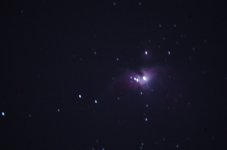
IMG_0398.JPG
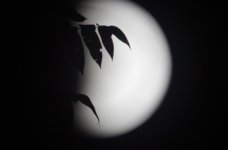
IMG_0226.JPG

1st photo = M42 Orion Nebula - Vixen VMC110L/ T-Mount Pentax K-01 (a tad blurry, but did pull nice color)
2nd = Last lunar eclipse "artsy" style / same equipment

Best I can do with average equipment and amateur knowledge - but very fun.
 
Last edited:
/ Astronomy #2  
Man, that's awesome.

There's really something to be said about being out away from the city lights and getting to see a proper "dark sky". After about 11pm out here the milky way becomes visible with the naked eye, truly make you feel small.

I got a 8" Dobsonian a while back and even for something that size it's amazing what you can see. All sorts of Messier objects and galaxies that I had no clue were so easy to see.

You don't need a fancy scope to see a lot of this stuff, quite a few things are visible even with a decent set of binoculars.
 
/ Astronomy
  • Thread Starter
#3  
Thank you, vvanders. Always wanted to look through a Dobsonian. Unfortunately, my sky isn't terribly dark, but FAR better than a city. I've read these things: Vixen 2.1x42 Super Wide Binocular for astronomy can propel you into another dimension under a very dark sky. Expensive hobby. I can only imagine what Saturn and Jupiter look like through your scope. I LOVE binos as well. Thinking of getting bino viewers for my scope.
 
/ Astronomy #4  
My sky isn't dark enough. I have some pretty good pictures from Nevada and Utah though. Unfortunately they're not on my phone. Probably the darkest sky in the continental US out there.
 
/ Astronomy
  • Thread Starter
#5  
I've heard very dark skies appear VERY close when witnessing it. One of these days I want to vacation to see it 1st hand, 4570Man. No one who has ever seen it that I know found it boring. It's seems like one of those things you must do at least once during a lifetime.
 
Last edited:
/ Astronomy #6  
My sky isn't dark enough. I have some pretty good pictures from Nevada and Utah though. Unfortunately they're not on my phone. Probably the darkest sky in the continental US out there.

I had 40 acres in Wyoming I sold a couple years ago. I lived in a fifth wheel for a little while there and when I turned off the generator at night it was dark if the moon wasn't out. About 11 miles outside of hullet wy and no lights Orc any kind. No neighbors that could be seen. Quite and dark. It took a little getting use to but what a sky at night!!!
 
/ Astronomy #7  
Thank you, vvanders. Always wanted to look through a Dobsonian. Unfortunately, my sky isn't terribly dark, but FAR better than a city. I've read these things: Vixen 2.1x42 Super Wide Binocular for astronomy can propel you into another dimension under a very dark sky. Expensive hobby. I can only imagine what Saturn and Jupiter look like through your scope. I LOVE binos as well. Thinking of getting bino viewers for my scope.

Indeed it's an expensive hobby, I briefly looked into doing astrophotography and seeing what it would take to get setup "proper" was enough to make me stay with what I had(the Dobsonian was a lovely gift from my wife). I've got enough expensive hobbies as it is.

If you can, I highly recommend seeing if you can get to a dark sky on a new moon. You don't even need to get off the beaten path, we're less than a mile from I-5 here, but far away from the metro areas, which is the important bit. There's a bunch of great maps out there like this one that can give you a good idea of what places would be good.

There's also a some great clubs out there and people are always happy to share their scope and experience viewing the night sky.
 
/ Astronomy #9  
I would like to be, but Branson is a very light polluted place. Especially for its size. I live out of town, but if you have low clouds we can read a newspaper at night around here. All of those tourist signs along the strip really light up the place.
 
/ Astronomy #10  
Light pollution is bad but atmospheric pollution makes it even worse.

I remember camping up in Sierra Nevada about 35 years ago ... we were up around 8,000 feet ... the Milky Way was incredible ...
 
/ Astronomy
  • Thread Starter
#12  
It's truly amazing what DSLRs can do nowadays - even awesome video. What camera/ lens? That looks GREAT!

They even make tracking accessories for just cameras now - no telescope needed for really impressive (different types, but still nice) photos: Vixen Polarie Star Tracker astrphotography mount
Cameras sure have come along way since my old Nikon FM series SLR.

Taken with my boys idiot proof camera he got for last Christmas

View attachment 514551

Geez. Just a couple of years ago that mount thingy was about $299 or $250 (can't remember). I should have bought one when I had the chance.
 
/ Astronomy
  • Thread Starter
#14  
I need to research atmospheric pollution because my skies are pretty dark, but can't see some things others are seeing. Interesting stuff.
Light pollution is bad but atmospheric pollution makes it even worse.

I remember camping up in Sierra Nevada about 35 years ago ... we were up around 8,000 feet ... the Milky Way was incredible ...
 
/ Astronomy #15  
It's truly amazing what DSLRs can do nowadays - even awesome video. What camera/ lens? That looks GREAT!

Canon PowerShot SX6 HS review - CNET

My boy doens't believe me that when I was into photography, we had to have a notebook to keep track of shutter and aperature settings, THEN develope the film and THEN compare the picture to the info we had on the image.
 
/ Astronomy
  • Thread Starter
#16  
Canon PowerShot SX6 HS review - CNET

My boy doens't believe me that when I was into photography, we had to have a notebook to keep track of shutter and aperature settings, THEN develope the film and THEN compare the picture to the info we had on the image.

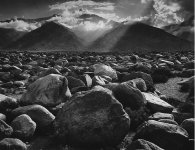
There's something to be said about doing it the "old" way. Any Ansel Adams photo pretty much shuts down the argument of digital being far superior to film. It's a true art.

adams_mount_williamson_sierra_navada_1944.jpg

Having said that, your camera is an absolute bargain considering the results. Very nice image!
 
Last edited:
/ Astronomy #17  
There's something to be said about doing it the "old" way. Any Ansel Adams photo pretty much shuts down the argument of digital being far superior to film. It's a true art.

View attachment 514567

Having said that, your camera is an absolute bargain considering the results. Very nice image!

Agreed about Mr. Adams.

The only money I've ever spent on photography (pictures) was on this guy...

Tom Till Photography

I use to spend a lot of time Utah. I could never come close.

Took my girlfriend (now wife) along with my dad on a trip out there (when I decided this was the right woman). Hope to get our boys out there, but... I've already told my wife I can't wait for the boys to grown up so we can go on vacation by ourselves LOL
 
/ Astronomy #18  
Anyone into telescopes/ solar scopes?
Farms are great for such a hobby.
View attachment 514497
View attachment 514498

1st photo = M42 Orion Nebula - Vixen VMC110L/ T-Mount Pentax K-01 (a tad blurry, but did pull nice color)
2nd = Last lunar eclipse "artsy" style / same equipment

Best I can do with average equipment and amateur knowledge - but very fun.

Great color!
If you've got a remote, use it - otherwise, try using the self-timer; that way when you hit the trigger, the camera's shaking will die down before the shutter fires.
The 3-second timer should be enough, if it's got one of those; 10 seconds is forever when standing in the (possibly cold) dark waiting for a camera to shoot!

What exposure settings did you use (f/aperture, s/shutter, iso, white balance)?
 
/ Astronomy
  • Thread Starter
#19  
I actually don't remember technical details. Was my one of my 1st attempts. I finally got a remote so I can try less shakey ones. I need to learn to learn how to use Registax next: RegiStax- Free image processing software . Ive seen incredible results using that program, but appears pretty complicated. My scope is pretty much a spotting scope so I can use only for brighter DSOs.
Great color!
If you've got a remote, use it - otherwise, try using the self-timer; that way when you hit the trigger, the camera's shaking will die down before the shutter fires.
The 3-second timer should be enough, if it's got one of those; 10 seconds is forever when standing in the (possibly cold) dark waiting for a camera to shoot!

What exposure settings did you use (f/aperture, s/shutter, iso, white balance)?

The camera itself is AMAZING. It's basically a mirrorless K5. I just need to learn how to use it properly. Ive been putting off opening the manual.

Worst part is my tracking mount died so I can't open the shutter for very long and am just using a standard tripod now.
 
Last edited:
/ Astronomy #20  
I actually don't remember technical details. Was my one of my 1st attempts. I finally got a remote so I can try less shakey ones. I need to learn to learn how to use Registax next: RegiStax- Free image processing software . Ive seen incredible results using that program, but appears pretty complicated. My scope is pretty much a spotting scope so I can use only for brighter DSOs.

The camera itself is AMAZING. It's basically a mirrorless K5. I just need to learn how to use it properly. Ive been putting off opening the manual.

Worst part is my tracking mount died so I can't open the shutter for very long with a standard tripod.

In general, you can follow the "500 rule" to avoid celestial motion showing up on a picture: compute ((500 seconds) divided by (focal length in mm)).
Eg, if you're using a 24mm lens, 500/24 ~= 21 seconds maximum exposure (long enough for tons of stars to show up at reasonable ISO).
Eg2, if you're using a 200mm lens, 500/200 = 2.5 seconds maximum exposure (not very long unfortunately).
Some people use 600 instead; YMMV.

Adjust for equivalence (I believe your crop factor is about 1.5, so if you've got an actual 24mm lens, it will behave like a 36mm lens for the 500 rule computation).
 
 
Top