You are using an out of date browser. It may not display this or other websites correctly.
You should upgrade or use an alternative browser.
You should upgrade or use an alternative browser.
Split-dovetail car hauler trailer
- Thread starter buggyman1
- Start date
- Views: 83001
More options
Who Replied?
/ Split-dovetail car hauler trailer
#41


Renze
Super Member
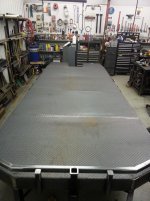
Receiver welded on the back, also recessed holes for the running lights.
Seems to me a larger trailer cant turn with its drawbar in the dovetail split, hooked to this receiver ? whats the idea behind a split dovetail ?
With a checker plate floor, i'd rather put some extra in than a few very heavy ones. At a former employer we once built a 21 ton forklift transporter with crossmembers spaced a foot apart, and 4mm (9 gauge) diamond plate. Within 3 months the floor washboarded due to the pointload of solid forklift tires, so we put on a new 8mm diamond plate floor in.I used 6" channel for the main frame and 4" channel for the cross braces, I want it heavy duty.
OP

buggyman1
Platinum Member
Seems to me a larger trailer cant turn with its drawbar in the dovetail split, hooked to this receiver ? whats the idea behind a split dovetail ?
With a checker plate floor, i'd rather put some extra in than a few very heavy ones. At a former employer we once built a 21 ton forklift transporter with crossmembers spaced a foot apart, and 4mm (9 gauge) diamond plate. Within 3 months the floor washboarded due to the pointload of solid forklift tires, so we put on a new 8mm diamond plate floor in.
I think the idea of a split tail is to be able to tie down whatever is on it easier, I just like the look of them. I'll prob. only haul vehicles with regular tires, I think 16" centers will be fine, if not i'll change it.

ZAR2USA
Silver Member
- Joined
- Sep 24, 2012
- Messages
- 222
Receiver welded on the back, also recessed holes for the running lights.
Trailer looks good. I too don't see how the hitch will work for a second trailer, unless you have an extension draw bar, or use it for a winch hookup, winch cable diverter, or D-ring/Shackle for added tie-down point. Regardless, it will serve many future uses.
OP
buggyman1
Platinum Member
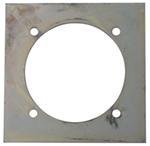
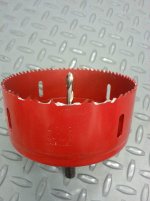
I tried to use a hole saw to cut the holes for the recessed D-rings, didn't work out, used my trusty jigsaw instead, worked like a charm. I decided to bolt them in instead of welding them in case I ever needed to change one. They are rated at 6000lbs each. I'm also installing backing plates on the underside.
Attachments


franklin2
Gold Member
I may have missed it in one of the pictures, but do you have feet on your ramps somehow or do you have flip down feet attached to the rear of the trailer? It's important.
When I borrowed a homemade trailer years ago when moving my old cars, it only had two thick wooden boards for ramps. I had my truck hitched to the trailer, but the whole rig was on a very slight downhill slope. I was loading my old 64 impala, and as soon as the front tires got to the back of the trailer, the weight of the car had pushed down on the back of the trailer enough that it lifted the rear of the truck off the ground and the whole shooting match started drifting down the hill. I panicked and stopped the impala, the trailer and the truck kept going forward till the ramps had pulled themselves out from underneath the car and the truck dropped back down and stopped. I had to get my wife outside to hold the brake in the truck before I could load it.
On the trailer I built, I have very light metal for the ramps, so I put a truss under the ramp like was pictured in the beginning of this thread. I didn't put any legs at the back, but when weight gets on the ramps, the truss comes down and hits the ground and keeps everything stationary and keeps the truck on the ground.
That's one thing you still have to watch for though. We were loading a 7000lb skid steer on my trailer a couple of years ago, and I mistakenly parked the truck and the trailer on a hump. That made the back of the trailer very high off the ground. As the guy was loading the skidsteer, the trusses had a long way to go before they hit the ground. I looked at the truck as he was coming up the ramps, and the tires of my f250 were at least 6 inches off the ground till he got the skidsteer all the way up on the trailer.
When I borrowed a homemade trailer years ago when moving my old cars, it only had two thick wooden boards for ramps. I had my truck hitched to the trailer, but the whole rig was on a very slight downhill slope. I was loading my old 64 impala, and as soon as the front tires got to the back of the trailer, the weight of the car had pushed down on the back of the trailer enough that it lifted the rear of the truck off the ground and the whole shooting match started drifting down the hill. I panicked and stopped the impala, the trailer and the truck kept going forward till the ramps had pulled themselves out from underneath the car and the truck dropped back down and stopped. I had to get my wife outside to hold the brake in the truck before I could load it.
On the trailer I built, I have very light metal for the ramps, so I put a truss under the ramp like was pictured in the beginning of this thread. I didn't put any legs at the back, but when weight gets on the ramps, the truss comes down and hits the ground and keeps everything stationary and keeps the truck on the ground.
That's one thing you still have to watch for though. We were loading a 7000lb skid steer on my trailer a couple of years ago, and I mistakenly parked the truck and the trailer on a hump. That made the back of the trailer very high off the ground. As the guy was loading the skidsteer, the trusses had a long way to go before they hit the ground. I looked at the truck as he was coming up the ramps, and the tires of my f250 were at least 6 inches off the ground till he got the skidsteer all the way up on the trailer.

OP
buggyman1
Platinum Member
Yeah, I've thought about this as I've had the same problem in the past, at this point i'm not sure how i'm going to address this yet. Thanks for your input.I may have missed it in one of the pictures, but do you have feet on your ramps somehow or do you have flip down feet attached to the rear of the trailer? It's important.
When I borrowed a homemade trailer years ago when moving my old cars, it only had two thick wooden boards for ramps. I had my truck hitched to the trailer, but the whole rig was on a very slight downhill slope. I was loading my old 64 impala, and as soon as the front tires got to the back of the trailer, the weight of the car had pushed down on the back of the trailer enough that it lifted the rear of the truck off the ground and the whole shooting match started drifting down the hill. I panicked and stopped the impala, the trailer and the truck kept going forward till the ramps had pulled themselves out from underneath the car and the truck dropped back down and stopped. I had to get my wife outside to hold the brake in the truck before I could load it.
On the trailer I built, I have very light metal for the ramps, so I put a truss under the ramp like was pictured in the beginning of this thread. I didn't put any legs at the back, but when weight gets on the ramps, the truss comes down and hits the ground and keeps everything stationary and keeps the truck on the ground.
That's one thing you still have to watch for though. We were loading a 7000lb skid steer on my trailer a couple of years ago, and I mistakenly parked the truck and the trailer on a hump. That made the back of the trailer very high off the ground. As the guy was loading the skidsteer, the trusses had a long way to go before they hit the ground. I looked at the truck as he was coming up the ramps, and the tires of my f250 were at least 6 inches off the ground till he got the skidsteer all the way up on the trailer.
OP
buggyman1
Platinum Member
Trailer looks good. I too don't see how the hitch will work for a second trailer, unless you have an extension draw bar, or use it for a winch hookup, winch cable diverter, or D-ring/Shackle for added tie-down point. Regardless, it will serve many future uses.
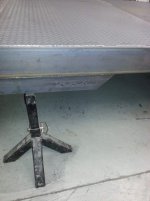
All of the above, plus some. I'm already working on an idea to pull a small trailer with it too.


OP
buggyman1
Platinum Member




two_bit_score
Super Star Member
- Joined
- Dec 22, 2008
- Messages
- 12,830
- Tractor
- John Deere 110 TLB, Diamond C 19LPX GN trailer
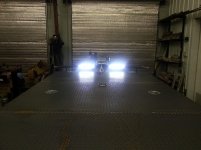
I got an 8000lb winch for Christmas...yes. I mounted it to a 1/2" piece of plate welded to a receiver tube. I had to fab up some mounts for the roller fairlead out of some angle.
Nice winch. Like the way it's mounted. Have you planned a cover for it or will you store it elsewhere?
OP
buggyman1
Platinum Member
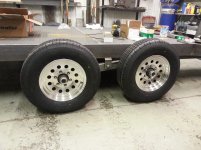
She's a roller. I got some wheels and tires for Christmas also. The axle caps were not deep enough, I ordered some open ended ones, just haven't gotten them yet. As soon as the weather gets a little better and I get the time i'm going to hook to it and see how well it pulls. Besides the fenders and a few other little things its about ready for paint.
Attachments

OP
buggyman1
Platinum Member
Nice winch. Like the way it's mounted. Have you planned a cover for it or will you store it elsewhere?
Yes I plan on getting a cover for it, but it can also be stored in my truck.
two_bit_score
Super Star Member
- Joined
- Dec 22, 2008
- Messages
- 12,830
- Tractor
- John Deere 110 TLB, Diamond C 19LPX GN trailer
Yes I plan on getting a cover for it, but it can also be stored in my truck.
I keep my 8,000 lbs winch on a cradle in the tool box and mount it on the trailer or the rear receiver of the truck also. The trailer is shaping up very nice!

s219
Super Member
- Joined
- Dec 7, 2011
- Messages
- 8,607
- Location
- Virginia USA
- Tractor
- Kubota L3200, Deere X380, Kubota RTV-X
Really nice work. But your helper is stealing the show....
Any idea of the cost savings by building it yourself?
Any idea of the cost savings by building it yourself?
OP
buggyman1
Platinum Member
I keep my 8,000 lbs winch on a cradle in the tool box and mount it on the trailer or the rear receiver of the truck also. The trailer is shaping up very nice!
Thanks.


