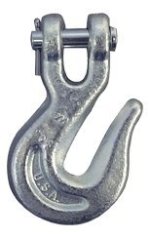
... When the bolt breaks, is an easyout required to remove it?
Good question.
The release in tension on the bolt head when it breaks, generally at the threadline, makes it easy to back out. The threadline on the bolt is the fulcrum and weak point. I prefer Grade eight bolts because they don't seem to bend, they just snap.
Also, carefully tapping the hole in the plate prevents tension between the threads in the nut and the threads in the plate. And, cut the bolt short enough so that it doesn't bottom out on the bucket wall when tightened down. If the bolt is too long, it will bottom out on the bucket wall before it cinches the hook down, and then it would be difficult to get the thread portion of the bolt out if it breaks.
BTW, some of the pressure on the hook is on the back side of the hook that sits in the groove in the plate. Can't say how much that adds to the overall capacity of the setup, but I haven't had a chronic problem with the bolts breaking.
Another advantage is that if you have a job that the hooks will interfere with, just unbolt them and toss into the tool box. Sometimes small branches get caught in the hooks when moving a lot of brush.
Actual pictures to follow when I get to the barn again. Like a lot of old folks, I run into so many things that need attention on the way to the barn that I forget the main reason for going there in the first place. "Lets see, now why did I bring this prybar and roll of duct tape?"