Ford 1700 clutch adjustment

/ Ford 1700 clutch adjustment #1  

284 International

Veteran Member
Joined
Jun 28, 2010
Messages
1,464
Tractor
International Harvester 284
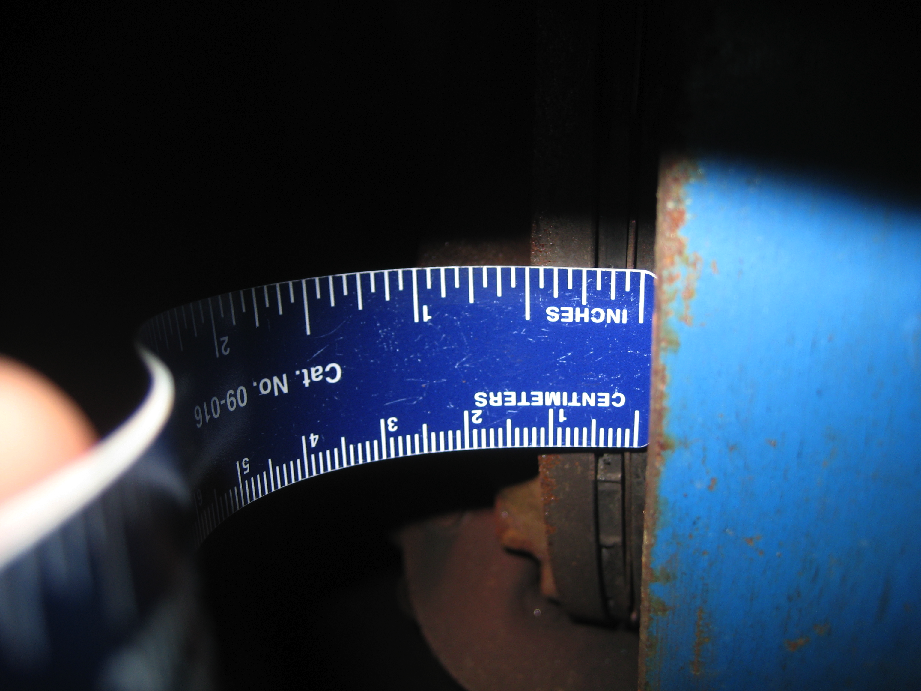
I just picked up a Ford 1700 that needed a starter. While I waited, I wanted to start it and move it around, so I tried pull starting it. However, the clutch is slipping. The clutch disk has what appears to be ample material left:
Ford1700clutch.png


The ruler has a space of about 2 mm from the edge to where the measurements start. I have seen in this thread that the thickness of the material of a new clutch is supposed to be 5/16", right about where this one is.

I have adjusted the pedal, and have tried it with the linkage entirely disconnected, so it isn't hanging on anything external, it just slips.

I don't see any sign of oil seepage into the case.

What should/could I try to avoid splitting this thing? Is there a shortcut I'm ignorant about to fixing a slipping clutch? Thanks in advance.
 
/ Ford 1700 clutch adjustment #2  
Don't pull start a 1700. The gear ratio is so low you will cause severe damage to it.
 
/ Ford 1700 clutch adjustment #3  
Clutch free travel = 3/4" to 1 1/16". (20 mm to 30mm) Adjust by changing linkage. Disconnect clevis at bellcrank and shotrten or lengthen rod. If yours is a duel clutch procedure is different.
 
/ Ford 1700 clutch adjustment #4  
The measurement you have done has nothing to do with clutch adjustment. it merely tell you how much clutch plate is left in comparison to oem. I have stated that in the thread you found. If you have someone push the clutch pedal in while your observing thru the hole (clutch housing) you see a small gap opening between pressure plate and clutch disk or flywheel and clutch disk. the only useful information there is to get a feel if he fingers on the pressure plate are touched by throw out bearing. Ray has the right info on how far part the release bearing should be from the pressure plate fingers. I just looked at your picture and noticed the gap I was mentioning between pressure plate and the disk. it appears you have ample disk material. I think your the throwout bearing is constantly riding the fingers. If you loosen the adjustment it should release the bearing. Have someone adjust the clutch travel while your observing the gap. I bet ya the gap slowly dispersers and clutch starts sticking.

JC,
 
/ Ford 1700 clutch adjustment
  • Thread Starter
#5  
Thanks for the tips.

I had tried the suggested adjustments at the clutch pedal already. In fact, even with the clutch pedal entirely disconnected it does the same thing. That is, I can't get any free travel in clutch at all.

If I block the clutch pedal down, I can get a clear gap between the pressure plate, clutch disk, and flywheel. It seems like there is some gap even with the pedal fully out. (The pedal was out when this photo was taken.)

What other adjustment procedures are there for a dual clutch? I don't know if this has one or not; is there a way to tell by serial number or external indicators? It has a one-way clutch in the PTO, so I can't use that as an indicator one way or another.

I'm not trying to be difficult or a know-it-all: Why would pull starting this tractor damage it? How could that happen because of low gears? I'm not disagreeing, I just don't understand what harm could come from running the engine through the tires, rather than the tires through the engine. Wouldn't the torque on components be the same, albeit reversed?

Thanks again. I'm hoping to get this thing operational soon.
 
/ Ford 1700 clutch adjustment #6  
I had a 1700 good tractor ,I dont belive it has a double clutch..
"If I block the clutch pedal down, I can get a clear gap between the pressure plate, clutch disk, and flywheel. It seems like there is some gap even with the pedal fully out"
sunds like the pressure plate isnt fully returning to squeese the disc..
Could there be some rust?
 
/ Ford 1700 clutch adjustment #7  
Thanks for the tips.

I had tried the suggested adjustments at the clutch pedal already. In fact, even with the clutch pedal entirely disconnected it does the same thing. That is, I can't get any free travel in clutch at all.

If I block the clutch pedal down, I can get a clear gap between the pressure plate, clutch disk, and flywheel. It seems like there is some gap even with the pedal fully out. (The pedal was out when this photo was taken.)

What other adjustment procedures are there for a dual clutch? I don't know if this has one or not; is there a way to tell by serial number or external indicators? It has a one-way clutch in the PTO, so I can't use that as an indicator one way or another.

I'm not trying to be difficult or a know-it-all: Why would pull starting this tractor damage it? How could that happen because of low gears? I'm not disagreeing, I just don't understand what harm could come from running the engine through the tires, rather than the tires through the engine. Wouldn't the torque on components be the same, albeit reversed?

Thanks again. I'm hoping to get this thing operational soon.

Picture that you show there is for sure and without a doubt a single clutch jobby. Tractor data indicate live pto option (double clutch) but yet to see anyone owning one of them. can you push the or pull the tractor say in a higher gear (range 3, spee3) and the clutch out ? I think pressure plate might have rust on it that keeps good contact between pressure plate and the disk. the spring might be rusted.I don't believe you hurt the transmission by putting in 4th range and 3rd gear. why don't you push the tractor somewhere safe, raise the rear axle , raise the wheels about 2" off the ground supported on two jacks stand and then try to start it. make sure glow it enough so ignition will be easier. it is a pain to do it but by taking the steering column you can inspect the throw out bearing, clutch disks and pressure plate.

JC,
 
/ Ford 1700 clutch adjustment
  • Thread Starter
#8  
In high range and high gear (4th/3rd) the clutch still slips. Every so often the engine will turn a bit, but the clutch is slipping. There may be rust, or course, and there are trace bits visible in the picture, but the insides don't look, feel, or smell musty or corroded, if that makes sense. It's certainly possible something is in between the friction plate and one of the surfaces though. Will rust make a clutch slip?

why don't you push the tractor somewhere safe, raise the rear axle , raise the wheels about 2" off the ground supported on two jacks stand and then try to start it.

Sorry for not getting it, but I don't understand what this is testing, and I won't be able to start it this way through any method I know.


... by taking the steering column you can inspect the throw out bearing, clutch disks and pressure plate.

Is there another access or service port on top of the transmission casing, or is the spot underneath the steering column?

The symptom I'm most concerned with is the inability to get any free play on the clutch pedal, even at maximum slack. It "seems" like the clutch is partially disengaged internally somehow, although this is speculation on my part.

Thank you all for the input, it's much appreciated.
 
/ Ford 1700 clutch adjustment #9  
In high range and high gear (4th/3rd) the clutch still slips. Every so often the engine will turn a bit, but the clutch is slipping. There may be rust, or course, and there are trace bits visible in the picture, but the insides don't look, feel, or smell musty or corroded, if that makes sense. It's certainly possible something is in between the friction plate and one of the surfaces though. Will rust make a clutch slip?


Sorry for not getting it, but I don't understand what this is testing, and I won't be able to start it this way through any method I know.


Is there another access or service port on top of the transmission casing, or is the spot underneath the steering column?

The symptom I'm most concerned with is the inability to get any free play on the clutch pedal, even at maximum slack. It "seems" like the clutch is partially disengaged internally somehow, although this is speculation on my part.

Thank you all for the input, it's much appreciated.


Okay, my bad !! I thought your disk did not disengage to start and that's why I suggested to raise the rear axle and suggested to try to start with the rear wheel slightly in the air so starter would turn the engine and transmission in all. If your clutch occasionally slips even with clutch pedal totally out then it must be with the pressure plate not applying enough spring action. I'll post two pics courtesy of Russel where he did split the tractor. He posted the pic of the steering column removed for my benefit and curiosity.

pressure plate assembly , clutch disk and flywheel.


Pics of the release bearing and relationship of release bearing to fingers of the pressure plate. unfortunately there is no easy way to do this inspection and that is to take the steering column off. I have not done this work before myself but I might consider this to avoid splitting the tractor. it is doable and much less work than tractor split.I know you said that the clutch housing looks clean. I just wonderd if you get a bit of hyd oil somehow getting on the friction plate thru the input shaft and causes it to slip till it cooks off dry till next occurrence.


JC,
 
/ Ford 1700 clutch adjustment
  • Thread Starter
#10  
Thank you for the pictures. Sorry for the misunderstanding, I should have been more clear.

I don't have a starter on the tractor, and have never seen it run before. I bought it knowing it needed a starter, but didn't know about the clutch situation (since it wouldn't run.) I tried to pull-start it, but the clutch slipped. I was unable to start it by applying power through the PTO because of the overrunning clutch (and would have had the same issues with the clutch slippage, I just thought it would be safer).

So, my problem, aside from not having a starter, is that the clutch slips. It could have hydraulic fluid or engine oil inside the housing. There could be something else wrong; I'm leaning toward the latter option, at least as a portion of the trouble, because I can't get any free play in the pedal.

However, I can't figure out what could happen to allow slippage if the friction plate is of full thickness, but there is clutch pressure. Oil of some sort would explain that, but there's no dripping or leak showing on the bottom of the case. Perhaps I'll have to pull the steering column and see.

I'm willing to split the machine if I have to, but I don't know how to isolate my troubles beforehand. I don't want to tear it apart and have everything up to specification!

Thank you for the ongoing help.
 
/ Ford 1700 clutch adjustment #11  
A lesson I learned a long time ago, and it wasn't an easy lesson to take to heart: If you are working on a problem, can't see what causes it, and you run into something else that needs fixing but couldn't possibly be causing the first problem, go ahead and fix what you know is wrong and often the first problem will go away.

In other words, I would replace the starter, get that working, then see to the clutch. One thing at a time, you know the starter needs replacing.
 
/ Ford 1700 clutch adjustment #12  
can't figure out what could happen to allow slippage if the friction plate is of full thickness,


okay... I'm beginning to see the picture. the statement you made above is true but see after looking at your pic closer, there is a gap between the surface of pressure plate and the the clutch disk (friction disk). Below you see the picture of my clutch. I'm not 100% sure now but I clearly remember on some of the pictures I did have the clutch pedal pushed in by help of a piece of 2x4 to simulate the disengagement.


I'll think about it more, but when you say at times it slips, does it mean you actually started it at some point? I know if you get a light and have some one push the pedal on demand you'll be able to see the throwout bearing moving forward and then return. I'm thinking may be bearing holder is rusted solid to the shaft. You can also raise the rear axle, support it securely on two jack stand and then have someone turn the wheels by hand. that should try to turn the input shaft and the clutch assembly along with the engine. you might have to take off or loosen the glow plugs to make it easier to turn (releasing the compression in the cylinder). that might give you an opportunity to look in thru the inspection hole and find out some diagnostic information. I think we might be able by process of elimination find the cause.


JC,
 
/ Ford 1700 clutch adjustment
  • Thread Starter
#13  
...If you are working on a problem, can't see what causes it, and you run into something else that needs fixing but couldn't possibly be causing the first problem, go ahead and fix what you know is wrong and often the first problem will go away. In other words, I would replace the starter, get that working, then see to the clutch. One thing at a time, you know the starter needs replacing.

This is good advice, and I agree; I've been fighting getting the starter replaced or repaired for the last couple weeks. I was wanting to determine if the rest of the tractor was in good enough shape to justify the expense of the starter (New Holland wants an absurd $1100, plus tax:confused2:) before popping for one of those. I've got one on order now, though.

Depressing the clutch pedal opens the gap more between the pressure plate and the disk, and releasing it puts it back to how it is in the photograph. It appears, as shown in the photograph, that there is a little bit of a gap even when the clutch pedal is all the way out. It's conceivable the throwout bearing holder may be catching or hanging. It looks as if that is visible through the transmission under the steering box.

I have never seen the tractor run.

When attempting the pull start, every once in awhile the engine blades would move some-perhaps a quarter turn-then not move at all. The tires were rolling all the time, and not locked up. It never spun the engine even a full revolution.
 
/ Ford 1700 clutch adjustment #14  
Check this and reply
1) When you are sitting in the tractor seat and you start pushing in on the clutch pedal with your foot: Can you push the pedal in ar least 1 inch before there is any engagement pressure of any kind? This is called "free travel"

2) if you are getting instant pressure of the pedal with no "free travel" the clutch pedal needs adjusting.

3) If you have the required free travel and the clutch is still slipping, you have some other "clutch" problem.

Pull starting possible Damage:
1) the manual says never atempt to pull start.
2) reason (not from the manual): Diesels have to be pre heated to start and have extremely high compression to overcome.
3) you will be slamming your cold engine and transmission "instantly" to 1000 to 1500 rpm with crankshaft breaking torque force. Rear tractor tires don't slip. Something else in the drive line has to give, and it won't be pretty.
 
/ Ford 1700 clutch adjustment
  • Thread Starter
#15  
1) There is no perceptible free travel of the clutch pedal.

2) I have adjusted the clutch pedal in the only way I know how, by adjusting the threaded rod between the clutch and the bell crank. Even with minimal thread engagement on the nut, there is still constant tension on the pedal.

3) With the clutch pedal disconnected entirely the slippage is the same.

4) When the clutch pedal is disconnected, there is some free rotation on the bell crank, but it does not affect the slipping clutch.


Thanks for the input about pull starting. I understand what you're saying, I guess, I just don't see those factors really applying the way I tried it. (The manual saying not to is sufficient for me, though.) I was pulling it at under 0.5 mph, (Low/low on another tractor) with the tractor in the highest gear and range, which would yield about 200 engine rpm, and easing out on the clutch. Either way, thanks for the feedback on not pulling it; I won't be doing that in an attempt to start anyway. I have no interest in abusing my machinery or doing things that may shorten their lifespan. If the manual says not to, I'm content with that. Again, thank you for the continued help.
 
/ Ford 1700 clutch adjustment #16  
It's been a long time since I adjusted my clutch so my memory needs refreshed. I assume from your posts you are lengthing the rod. Maybe you need to shorten it. (thats the part I don't remember). This is where we need some other posters to jump in with the correct procedure. Meanwhile I am going to look at mine to try to determine which way I adjusted it.:confused2:
 
/ Ford 1700 clutch adjustment #17  
I looked at mine and if you disconnected the linkage completely like you said that would give you full engagement of the clutch. If it's slipping in that position then pedal adjustment is not the problem. My pedal free travles an inch before it starts to pull on the clutch at the clevis connection. JC will take over from here. He has done most of this type of work on his tractor. Over to JC.......
 
/ Ford 1700 clutch adjustment
  • Thread Starter
#18  
Rayikeo2, thanks for your help. I really appreciate you taking the time to check on your machine for me.
 
/ Ford 1700 clutch adjustment #19  
1) There is no perceptible free travel of the clutch pedal.

2) I have adjusted the clutch pedal in the only way I know how, by adjusting the threaded rod between the clutch and the bell crank. Even with minimal thread engagement on the nut, there is still constant tension on the pedal.

3) With the clutch pedal disconnected entirely the slippage is the same.

4) When the clutch pedal is disconnected, there is some free rotation on the bell crank, but it does not affect the slipping clutch.


Thanks for the input about pull starting. I understand what you're saying, I guess, I just don't see those factors really applying the way I tried it. (The manual saying not to is sufficient for me, though.) I was pulling it at under 0.5 mph, (Low/low on another tractor) with the tractor in the highest gear and range, which would yield about 200 engine rpm, and easing out on the clutch. Either way, thanks for the feedback on not pulling it; I won't be doing that in an attempt to start anyway. I have no interest in abusing my machinery or doing things that may shorten their lifespan. If the manual says not to, I'm content with that. Again, thank you for the continued help.


I sure can't argue with Ray and his opinion about pull starting. he does make full sense but desperate times might require desperate measures within some common sense. If I had your rig, depending how much I paid for it and the fact of $1100 dollars for a a starter then I might make the risk of pull starting. very high gear and pulling it slow you'll much lessen the chance of damage. I realize if your tractor was an 8n with gas engine then pull start it would be a no brainer if push come to shove. I was at my place to clear some of my shooting lanes and took a look at the clutch again and took a few pictures as well. The point I was making about the gap between pressure plate and the clutch disk was a valid one. with the clutch fully out there is no gap at all between the plates. The pic below shows just that.


I took a flash light and inspected the release bearing, holder and spring. They all can be easily inspected form the side inspection hole The thing that is noteworthy is that you can inspect the actual distance between the fingers to the release bearing. I have really never needed to adjust the free play at the pedal since I had no issues. Saying that what is important is that the bearing (release) is not permanently riding the finger for the obvious reason and secondly it should not be far enough that full clutch pedal pressing does not result in full disengagement. As you can see I have about a bit more than 1/8" distance between the finger and the bearing. I would not sweat the statement that I adjusted all I could. The proof of that statement is a visual inspection that is provided for this tractor. There is no guess work none what so ever. As I was able to see the gap with a flash light you should be able to duplicate it as well. I see a possibility of your clutch pedal is out of wack (physically bent) due to hitting some obstruction leading to not being properly adjusted. if that is the case then it should not be difficult to bend it to proper shape so it would release. The only thing you can not identify looking thru the hole is if the clutch disks are sticking just buy visual observation. again by raising the rear axle you can slowly turn the wheel hence turning the clutch assembly. That would enable you to check all the 3 fingers on the pressure plate. With max adjustment and if the bearing is touching the finger is sure enough indication of problem.


Can you identify the one finger shown and the bearing?


I usually block the clutch pedal using a piece of 2x4 in order to keep the disk wanting to rust and lock together. I'm wondering if in your tractor previous life someone done that very severely and for a long time where the pressure plate spring lost it's stiffness. I hope yo do not have a busted input shaft splines although pretty unlikely from your statement.

what is the background of the tractor? what's the story of the starter? do you have a dead starter or nothing at all ? do you know if your tractor ever ran prior to your purchase.


JC,
 
Last edited:
/ Ford 1700 clutch adjustment
  • Thread Starter
#20  
I've sent off for a replacement starter, so that should be resolved in a few weeks. A rebuilder most of the way across the country is supposed to rebuild it if they can, and sell me a new one if they cannot.

Backstory on the tractor: I picked it up 2 weeks ago as a project/fixer upper (as I usually do) knowing it had a weak starter. It would turn over very, very slowly, but nowhere near enough to start. I had found some starters for less than what New Holland wants (which isn't hard), so it seemed like a decent bargain. I pulled the starter apart, but it needed more help than I can give it (At least one of the field coils is shot, as well as the solenoid and brushes).

Since I couldn't start it, the status of the rest of the tractor was/is unknown. The previous owner said he had used it a couple weeks before, had starter trouble, and parked it on the trailer.


I agree with you that there is something amiss keeping the clutch partly disengaged. I just can't figure out what. The throwout bearing is in contact with at least two fingers of the pressure plate, even with the clutch pedal entirely disconnected from the linkage.

I guess the next step is to pull the steering column and see if there is something simple causing the throwout bearing to hang in a forward position. I just can't figure out what the likely cause of this trouble might be.

Thank you, JC-jetro, for taking the time and effort to help me through this, and take pictures of your tractor.
 

Marketplace Items

2018 LARK UNITED MANUFACTURING S/A GUARD SHACK (A55745)
2018 LARK UNITED...
2016 Nissan Altima 2.5 Sedan (A59231)
2016 Nissan Altima...
2019 Takeuchi TL8 Track Loader with 72in Tooth Bucket (A61306)
2019 Takeuchi TL8...
2012 Ford F-250 4x4 Pickup Truck (A60352)
2012 Ford F-250...
20FT X 12FT LIVESTOCK METAL SHED (A58214)
20FT X 12FT...
2010 Honda Accord Sedan (A59231)
2010 Honda Accord...
 
Top