Valve Spool, Control Valve questions

/ Valve Spool, Control Valve questions #1  

woodlandfarms

Super Member
Joined
Jul 31, 2006
Messages
6,151
Location
Los Angeles / SW Washington
Tractor
PowerTrac 1850, Kubota RTV x900
I have a very basic question to ask. What is the difference between various valve spool controls. I am looking to add another remote, and there appears to be 4 different types (or at least they are labeled that way).

Log Splitter Valve
Motor Spool Valve
Control Valve (the most common)
Electric control valve

Log Splitter valves seem to be the cheapest, and motor spools the most expensive.

I get what electric is (although I have a question, can you "feather" an electric valve - meaning slowly let the juice flow for precision work or is it just on and off)

Can anyone help a layman get through these vageries?

Thanks
 
/ Valve Spool, Control Valve questions #2  
I'm certain some of the experts will be able to answer your questions- however they may need more information.

Do you have a specific need for a valve? or what do you want the valve to do??
 
/ Valve Spool, Control Valve questions #3  
Very briefly:

A Log Splitter Valve will go into detent (stay in that position) when you
first activate it (push the lever). What this does is extend the cylinder
all the way until it hits the end of its stroke, allowing you to leave it
untended while it does its work. When it reaches the end of its stroke
it automatically goes out of detent and retracts, ready for the next log.
You don't need these kind of spool valves for a log splitter. A simple DA
spool valve will work.

A motor spool valve is another type of spool valve that allows fluid from
the motor to return to the reservoir after you return the control lever to
neutral. You want this for some applications where the momentum of the
motor will cause large spikes in the pressure as you close the valve.

"Control Valve" is a generic term that could refer to many kinds of valves,
spool valves, ball valves, solenoid-controlled valves, etc.

An electric valve usually has a solenoid that acts directly on a spool or
poppet. Most will be all on or all off, but there ARE proportional electric
valves. Your common solenoid valves can not be feathered, but
proportional electric valves do provide volumetric flow control. That's
a whole new world of electrically-controlled hydraulics.
 
/ Valve Spool, Control Valve questions #4  
And I thought the Log Splitter valve would NOT go into detent on the splitting direction/motion (for safety) but would go into detent on the return stroke.

Upon return, it would kick into neutral.
 
/ Valve Spool, Control Valve questions
  • Thread Starter
#5  
dfkrug... thanks for the info. What is DA?

Also, what this is for is a grapple control valve. The logs splitter sounded interesting cause I could "command" it to open and not have to keep a hand on the valve.

The ideal valve body would be small. I am also trying to figure out how to mount it so I can position this control properly.

JJ knows that space is limited on my tractor, and while I have to be economical on this project I have to also balance other factors.

dfk, or anyone else. Can you explain a little bit more on the motor spool valve. I thought all valves (if open center) would send fluid back to the tank in "nuetral".

Ahh,,,, jeez... one more question. When you say volumetrics, you mean if I momentarily open and close the switch it will let fluid through... The electric system seem to me to be not a great control for running stuff as it would be jerky, not chance of feathering. BUt I see lots of heavier equipment using it so clearly I am missing something.

ps... Trails. I was raised in Powell, WY. I SOOOOO miss that part of the world.... You are a lucky guy even though it is Lander ;-)
 
/ Valve Spool, Control Valve questions #6  
And I thought the Log Splitter valve would NOT go into detent on the splitting direction/motion (for safety) but would go into detent on the return stroke.

Upon return, it would kick into neutral.

Actually, that is how I would set it up, too (for safety). I wonder if you can
plumb these valves 2 different ways? I admit I have not played with them
much, but I do have one here that I repaired....a HF unit with a gummed
up internal ball valve that kept it from springing back to neutral when
it hit relief.
 
/ Valve Spool, Control Valve questions #7  
dfk, or anyone else. Can you explain a little bit more on the motor spool valve. I thought all valves (if open center) would send fluid back to the tank in "nuetral".

Ahh,,,, jeez... one more question. When you say volumetrics, you mean if I momentarily open and close the switch it will let fluid through... The electric system seem to me to be not a great control for running stuff as it would be jerky, not chance of feathering. BUt I see lots of heavier equipment using it so clearly I am missing something.

In the motor valve, the WORK PORTs can return fluid to the tank when
the valve is OFF, In a simple spool valve intended to control double-
acting (DA) cyls, the work ports are cut off when the valve is OFF (neutral).
The pump sends fluid to the tank or next valve when your valve is OFF, in
an open center system.

Proportional controls are not fully off or on, as your solenoid valves are.
Also, heavier equipment often uses variable displacement hyd pumps for
additional hyd control.
 
/ Valve Spool, Control Valve questions #8  
woodlandfarms said:
.....
ps... Trails. I was raised in Powell, WY. I SOOOOO miss that part of the world.... You are a lucky guy even though it is Lander ;-)

I was raised in Casper- So I think I moved in the right direction- I guess you went a little further West than I did :)

It nice to hear from other Wyomingites- there arent many us around ;)

Go Pokes!
 
/ Valve Spool, Control Valve questions #9  
The solenoid, electric, whatever you want to call them valves, can be opened a pre-determined amount by controlling the voltage to it. Let's say your system is 24 volts. Applying 24v would open it fully, 12v halfway. The more voltage, the more open. The voltage creates a magnetic field. The magnetic field pulls the valve off of it's seat and lets fluid flow. So, the more voltage, the more magnetism, the more fluid flow. I know AKKAMAAN must have a drawing on this. He must be sleeping today.

Carl, sounds like a detent valve may work for you. Hit the lever into detent and it opens all the way. Might even be good for closing too. Would only let it close to a certain force to prevent wrecking your equipment. If you need more holding force, you could hold the lever manually.
 
/ Valve Spool, Control Valve questions #10  
Carl,

Do you have the QA hyd circuit? If so, then I would use that for the grapple by diverting the fluid from the QA circuit for the grapple. There are selector/diverter valves, that will switch the fluid from the QA circuit to the grapple circuit, using a switch to switch circuits. .

https://www.surpluscenter.com/item.asp?UID=1960011616312126&item=9-7852&catname=hydraulic

You can do it cheaper with this. Manual control,
https://www.surpluscenter.com/item.asp?UID=1960011616312126&item=9-6131&catname=hydraulic

You could also switch the hose fro the QA cyl to the grapple cyl,for a real cheap way to control the grapple.

On my three gang valve, two are for th joystick, and the other one is for the aux circuit.

I use the third lever for my tree snipper, or grapple.

The most convenient way is the solenoid valve setup.
 
/ Valve Spool, Control Valve questions #11  
I too am learning about applied tractor hydraulics and one of the first things to consider when choosing a valve is its center action...most valves are either open or closed "center"...

"closed center" valves leave the cylinder(s) in position when the valve is released i.e., leaving pressure on the line...

"open cneter" valves neutralizes the pressure when the handle is released and returns to center...
 
/ Valve Spool, Control Valve questions
  • Thread Starter
#12  
Hey JJ. Well... Help me out here a bit...

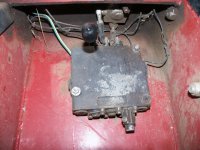
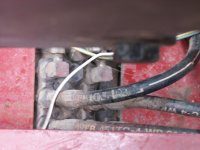
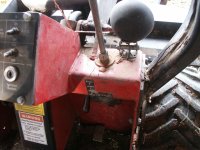
What I have on the PT is a valve block that is (I believe) a 3 valve open center. Valve 1 and 2 operate lift tilt and dump and are manipulated by the handle on the left. The 3rd circuit is for the Quick attach lock, that can also be uncoupled to operate various hydraulic implements (for me it is the grapple which I use extensively and the backhoe for the moment).

I do not know who manufactures the valve block. PT is notorious for removing part numbers.

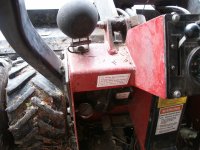
My idea was to tie into this valve block (can I, you scared me with your idea) and run a line to this new control on the left side of the PT and then run the return back to the existing valve block or wherever it dumps to.

I am sure I am making this way to simple and the process is much more complicated than I have imagined. Typical of me.... Oh here are some pix...

The first two are of the valve body, the third is of the control, and the 4th is the general area of the proposed new control... May have to weld a plate on.
 

Attachments

  • PICT0985.JPG
    PICT0985.JPG
    767.7 KB · Views: 421
  • PICT0986.JPG
    PICT0986.JPG
    546.5 KB · Views: 367
  • PICT0981.JPG
    PICT0981.JPG
    663.9 KB · Views: 406
  • PICT0982.JPG
    PICT0982.JPG
    691.2 KB · Views: 354
/ Valve Spool, Control Valve questions #13  
I too am learning about applied tractor hydraulics and one of the first things to consider when choosing a valve is its center action...most valves are either open or closed "center"...

"closed center" valves leave the cylinder(s) in position when the valve is released i.e., leaving pressure on the line...

"open cneter" valves neutralizes the pressure when the handle is released and returns to center...

Not quite. Actually not at all! OC and CC has to do with the "center" of the valve-where the fluid from the pump flows when the valve is in neutral.

Both OC and CC valves can/will leave the cylinders in postion when the handle is in neutral. The proper valve we usually need for our machine is actually called a "tandem center" valve, but the Surplus Center uses this interchangeably with "Open Center". In most of the industry "Open Center" means the work ports are open to the center like a motor spool valve. In "Tandem Center" valves the work ports are block so the cylinder stays put.
 
/ Valve Spool, Control Valve questions #14  
I know AKKAMAAN must have a drawing on this. He must be sleeping today.

Sorry guys...I'msjust reading your posts....I have spent day in Victoria BC, and I will see what I can come up with in sunday am.....

I so "sorry" I failed on you guys.. :eek: ...LOL....
 
/ Valve Spool, Control Valve questions #15  
Hey JJ. Well... Help me out here a bit...

What I have on the PT is a valve block that is (I believe) a 3 valve open center. Valve 1 and 2 operate lift tilt and dump and are manipulated by the handle on the left. The 3rd circuit is for the Quick attach lock, that can also be uncoupled to operate various hydraulic implements (for me it is the grapple which I use extensively and the backhoe for the moment).

I do not know who manufactures the valve block. PT is notorious for removing part numbers.

My idea was to tie into this valve block (can I, you scared me with your idea) and run a line to this new control on the left side of the PT and then run the return back to the existing valve block or wherever it dumps to.

I am sure I am making this way to simple and the process is much more complicated than I have imagined. Typical of me.... Oh here are some pix...

The first two are of the valve body, the third is of the control, and the 4th is the general area of the proposed new control... May have to weld a plate on.

Carl.

That setup is very similar to mine. It is a manual circuit, and you are probably using it with the grapple. I don't have the manual, or never looked at mine to see if it had PB. If it did, it would be simple to add an electric valve. Seems like I posted awhile back about getting a new joystick with PB, and using the old one on the left side.
 
/ Valve Spool, Control Valve questions
  • Thread Starter
#16  
Thanks JJ. You did indeed. I am a little leary of the electric control as I do not want any wires dangling around as I tend to rip them off in the brush and trees.

OK. This all said. What exactly is power beyond? I assume it is a port generally closed on a valve spool that you can open attach a hose to and let the juices flow to a new control or whatever... Any special rules for Power Beyond (how to run, cap and return?)
 
/ Valve Spool, Control Valve questions #17  
/ Valve Spool, Control Valve questions #18  
I have a very basic question to ask. What is the difference between various valve spool controls. I am looking to add another remote, and there appears to be 4 different types (or at least they are labeled that way).

Log Splitter Valve
Motor Spool Valve
Control Valve (the most common)
Electric control valve

Log Splitter valves seem to be the cheapest, and motor spools the most expensive.

I get what electric is (although I have a question, can you "feather" an electric valve - meaning slowly let the juice flow for precision work or is it just on and off)

Can anyone help a layman get through these vageries?

Thanks

Here is my 2 cents.....for now....lol

The valve an operator uses to control an actuator (cylinder or motor), is a control valve, directional control valve etc....many names on the same thing....all these valves you are mentioning are control valves.....

A log splitter valve is a control valve, often with some extra features like auto cycle and/or detent. log splitter valves are hand operated, and they direct a flow, that is "proportional" to how much you move the spool.....

The opposite to a proportional valve is an "on-off" valve, in which the spool only can take two positions, either neutral or fully "open" work port. Most electric solenoid valves you see on equipment is "on-off"- control valves. You operate them with an electric switch, or they are operated automatically by a electric control system.

There are proportional electric valves, the are controlled by an electric amperage, that is proportional to an operator "signal" or electric lever movement (joystick). This amperage, is usually created by a PLC (Programmable Logic Controller ) unit that sends out a PWM (Pulse Width Modulated) amperage to the electric solenoid (especially designed for proportional control valves). These Proportional hydraulic control valves are expensive.

All hydraulic control valves can be set up for different characteristics. This is made by different spool design. Usually the valve housing is the same and the spool design varies with type of system to work in, like an Open Center system, Closed center system, Load Sensing system etc. Even different type of actuator setup requires different spool design, like motor spool, regenerative spool, 3 way spool for single acting cylinder , 4 position spool with float etc etc. There are also variations in how spools overlap the ports when opening and closing for flow. All these things combined makes it possible to have hundreds of different spools for different purposes. And they all can be fit in the same housing, together with some extra control accessories, like power beyond plugs, and detent controls etc.

A motor spool valve has its special feature in neutral position. If we go back to a regular spool for a double acting actuator (cylinder), that spool keeps both work ports closed in neutral. The actuator can not move when valve is in neutral. Many hydraulic motor applications require the motor to be "unlocked" when control valve is in neutral. A hydraulic wire winch is an example, it will need a spool for bi directional motor control, but with valve in neutral, we might want to be able to pull out the wire by hand, or roll it back on to the drum by hand. Then the motor have to be "unlocked" in neutral. That is made by using a "motor spool" in the valve. With a one directional motor this can be solved with a check valve between the two work ports.
Such check valve is also used to let a motor, with inertia on the shaft, slow down by it self when control valve, suddenly, is in put into neutral. Other wise this rotating inertia will create a "pressure pump" of the motor, and oil wont have any where to go. An example could be a large diameter, heavy mass, circular saw.

The reason a log splitter valve is cheapest, is that it is a "low quality" control valve. You do not put a 1500$ control valve on a 1000$ log splitter......

As I explained above, you need some advanced electronic to "feather" an electric control valve. You also need a especially designed electric control valve for this. So don't expect a regular on-off solenoid valve be "feathered" by changing supply voltage. It takes a little more than that. ;)

This Prince Serie 20 valve pdf file shows how a system of spools are used in one housing depending on valve purpose...page V6....have fun...:D
 
Last edited:
/ Valve Spool, Control Valve questions #19  
Carl, In order to operate the PT and keep the left hand on the steering, and the other hand on the joystick valve, the best way to operate a grapple circuit is with a solenoid valve to swatch circuits between the QA cylinder, and the grapple circuit. To use the grapple as you have it now, you must remove your hand off the joystick and reach under the dash and operate the QA/grapple circuit, or move the QA lever with the left hand. The most convenient way to do what you want to do is to install a new joystick valve with PB, and a solenoid hyd valve to operate the grapple. If you need to feather a valve, and want 12 v activation, then you need a proportional valve, but they ain't cheap.

If I were to upgrade the valves on my PT, I would do as above, and use a joystick valve with PB, and a solenoid valve to operate the grapple, with a needle valve in-line to adj flow..

Keep in mind that the lift, tilt, grapple circuit is downstream of the steering valve, and uses the fluid flow that the steering cyl are not using.

If you were to add a small hyd pump, fan-belt driven, and a small log splitter valve for the grapple circuit, that would give you another independent hyd circuit.

All the hyd on the front of my PT-1445, uses a pump like this mounted like I said, and does a fine job with the hydraulics. The pump only pumps about 3 GPM.

PB, Power Beyond allows you to add valves downstream of the first valve. Which ever valve is activated, the valves downstream will get nothing, or the remainder of the fluid the operating valve is not using. Each valve with PB must return cyl/motor fluid out the tank port.
 

Attachments

  • Hyd-Valve_drawings.pdf
    124.6 KB · Views: 331
Last edited:
/ Valve Spool, Control Valve questions #20  
Carl,

As mentioned in anther post, the diverter valve will let you use the joystick to operate the grapple, by switching the fluid from the tilt cyl to the grapple cyl, and all this done using one hand, with a switch on the handle to switch circuits.

Wiring is no problem as you bundle and tuck the wiring out of the way under dash.
 

Marketplace Items

2016 Boxer 700HDX Compact Skid Steer (A63116)
2016 Boxer 700HDX...
2019 Kenworth W900 Ext. Day Cab w/ Wetline (A62613)
2019 Kenworth W900...
UNUSED RAYTREE RMDM70 - 70" DISC MULCHER (A62131)
UNUSED RAYTREE...
UNUSED WOLVERINE TCR-12-48H 48" HYD TRENCHER (A62131)
UNUSED WOLVERINE...
UNUSED KJ 42'X30' METAL STORAGE SHED (A62131)
UNUSED KJ 42'X30'...
Honda 300 Four Trax (A61166)
Honda 300 Four...
 
Top