Truck and Horse trailer questions

/ Truck and Horse trailer questions #21  
I have a Lakota 8315 (3 horse, 15 ft living) empty weight is 10500 with horses, feed, tack, clothes, water, etc 14300. I use a Dodge 3500 C&C DRW, 6.7 w/aisin and my next tow vehicle will be a 45 or 5500 (preferably with air ride). I want something with better braking because Ive been in a couple spots where the trailer pushed the truck more than I want to be comfortable with.
Our friends have a Lakota LQ w/bunks and a 16 ft. Livestock area. They use a Ford 350 SRW and every time he hitches up I shake my head in disbelief watching the truck squat down on the overloads.
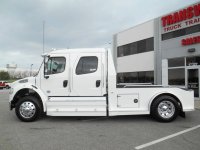
I was at an event last weekend and the 4 Horse LQs were hitched to 450s and 3 of them had Freightliner M2s :eek: Maybe you could buy the trailer then take the horses out on the new truck test drives? A LQ trailer definitely pulls and feels different than an equipment trailer.
Ive been to Otter Creek, any other great places around there?

The medium duty trucks are a lot better value for towing. And tow way better than a pickup. I see pretty nice daycab road tractors for 10k or decent ones for 5k. And no CDL needed for private RV use.
 
/ Truck and Horse trailer questions #22  
The truck makers GVWR ...payload sticker is not used to determine how much load the truck can carry....or is it used in any civil court case if its exceeded causing death or injury or property damage..... or will a DOT officer use it to write a overweight ticket. However exceeding a axle or tire rating or a declared gross combined weight can result in tickets....civil lawsuits/etc .

My experience is otherwise. After registration and lighting, GVWR is the first thing LEO’s check, out of what you’re talking about. The payload sticker is not used, too many variables-not a legal standard. Then, axles and tires, as you said truck and trailer). After that, hitch and coupler ratings.

The civil side has no rules and everything can be used.

I’ve been a LEO on a major US Interstate for over a decade, that’s how it’s done, where I work. I’ve run a DOT F-350 for a couple of years (part-time tractor gig). Everyone has to read the rules and make their own decisions. My advice is worth what you paid for it.

(I am not a lawyer and sometimes laws change)
 
/ Truck and Horse trailer questions #23  
Thanks, that actually all just clicked. Treating the truck and trailer as separate parts and including the trailer tongue weight as part of the trucks individual capacity. I only see the weight issue being a legal issue if there was an accident of some sort if I was over weight. I know with my current set up I'm not over the limit or else something may have already broke. View attachment 622526


Generally, for non-DOT vehicles it’s only an issue if you’re in a collision resulting in great bodily harm or death. Sometimes, the DOT guys will do saturation patrols and stop every truck (for an infraction) then get out the scales, but that’s not as common. Civil court is a crap shoot, on the best days.

Being overweight is like being drunk. Even if you weren’t at fault, by driving action, you will be, by operating in an unsafe condition. To me, it’s just not worth it.

Remember, there’s a fudge-factor built into ratings by engineers and lawyers versus what the marketing guys want. Just because you haven’t broken anything doesn’t mean you’re under weight and more than breaking something automatically means you’re overweight. Maintenance, care, and common-sense driving can allow an overworked rig to last longer than a neglected rig that barely gets worked.

With that GVWR on the trailer, your truck seems adequate. A little close to maxing everything, but quite a nice pairing, I would guess. Especially, with horses in the back, removing some of the tongue weight. I wouldn’t want much more trailer, than this, with your current truck-you’re already about maxed out, worst case scenario. With live animals, I like a larger margin of safety. You go to a 15k trailer, you’re really in dually territory, for limiting liabilities and ensuring the best chance if successful transport. The 3500 series SRW can do it, though.
 
/ Truck and Horse trailer questions #24  
Ah cool. Thanks, its good to know. Ive been reading that the rams have been decent on mileage so thats a plus. How big is the tank on yours? 20% off sounds great, I assume that was prob around 10k off the msrp then?

I'll need to verify, but I believe the tank is 32 gallons. I ended up very close to $12,000 off of the sticker price.
 
/ Truck and Horse trailer questions
  • Thread Starter
#25  
I'll need to verify, but I believe the tank is 32 gallons. I ended up very close to $12,000 off of the sticker price.

That's a good deal you got there. I know someone that works at a ram dealership and he said they are only offering 10% off the 2500/3500s. Prob. doesn't matter anyways cause the wife started to question the rams again by saying "I never see anyone towing with a ram, its always chevy or gmc for big trailers." .... I bit my tongue at that time but if she says that again to me then I'll tell her that she needs to open her eyes more while were driving around. If she wasn't so bent on the 4 horse trailer, we could easily get what we need with a 3 horse without buying a new truck..

So, I wonder if having a rooftop hay rack in the back behind the axles on the trailer would help with counter weight for heavier trailers??? Not sure how much lighter that would make it at the nose of the trailer but it has to help somewhat I am sure.
 
/ Truck and Horse trailer questions #26  
On horse trailers (moreso with living quarters), flatbeds, and toy haulers, I like to figure using worst case scenario. GVWR with 25% on the truck is about worst case. On a flatbed, you can usually manipulate the load, for proper distribution. With a living quarters trailer, the front weight is going to be closer to a constant than the garage/stock part. You’re putting the biggest variable (ATV/horses) as far from the tongue, as possible. This will have the biggest effect on tongue weight. Yes, a lot of weight in the back will relieve tongue weight. The issue then becomes where the axles are placed and how far apart they are.

If you look at axle placement on a typical toy hauler camper the axles are usually about 2/3 from the tongue, towards the back. They are designed for non-living static loads of a couple thousand pounds (some will hold cars, but those are usually goosenecks built like horse trailers). Most horse trailers, moreso if the have with living quarters, have the axles set much closer to the back end of the trailer. These trailers are designed for a live, dynamic load and much more weight, in the cargo area. The reason for the axles being further back is the stability of the load. The closer the trailer axles are to the truck, the worse the pendulum effect will be. Spreading the axles between the tow vehicle to the trailers makes it much more stable, especially, when you have thousands of pounds of animals moving around (toy hauler load shift is usually found spread down the highway). The real world effect of this is the horses standing over or behind the trailer axles relieves a lot less tongue weight than than the effect seen by removing an ATV from a toy hauler.

Here’s some examples.

Typical camper toy hauler:
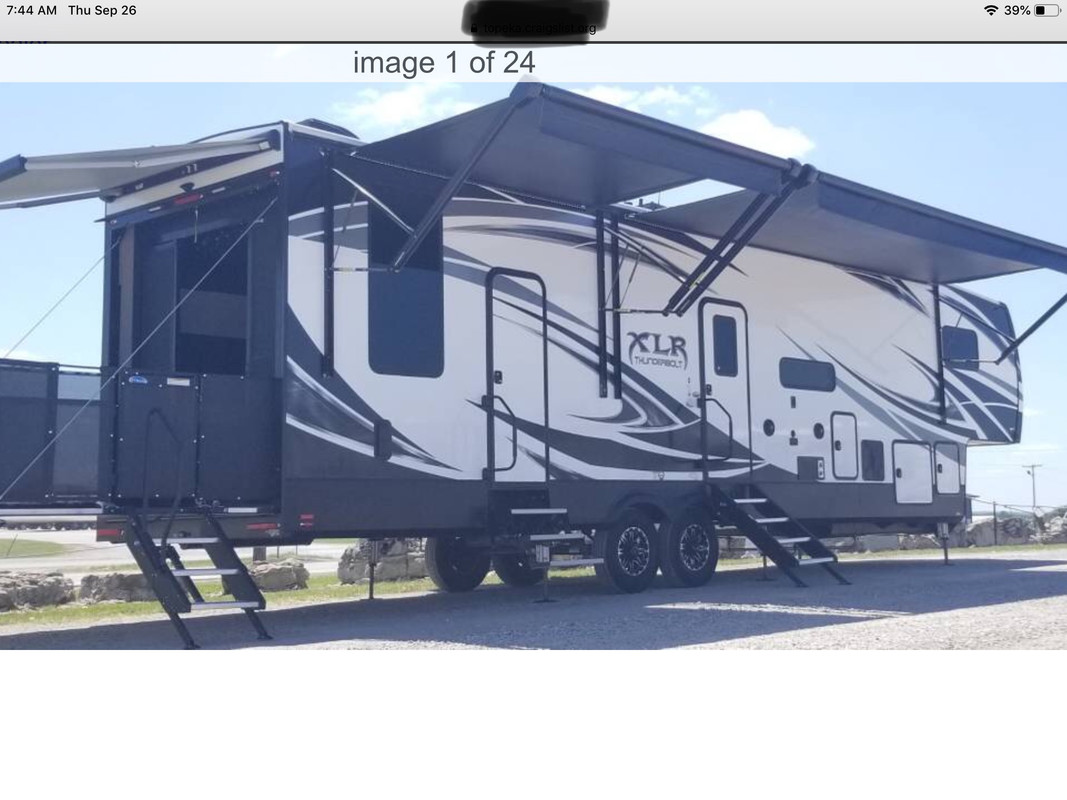


You can see the heaviest part of the load goes entirely behind the trailer axles, this will relieve a lot of tongue weight. I commonly hear about 500 lbs being taken off the tongue with a Polaris RZR in the garage.

Now, look at a typical living quarters horse trailer (I found a big one, since that’s what we’re talking about.


See how the axles are much closer to the rear of the trailer? With the four horses slanted, the majority of their weight goes over the axles. Even with four large horses, most of their weight will go directly onto the trailer axles, very little of it will be transferred anywhere else. The only real tongue relief you’re going to get is from the hay on the hay rack and what’s in the rear tack storage area. Even several hundred pounds, here, will not make much difference to the tongue weight. Look back at the toy hauler, putting over 1,000 pounds fully behind the trailer axles generally nets a tongue weight savings of less than half.

Here’s another large horse trailer, with a different axle setup:


Notice how they are spread further apart. This will spread the main load (horses) over even more area, to keep their weight on the trailer axles. This is a five horse. Perhaps, you could load just the two rear stalls and see a bit more tongue weight reduced, but if you were only hauling two horses, just get a smaller trailer. As soon as you put five horses in, they will go right back to countering what’s in the rearmost stalls.

Here’s a picture of two double axles, showing the axle spread differences (two new trailers). It’s quite dramatic:


Most of the trailers shown (horse) have GVWR (for the trailer only) of 16,000-20,000. Solid dually territory. The triple axle trailer is rather at 30,000 lbs. those are triple duals.
 
Last edited:
/ Truck and Horse trailer questions #27  
So, I wonder if having a rooftop hay rack in the back behind the axles on the trailer would help with counter weight for heavier trailers??? Not sure how much lighter that would make it at the nose of the trailer but it has to help somewhat I am sure.

The issue with this thinking is you’re counting on a used commodity. Before your trip, you load up hay and relieve tongue weight. As you go, hay is used, removing the weight you were using to relieve tongue weight. Even if the trailer weight is lighter, with less hay, you’ve removed it from the furthest point. Get a truck that can pull the trailer with at least 25% of the trailer’s GVWR and you won’t have to worry about it.
 
/ Truck and Horse trailer questions
  • Thread Starter
#28  
The issue with this thinking is you’re counting on a used commodity. Before your trip, you load up hay and relieve tongue weight. As you go, hay is used, removing the weight you were using to relieve tongue weight. Even if the trailer weight is lighter, with less hay, you’ve removed it from the furthest point. Get a truck that can pull the trailer with at least 25% of the trailer’s GVWR and you won’t have to worry about it.

That will be the plan, but most likely not this year now. The 3500's are a bit more money so we'd have to wait a year or so. We have tried to look at other options but class C rv's wouldn't be good for towing a 4 horse trailer or much of anything over 5k lbs from what I found. A diesel pusher would be way to big for our needs so we wouldn't do that.
 
/ Truck and Horse trailer questions #29  
If you can hold off until the 2021’s come out, that would give the new GM HD gas engine a year to work the kinks out. Check around, it’s not unheard of for the 3500 trucks to cost less than the 2500 trucks-just have to find the right seller at the right time.
 
/ Truck and Horse trailer questions
  • Thread Starter
#30  
If you can hold off until the 2021’s come out, that would give the new GM HD gas engine a year to work the kinks out. Check around, it’s not unheard of for the 3500 trucks to cost less than the 2500 trucks-just have to find the right seller at the right time.

Not around here unless the 3500 is a base model and several years older than the 2500. I was just checking to see what was available for chevy and even a 2009 3500 dually with 71k miles is being advertised for 35k. It may be worth it to look out of state for a new one but I haven't done that before with a vehicle. I'll have to look at the specs for the new 2020 models and check them out.
 
/ Truck and Horse trailer questions #31  
On horse trailers (moreso with living quarters), flatbeds, and toy haulers, I like to figure using worst case scenario. GVWR with 25% on the truck is about worst case. On a flatbed, you can usually manipulate the load, for proper distribution. With a living quarters trailer, the front weight is going to be closer to a constant than the garage/stock part. You’re putting the biggest variable (ATV/horses) as far from the tongue, as possible. This will have the biggest effect on tongue weight. Yes, a lot of weight in the back will relieve tongue weight. The issue then becomes where the axles are placed and how far apart they are.

If you look at axle placement on a typical toy hauler camper the axles are usually about 2/3 from the tongue, towards the back. They are designed for non-living static loads of a couple thousand pounds (some will hold cars, but those are usually goosenecks built like horse trailers). Most horse trailers, moreso if the have with living quarters, have the axles set much closer to the back end of the trailer. These trailers are designed for a live, dynamic load and much more weight, in the cargo area. The reason for the axles being further back is the stability of the load. The closer the trailer axles are to the truck, the worse the pendulum effect will be. Spreading the axles between the tow vehicle to the trailers makes it much more stable, especially, when you have thousands of pounds of animals moving around (toy hauler load shift is usually found spread down the highway). The real world effect of this is the horses standing over or behind the trailer axles relieves a lot less tongue weight than than the effect seen by removing an ATV from a toy hauler.

Here’s some examples.

Typical camper toy hauler:
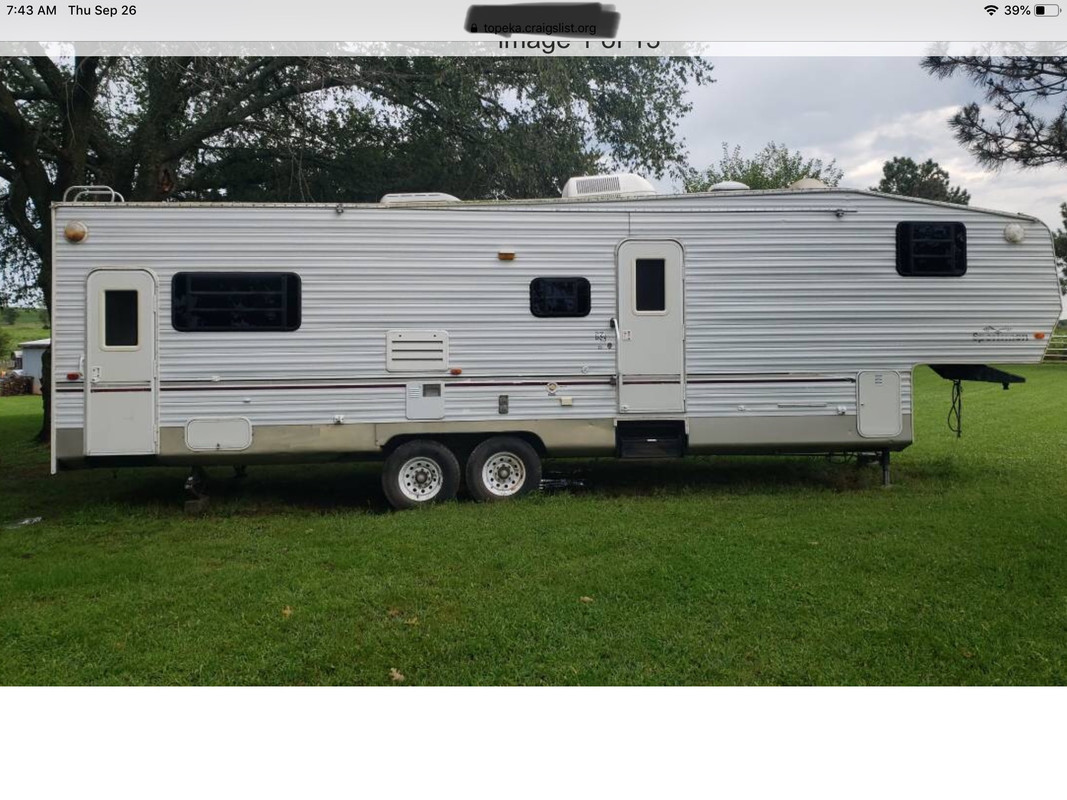


You can see the heaviest part of the load goes entirely behind the trailer axles, this will relieve a lot of tongue weight. I commonly hear about 500 lbs being taken off the tongue with a Polaris RZR in the garage.

Now, look at a typical living quarters horse trailer (I found a big one, since that’s what we’re talking about.
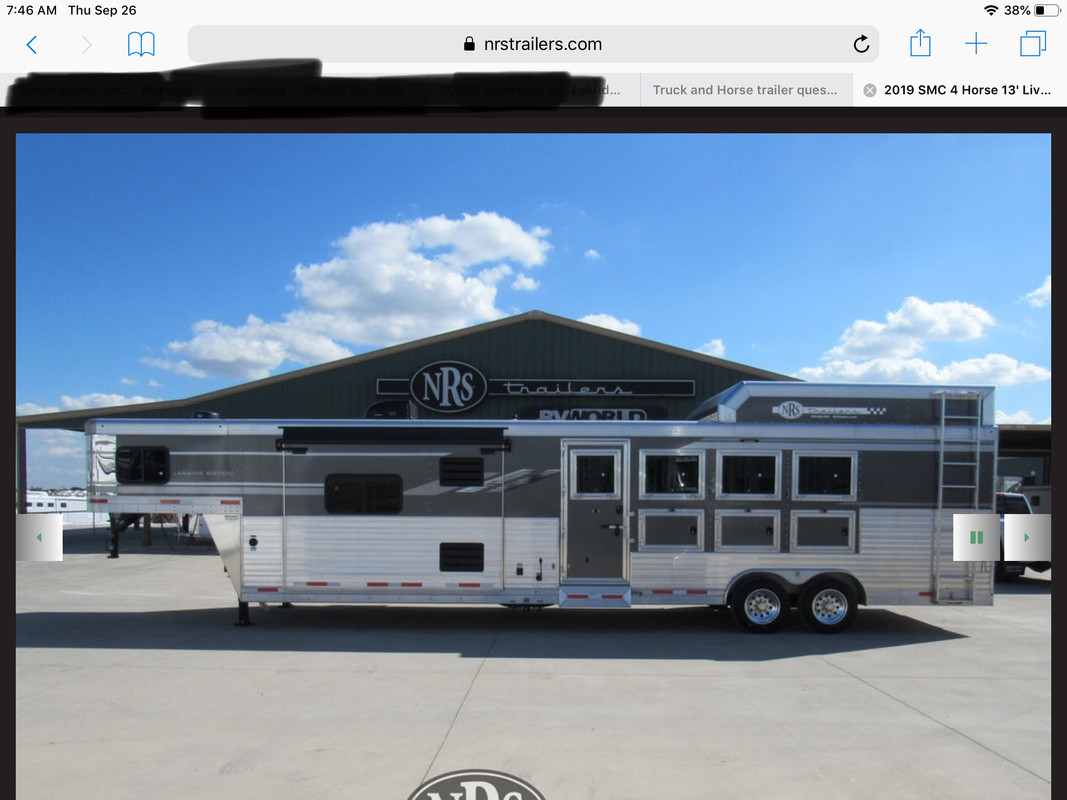


See how the axles are much closer to the rear of the trailer? With the four horses slanted, the majority of their weight goes over the axles. Even with four large horses, most of their weight will go directly onto the trailer axles, very little of it will be transferred anywhere else. The only real tongue relief you’re going to get is from the hay on the hay rack and what’s in the rear tack storage area. Even several hundred pounds, here, will not make much difference to the tongue weight. Look back at the toy hauler, putting over 1,000 pounds fully behind the trailer axles generally nets a tongue weight savings of less than half.

Here’s another large horse trailer, with a different axle setup:
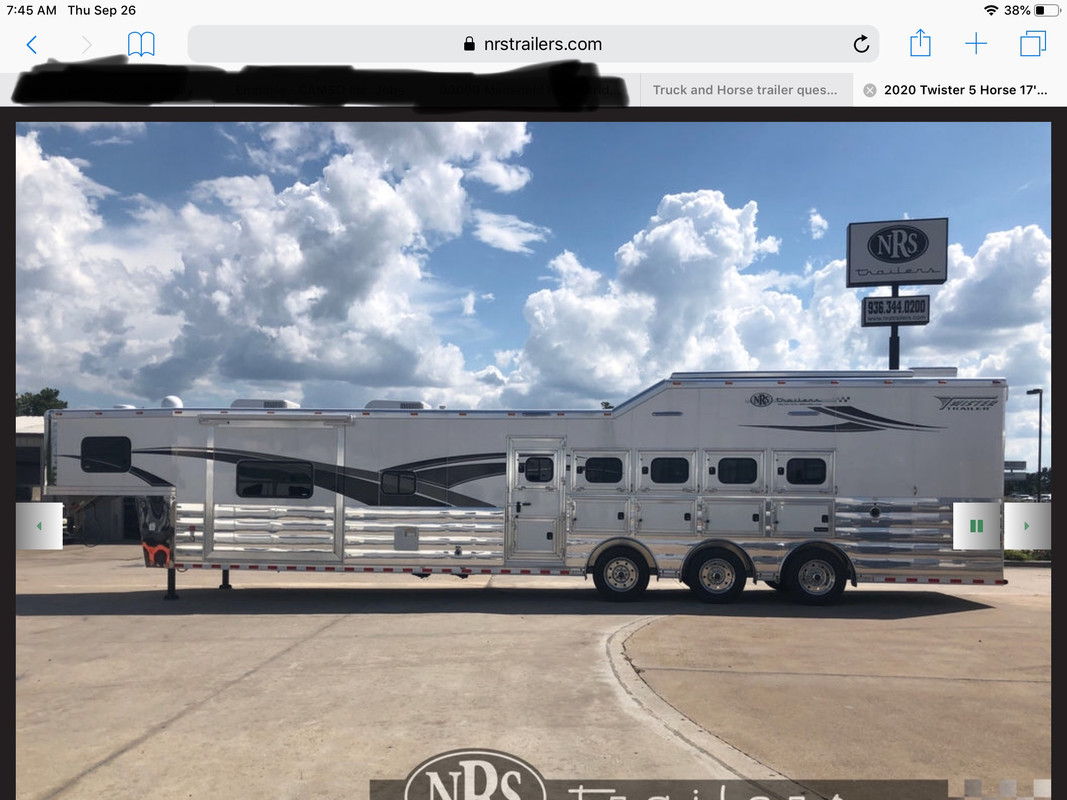


Notice how they are spread further apart. This will spread the main load (horses) over even more area, to keep their weight on the trailer axles. This is a five horse. Perhaps, you could load just the two rear stalls and see a bit more tongue weight reduced, but if you were only hauling two horses, just get a smaller trailer. As soon as you put five horses in, they will go right back to countering what’s in the rearmost stalls.

Here’s a picture of two double axles, showing the axle spread differences (two new trailers). It’s quite dramatic:



Most of the trailers shown (horse) have GVWR (for the trailer only) of 16,000-20,000. Solid dually territory. The triple axle trailer is rather at 30,000 lbs. those are triple duals.
Excellent post!
 
/ Truck and Horse trailer questions #32  
My experience is otherwise. After registration and lighting, GVWR is the first thing LEOç—´ check, out of what youæ±*e talking about. The payload sticker is not used, too many variables-not a legal standard. Then, axles and tires, as you said truck and trailer). After that, hitch and coupler ratings.

The civil side has no rules and everything can be used.

I致e been a LEO on a major US Interstate for over a decade, that痴 how it痴 done, where I work. I致e run a DOT F-350 for a couple of years (part-time tractor gig). Everyone has to read the rules and make their own decisions. My advice is worth what you paid for it.
Always enjoyed running in KS. Seems most scale house folks were nice and very informative on tie downs....weights on various class combinations.....log books.
Most of my KS entry points was I-35 coming from TX/OK.
My district was NM/CO/KS/OK/TX/LA/AR/MO so I've gone through lots of scale houses. Never did any scale house DOT officers look at or look for the truck makers GVWR. What they looked at was the truck and trailers registered GVW and my declared GCW operating weight.

Non commercial vehicle combinations ?
TX got me for exceeding vehicle axle load ratings on my wifes '86 2500 chevy carrying a 9' 6" truck camper and pulling a 1800 lb fishing boat. We were about 6 miles from a scale house on US-271. I was scaled 600 lbs over the trucks RAWR but under my over size whels and tires. Nice guy...so he says unload "stuff" out of the camper and put it in the boat. I got down to axle weight allowances. He and his family camped and fished also so we had a good talk while the wife and I shifted weight.

OK DOT officer got me on US69-75 for a roadside check. This was before I started hauling for a living. I had a 3500 DRW GMC and a buddies 36' triaxle GN flatdeck with a load of steel beams and sheet metal for the buddy to have a shop at his place. Nothing being sold as commerce.
The loading yard had loaded the trailer with to much weight on the trucks rear axle. Officer says redistribute the load or drop the trailer. The trailer had a winch and after rigging a reverse pull we were able to move pallets enough to be with in the trucks RAWR.

So yeah Dot can and sometimes do weigh non commercial vehicles. Its happended to me and happened to others.

Reading the rules ?
Good idea however I've found its best to contact a state troop hdqtrs and get their input from a size and weigh certified DOT officer on how that state enterprets and enforces vehicle weight codes. Of the eight states I was required to cover they were all on the same page.
 
/ Truck and Horse trailer questions #33  
I’m in the middle of the State scales. We have to escort to a fixed scale or use portables. The portables are good fir the drivers as they can’t be certified to the same accuracy, so much more leeway is given.

Most Kansas people a friendly and helpful, in general.

Reading the rules is tough. Nothing is as hard to get right as started in the trucking industry. As far as calling someone, that’s great, but understand there are often times groups of us get together and argue about applicability. Sometimes four of us won’t agree on an issue or specific situation. The trucking laws need major overhaul toward simplification. From what I’ve found, most guys find their niche, in truck inspections. Some like the hot-shooters, some like farm semis, others prefer the trucks where you know you’ll find axles held on by ratchet straps (yes, this happens), some only pick the nicest trucks hoping to not find anything because they just have to get their required inspections in.
 
/ Truck and Horse trailer questions
  • Thread Starter
#34  
Thanks for all the info. Its been very informative and it'll help for future purchases. The final decision we ended up making was to keep our current set up and do some small modifications to add a set of bunk cots we bought into the front of the trailer. When the time comes, we will trade in our Subaru and look at getting a small truck to pull a small camper and go that route instead. Then we will have the camper for the times we go camping without the horses so it'll get used more.
 
/ Truck and Horse trailer questions #35  
The medium duty trucks are a lot better value for towing. And tow way better than a pickup. I see pretty nice daycab road tractors for 10k or decent ones for 5k. And no CDL needed for private RV use.

This is the pleasure horse industry and most of them are pretty spoiled.:p My ideal truck is about 65k new, the M2 is 155 :shocked: oh yeah, crew cab and 4x are necessary standards cause we usually park in someone’s hayfield
 

Attachments

  • 6C5151E2-6089-47B0-A96F-22AD7F6831A6.jpeg
    6C5151E2-6089-47B0-A96F-22AD7F6831A6.jpeg
    91.1 KB · Views: 163
/ Truck and Horse trailer questions #36  
The issue with this thinking is youæ±*e counting on a used commodity. Before your trip, you load up hay and relieve tongue weight. As you go, hay is used, removing the weight you were using to relieve tongue weight. Even if the trailer weight is lighter, with less hay, you致e removed it from the furthest point. Get a truck that can pull the trailer with at least 25% of the trailerç—´ GVWR and you won稚 have to worry about it.

:thumbsup:
 

Marketplace Items

ALLMAND NIGHT-LIGHT PRO 4 BULB LIGHT PLANT (A52706)
ALLMAND...
2025 Ford Transit Cargo Van (A56858)
2025 Ford Transit...
(15) UNUSED 8'X41' PROTECTION MATS (A60432)
(15) UNUSED 8'X41'...
2025 DIGMASTER DM100 EXCAVATOR (A60430)
2025 DIGMASTER...
2021 KENWORTH T680 TANDEM AXLE SLEEPER (A59575)
2021 KENWORTH T680...
JOHN DEERE 4450 TRACTOR (A59823)
JOHN DEERE 4450...
 
Top