Semi rural living - Fire safety & water provision best practices

   / Semi rural living - Fire safety & water provision best practices #1  

Tangoddess

Bronze Member
Joined
Apr 6, 2017
Messages
82
Location
Cleveland, TX
Tractor
None yet
Hello,

Me again. So, now that our household is growing and our land is clear we need to start thinking about fire safety and safety in general.

We live on a residential farm in North Houston, Texas, proximal to other similar properties. But it would take 20 mins for a fire truck to get to our home, and there are no fire hydrants on the street.

We do have some diesel containers and gasoline containers in our garage so that creates a permanent fire hazard. And of course our neighbors may have more hazardous substances or quantities of gas and diesel.

We do have some store bought ABC category fire extinguishers and smoke alarms at home.

We are planning to build a lake on our property within the next year or so....

What are some of your tips to prevent a fire and Lord forbid if there is one, to have a water source for the fire trucks to use?

To add, how important is it to have a knox box on our gate for the fire department to access and open our gate to the property? The door may take a while to break down :)

Any and all recommendations are very welcome.

Thank you
 
   / Semi rural living - Fire safety & water provision best practices #2  
Hello,

Me again. So, now that our household is growing and our land is clear we need to start thinking about fire safety and safety in general.

We live on a residential farm in North Houston, Texas, proximal to other similar properties. But it would take 20 mins for a fire truck to get to our home, and there are no fire hydrants on the street.

We do have some diesel containers and gasoline containers in our garage so that creates a permanent fire hazard. And of course our neighbors may have more hazardous substances or quantities of gas and diesel.

We do have some store bought ABC category fire extinguishers and smoke alarms at home.

We are planning to build a lake on our property within the next year or so....

What are some of your tips to prevent a fire and Lord forbid if there is one, to have a water source for the fire trucks to use?

To add, how important is it to have a knox box on our gate for the fire department to access and open our gate to the property? The door may take a while to break down :)

Any and all recommendations are very welcome.

Thank you

Depending on your budget I’d suggest having a residential sprinkler system installed. Oasis fire protection is a company for example. As for the Knox box, get with the county fire Marshall so you can get it keyed correctly. Hopefully it’ll never be used but they are very useful and would be nice if they were mandatory.

If you have a pond a dry hydrant would be useful for drafting but a turbo draft site would also be handy

Brett
 
   / Semi rural living - Fire safety & water provision best practices #3  
Do not depend on a fire dept to save your house. In my experience, even if you are next door to the volunteer fire dept like my friend was, by the time they get to your house, even if you have fire hydrant at your front door, all the FD is going to do is keep anything else from catching fire. Your house is going to be totaled.

Best spend your money on a good insurance policy. Make sure that it will cover removal of the remains of your home if a fire does happen. It is quite costly to demo and haul off the remains of a burned house.
 
   / Semi rural living - Fire safety & water provision best practices #4  
Are we talking about a fire that starts IN the house? Or a fire that spreads to your place from outside your boarders?

For inside, your best bet is make sure everything is to code, electrical, etc. Have smoke detectors, maybe some heat detectors in the attic space, and a couple fire extinguishers to help you get out. Fire extinguishers are NOT for fighting fires. They are to handle a small problem like a waste paper basket, or skillet on the stove. Anything bigger, and just collect all the people and animals and get out. A sprinkler system will help, but the water damage from that will still likely "destroy" the inside of the house. Sprinklers are there to save people, not structures. And you have to have a water source for the sprinkler system, which is sounds like you do not.

Most of the time, the ONLY time a FD crew will enter a structure fire, is if there are still people trapped inside. If they are sure the structure is empty, they will just "monitor" the fire to keep it from spreading to the next house/structure/property. They are not going to risk their lives to save your house. That is what insurance is for.

Brush fires. Keep your property cleared from piles of brush, tall grass, dead trees, limbs, old pallets, undergrowth beneath your trees, etc. Create a barrier zone (normally called a "fire break") around your house and out buildings that is clear of all these "fuels". In summer, or other high risk times, also keep any portion of your property bordered by a road or highway mowed down very short of grass or brush. People driving by like to throw all manner of garbage, including burning cigarette butts, from their vehicles as they go past your place. Again, reduce the quantity of fuel source available to start or feed a brush fire.
 
   / Semi rural living - Fire safety & water provision best practices #5  
A lot said is very true but I'll add, Have your chimney swept regularly, like annually at least.

Next door neighbor (we are rural) had the chimney catch fire and even though the trucks made it in 20 mins the house will be declared total I think.

The dept cut his hydro so all the plumbing will be scrapped, water damage is extensive as is smoke damage.
Water got between the siding and structure and the siding bulges out. The all wood ceilings and BC fir exposed trusses are charred and some partially burned thru.
Now also not being heated I'd suspect the foundation will have suffered as well.

Adding insult to injury he might even lose his 'acquired rights' and no be able to rebuild.
(Bylaws specify you need 75 ft frontage on the municipal road which he has 0 ft)
 
   / Semi rural living - Fire safety & water provision best practices #6  
Are we talking about a fire that starts IN the house? Or a fire that spreads to your place from outside your boarders?

For inside, your best bet is make sure everything is to code, electrical, etc. Have smoke detectors, maybe some heat detectors in the attic space, and a couple fire extinguishers to help you get out. Fire extinguishers are NOT for fighting fires. They are to handle a small problem like a waste paper basket, or skillet on the stove. Anything bigger, and just collect all the people and animals and get out. A sprinkler system will help, but the water damage from that will still likely "destroy" the inside of the house. Sprinklers are there to save people, not structures. And you have to have a water source for the sprinkler system, which is sounds like you do not.

Most of the time, the ONLY time a FD crew will enter a structure fire, is if there are still people trapped inside. If they are sure the structure is empty, they will just "monitor" the fire to keep it from spreading to the next house/structure/property. They are not going to risk their lives to save your house. That is what insurance is for.

Brush fires. Keep your property cleared from piles of brush, tall grass, dead trees, limbs, old pallets, undergrowth beneath your trees, etc. Create a barrier zone (normally called a "fire break") around your house and out buildings that is clear of all these "fuels". In summer, or other high risk times, also keep any portion of your property bordered by a road or highway mowed down very short of grass or brush. People driving by like to throw all manner of garbage, including burning cigarette butts, from their vehicles as they go past your place. Again, reduce the quantity of fuel source available to start or feed a brush fire.

They won’t sit back and watch a fire that is small burn the house down. A fireman’s job is to protect life and property. They aren’t going to burn their gear up for an empty building but if they can fascilitate an offensive attack than they generally will. Especially in the Houston area of depts which Cleveland is in. The sprinklers can help keep a fire in check. There will be water damage but that’s much better than fire especially since it’s fresh water. There main focus is buying time for the occupants to escape.

As for a water system. They don’t require a tremendous amount of water since they are residential systems and not designed to flow several heads at a time. A well can keep up with it generally if it has power and city water is a no brainer. Materials is approx $1 per sq ft then installation last time I checked.

Brett
 
   / Semi rural living - Fire safety & water provision best practices #7  
Do not depend on a fire dept to save your house. In my experience, even if you are next door to the volunteer fire dept like my friend was, by the time they get to your house, even if you have fire hydrant at your front door, all the FD is going to do is keep anything else from catching fire. Your house is going to be totaled.

Best spend your money on a good insurance policy. Make sure that it will cover removal of the remains of your home if a fire does happen. It is quite costly to demo and haul off the remains of a burned house.

What he said. Call your insurance agent and do what makes sense from lowering your policy stand point. Then take pictures and document what you do own. Then have a good get out of dodge plan. Of course do what you need to do to lower risk. Like putting fuel in building off in the corner of your lot!
 
   / Semi rural living - Fire safety & water provision best practices #8  
Residential sprinklers /fire suppression systems have really come down in cost. Well worth it even for the insurance standpoint. I have 2 - two thousand gallon tanks of water for "stand by" fire suppression and FD use. I have a gas powered water pump and 100' of 1 1/2" fire hose / nozzle. We have a full time paid FD, about 6 miles away, but I guarantee by the time I would call 911, they get dispatched, and the crews respond and arrive on scene, the structure could be fully involved. Sprinkler systems have it out before you even get off the phone. Also works when no one is home.
 
   / Semi rural living - Fire safety & water provision best practices #9  
a pool or lake that can be accessed, I have a 9000 gallon tank on my property, if full that may only last a few mins in a fire pumper,
but the biggest problem is water availability for fighting fire in a rural area. If the department uses foam it can stretch a water supply greatly,

I have found 2.5 gallon air pressurized extinguishers far superior than the ABC units, I have the foaming nozzle on the extinguishers, and even adding some dawn dish soap will do wonders, to the effectiveness of the extinguishers, look up cold fire and watch there videos,

but the fact is fire prevention is your best bet,
spread out the buildings,
store the flammables in a separate shed away from other buildings,
keep grass cut low,
and any piles of flammable materials, away from other buildings,
use fire resistant materials for siding of buildings
read up on fire mitigation,

adding a residential sprinkler (even with limited water supply can stop a fire before it gets out of control) , biggest problem with a residential sprinkler is agan water supply, most wells are under 15 gallons a min, that will not run a lot of heads if needed. having a water supply that with an auxiliary pump could help a lot.
 
   / Semi rural living - Fire safety & water provision best practices #10  
Most of the time, the ONLY time a FD crew will enter a structure fire, is if there are still people trapped inside. If they are sure the structure is empty, they will just "monitor" the fire to keep it from spreading to the next house/structure/property. They are not going to risk their lives to save your house. That is what insurance is for.

OMG! Totally incorrect! I have been inside many burning houses, putting out fires, when we knew there was no one inside. Only when collapse became a high risk were the firefighters pulled out and it became a "defensive" situation. (I was a volunteer firefighter for 14 years and responded to over 1200 fire runs. Only a few times did we fight the fire from outside and those were after we were unable to stop it with an interior attack.)

As for providing a water source for the fire department, TALK TO THE FIRE CHIEF! While ponds and FD connections are nice, the FD is accustomed to providing their own water and may very well ignore private sources. The first rural department I served on was so used to operating off of their tanker that they only used hydrants to refill the tanker after the fire was out!
 
   / Semi rural living - Fire safety & water provision best practices #11  
I have found 2.5 gallon air pressurized extinguishers far superior than the ABC units, I have the foaming nozzle on the extinguishers, and even adding some dawn dish soap will do wonders, to the effectiveness of the extinguishers, look up cold fire and watch there videos,

I agree! Dry chemical extinguishers are for grease and oil fires, not wood/plastic/paper. Looking at a typical small dry chem extinguisher, it is rated at 1A:10BC. The A rating is miniscule. I much prefer the pressurized water extinguishers but they are not for kitchen stove fires!!
 
   / Semi rural living - Fire safety & water provision best practices #12  
If you have a decent enough plot of land, my #1 suggestion is to NOT store flammables and combustibles in the garage. Put them in a shed or other suitable outbuilding. Don't leave small appliances plugged in. The rest of the advice is spot on.
 
   / Semi rural living - Fire safety & water provision best practices #13  
Shazam - I live way out in the country but fortunately there is a volunteer fire dept facility about two miles south.

For the first thirty years I lived out here I maintained a "fire break" on the SW portion of my property. Around 90% of all our wind comes out of the SW and would be the factor that would bring a wildfire to my property. Then five years ago we DID have a wildfire - Watermelon Hill Wildfire. The wind shifted at the VERY LAST moment and the wildfire just missed the SW edge of my property by 100 feet.

What that wildfire revealed - my firebreak would have been a TOTAL JOKE. The winds driving that wildfire were causing it to leap in quarter mile increments.
Even if my firebreak were 100 yards wide - which it is not - it would have had zero effect.

I do have a five acre lake - 80 feet deep - that has been used by helicopters to "dip 'n go" when fighting that wildfire five years ago. So it could easily be used if their equipment were ever positioned on my property.

MY SUGGESTION - - #1) have a well rehearsed evacuation plan. Know where you will evacuate to and let those who would be concerned for your health know also. #2) Have top notch fire insurance. When all is lost - you will at least know the money is there to rebuild - should you choose.

Never - in all my life - have I witnessed such a helpless situation as the Watermelon Hill wildfire. The full resources of all available fire suppression forces were at a complete loss to stop its advances. Only thru the actions of several local farmers - (LARGE tractors & disks), the abating wind & lack of fuel - - was this fire snuffed out.
 
   / Semi rural living - Fire safety & water provision best practices #14  
We have a 10,000 gallon tank 250' above the house with a 4" line to a hydrant in front of the house. Having that much water and a hydrant is a requirement here, though it can be in a swimming pool or tank at hydrant level. We also have roof sprinklers to turn on if there's a fire approaching. I have 300' of hose and fire tools which go in a bin next to the hydrant. They're for us to use on a small fire before the fire fighters get here. The local wildland fire dept helicopter station is only a few miles from us so a copter can get here fast but it'll take a while for any trucks to make it as the road is steep and twisty.

Other posters have covered house fires. For wildland fires, the most important thing is to keep vegetation and flamables clear around your house. For example the wood pile next to the house is a great place for embers or brands to land and start a fire. Decks are where a lot of wildland fires become house fires as well. We're getting ours rebuilt, we'll be using more fire resistant material.

When you remove the ashes from your stove don't put them on the ground until you're really sure they're out. One of the neighbors didn't do that and set an outbuilding on fire. Fortunately it was in winter when the vegetation doesn't burn fast.

Have a plan for what you'll take if you evacuate on short notice, where you'll go and how you'll meet up if you're separated.
 
   / Semi rural living - Fire safety & water provision best practices #15  
I guess it is very minimalist fire protection that we did when we built our place, but it makes me feel a little more secure:

When we ran our domestic supply (city water) down our our 1/2 mile driveway, we put in 6 branches with yard hydrants. We have about 125psi of pressure and 2" lines (choked down to 3/4 at the hydrants), but they still flow a LOT. Gives at least a modicum of "forest fire" protection.

In the house, we have a full basement with drive under 2-car parking. I mounted a 195deg sprinkler head directly above where each vehicle (engine) sits, plus one in my shop area, plus one above the wood furnace. After I set up my reloading bench I added another one there.
 
   / Semi rural living - Fire safety & water provision best practices #16  
When I lived in the Santa Cruz mountains, I had 10,000 gallons of water and 4" hydrants in two locations that I could use, all gravity feed at 50 psi. You are not at the fire risk that we were with 6 months (give or take) of no rain at all and sitting in the middle of a mixed redwoods and hardwoods forest/woods. I could not even begin to get homeowners insurance.

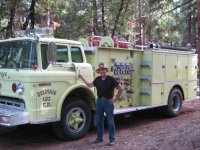
Now I live in the Cascade Mountains of northern CA and we get 60 to 70" of precip a year, but still have four or five months of zero rain and sit in the middle of a pines/firs/cedar and oak forest with just a tad less fire danger than before. Some people never learn. I'm only a mile from a CalFire station that is manned year around but still, what I did is buy a running pumper with a sound 750 gallon water tank and 200' of 1" hose for $1500. I keep it full all fire season and keep Barricade handy to hose down the buildings in the event of a wildfire.

I will be adding two 2500 gallon poly water tanks to keep the pumper fed during a fire as well. Home Depot has good poly tanks for under a grand.

IMG_0637.JPG
 
   / Semi rural living - Fire safety & water provision best practices #17  
Be sure to accurately list your distance from the fire station as otherwise if over a certain distance (8 kms here) the rates change and you could be considered co insured.
Also be sure the evaluation is current as again co insurance clause might apply.
Major insurers will adjust your policy from time to time to reflect costs of replacement. (and LOL, the premium)

Co insurance means you share the risk, example, you insure for $100k as that is what it cost back then and you have 'total loss' and that same building costs $200k to rebuild. Well as co insured they will give U 1/2 of your $100K.
Bummer I know, but I know of 2 cases where that happened.

Many policies rely on how far U are from a hydrant for calculating the risk.
When we learned of that fact we installed 'dry hydrants' at a minimal cost.
With 2 'dry' all of us are within the magic distance and therefore our rates at decent.

NB a 'dry hydrant' is a pipe system that is permanently installed in such a way that the screened intake is proud of the source bottom (ie lake) and easily accessible is a hydrant or pipe that is fitted with the fire department hose hookup that they can rapidly refill their tanker truck from.
These dry hydrants have become very commonplace for many miles around here, in fact 10 municipalities that I am aware of.
(Our dep't now uses 5" PVC piping to fabricate them.)

SO if you have a stream or pond lake etc consider a dry hydrant and be sure to mention that when you get insurance quotes.
The only costly item will be the dep't mating fitting.

Another idea is to take pics of all your valuables as proof of contents should U have a fire, remember fire will consume the items and any invoices you had kept.

My daughter needed to claim (break in, not fire) but she could document every loss item and consequently only lost her deductible amount. ($200. on a $5000. claim)

Many years ago we installed the first dry hydrant (at our expense) simply for peace of mind. It so happened that we had a small forest fire and that hydrant proved so successful (actually saved the fire truck that was surrounded by fire) that the city reimbursed us the costs of installation. The rest has become history.
 
   / Semi rural living - Fire safety & water provision best practices #18  
when we built, we added fire sprinkler heads all over the place. They are only $5 each, with a separate pex line, super low cost. We don't have a 2 inch high pressure line feeding them. But in a typical home fire it starts in one spot and a sprinkler would slow it way down. If it were to spread to the next room/sprinkler, the second one would "share" the pressure.

We also live in a all concrete home. So for us living far from the fire dept, we are buying time.....
 
   / Semi rural living - Fire safety & water provision best practices
  • Thread Starter
#20  
Hello,

I am grateful for all the replies, thank you. It looks like having a sprinkler system is a good option.

a) Can a residential sprinkler system receive water from a well? - We currently receive our water from a well, it has been working well and there have been no water shortages.

We also have a septic system in case that matters.


b) It also seems that good INSURANCE is very important, we have home owners insurance, but not sure if that is sufficient, especially in terms of recovery from a fire, Lord forbid.

Is a comprehensive fire insurance separate to a homeowners insurance? Or are there specific offerings and clauses we need to look for in the homeowners insurance to learn what level of coverage it provides?

I appreciate your help thank you again.

Thank you
 

Marketplace Items

HOMEADE 8' X 22' TRI-AXLE TRAILER (A60430)
HOMEADE 8' X 22'...
2018 ALLMAND MAXI-POWER 45 GENERATOR (A58214)
2018 ALLMAND...
2025 CATERPILLAR 255 SKID STEER (A60429)
2025 CATERPILLAR...
UNUSED FUTURE FT36C STAND ON SKID STEER (A52706)
UNUSED FUTURE...
Unused 2025 CFG Industrial H15R Mini Excavator (A59228)
Unused 2025 CFG...
2019 Allmand Night-Lite V-Series 7 kW S/A Towable Light Tower (A55973)
2019 Allmand...
 
Top