Mark @ Everlast
Advertiser
A weldable collar type jack would probably worked better in this situation.

Add 2 triangular braces on each wheel as shown?
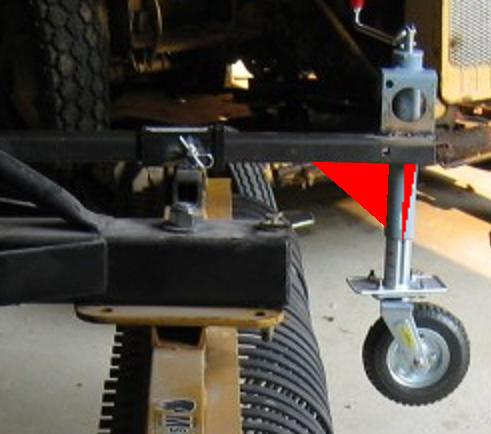
----------------------------------------------------------------------I'm looking at the pix and thinking that the welds holding the jacks bracket to the square tube are what broke. They have good length front to back, but not much to hold them from side stress. For some reason I don't think he welded the round tube of the jack. I'm thinking he needs to install a side gusseted plate to the top of the square tube to bolt the jack to.
The whole 3ph mechanism will rise all the way to its stop before the top illustration happens. Only extreme circumstances are sufficient to cause this.
larry


It would help if we knew what type of welder you are using. also could the wheel not be swiveking and putting a side load on the weld? As you go up and down with the adjustment the angle of the castor changes and this could make it hard to turn just a idea.
I like your gauge wheel implementation and think ill use some variation of it.:thumbsup: I dont see where the weld of jack tube to square tube is made. Looks like there is a bracket on the jack that would be welded to the square. Maybe you are augmenting this with another weld to the jack tube?
At any rate, grind off as much failed weld as possible and use 6011 rod at highest non burnthru level. Chip slag, inspect the weld and touch it up while hot if you can. Bracing too as mentioned previous. ... oopps - you are stick welding right?
larry
Looked at it more closely. Cut a plate, bolt it to the jacks and then bolt or weld plate to the main frame.:thumbsup:
No penetration, a little more heat?