macecase
Bronze Member
- Joined
- Sep 27, 2012
- Messages
- 98
- Location
- Princeton, KS
- Tractor
- 1965 John Deere 3020 Diesel and 1975 John Deere 4630 Diesel
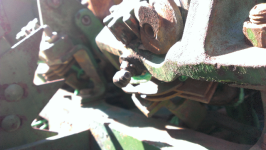
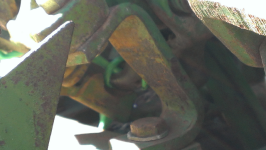
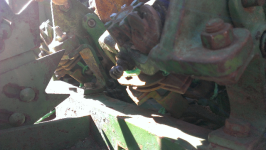
Your billhook is WAY too rusty. It should be shiny and smooth, which helps the knot to slide off. Clean it up and I'll bet your problem goes away (and after setting the proper tension if it's been adjusted trying to get it to work)
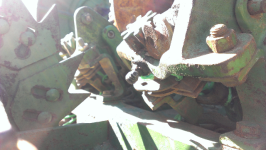
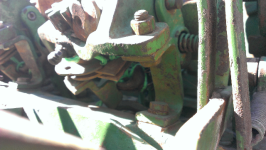
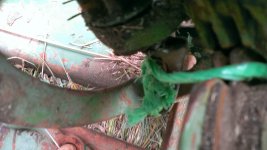
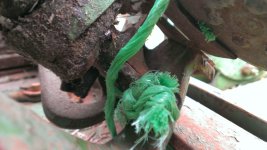
Your knotters are really filthy. I'd clean all the dirt, grime and rust off them. Get the cleaned knotters working correctly. Then after each baling session, spray WD40 on them and repeat every few weeks when the baler is in storage between seasons.
Your knotter should be as clean as the ones in this video
John Deere Baler Knotter Action - YouTube
Good luck
To the fellas that have commented and actually know all the names of the knotter parts, I apologize in advance if I get the names all messed up:
I had a very similar problem on the knotter on my 24t baler a couple of weeks ago, and it ended up being a broken part that wipes the knot of the billhook (I think). I was able to pull the part off of the working knotter and go make another one with some flat stock and grinder. I have no idea if that could be the same thing in your case.
I don't have my parts manual with me, or else I could scan in the diagram and show the part I'm talking about.
Hopefully, the knotters are just a bit rusty and need to be cleaned and they will start working.
Good luck and take care.
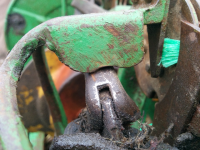
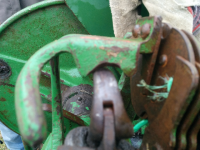
So, I did a lot of investigating and have come to the conclusion that the wiper is worn on the left knotter; just like yours. If you review the attached photo, I hope you'll agree that the left wiper is a worn down semi circle whereas the right one seems more flat and makes good contact with the hardened bill hook.
So, your fix.... You took the arm off and just welded more metal on and then ground it? Imam not sure how to do that.... Know anybody that offers that service?
I read about bending as well. Does anybody think this can just be bent to make better contact?


Any thoughts on what to do?
Wiper arms are made of malleable iron. That means its softened and bends without breaking. The manual instructs you to bend the wiper arms so that they make hard contact with the billhooks. It should take 5 - 10 lbs of force to pull the arm across the jaw when its done correctly.
I use TWO Crescent type wrenches to do this with the arms in place: First one is on the arm itself and the second one is on the first wrench. This allows you to draw the wiper area back to a contact position without having to remove it from the knotter frame.
No need to file or grind the wiper in the contact area. Check the other side, too. The manual indicates that there is such a thing as a 'modeling tool' available to do this same adjustment, but the two wrenches give me all the movement I need. We're not talking a quarter inch, it should only be off by 1/16" or so before trouble starts.
These parts don't get out of adjustment because of wear usually. It's because other causes of knot failure make multiple knots build up on the billhooks and this makes the wiper bend away to clear the tangled up twine.
First thing to do is replace the wire wound on the wiper arm shaft with washers, really shims ie different thickness washer/s to give a firm fit without end play but not so tight as to impede the rotation of the wiper arm. The billhooks are usually really shiny, although I assume they have been cleaned up. If a smoother finish is needed use wet and dry paper of at least 400 grit and instead of dry or with water use a small quantity of lubricating oil on the carborundum paper, it may also be known as emery cloth. The oil helps give a very smooth finish.
The wiper should make a reasonably wide contact with the billhook. The video shows only a small contact not central to the centre line of travel on the billhook. The video shows contact to the left of centre.
Although filing is a last resort, I think that the wiper of the knife arm should be very gently filed to give a rounded profile to match the curved profile of thebillhook that the wiper traverses. The knife arm should be bent to give good contact of the wiper to the billhook and the wiper should not have any taper in the direction of travel such that twine would wedge under its leading edge.
You have asked the question in regard to knife clearance from the twine disc holders. The knife arm when fitted with the shims should not foul on the twine holder discs but does not have to be in very close proximity. The knife itself should be sharp and can be touched up with an oilstone to make it almost razor sharp.
In the passage of the knife arm toward the billhook to wipe the formed knot from the billhook, the knife passes the tightly tensioned strings and cut them only a moment before the wiper removes the formed knot from the billhook and can do so because the twine ends have just been cut leaving a small residue length of twine, about 1 inch long which falls out of the twine disc holder and the other end is already held in the next station of the twine disc which rotates ready for the next bale to be formed. That end which was held and cut off from the looped and just formed knot is the little bit of cut twine that appears on the top of the bale chute behind the knotters.
I like zzby6's use of two crescent spanners to achieve adjustment of the wiper arm. Much more controlled than my hit with a hammer.
After a few failed knots build up on the billhook, the knots pull very very tight on the billhook and are almost impossible to remove so the wiper has to jump over the growing bundle of knots and is bent away from the billhook just as zzby 6 says.
To get the build op of knots off the billhook, undo the knotter from its secured position and swing the knotter up as is shown in the video and flick the billhook tensioning arm off the billhook roller, this allows the billhook beak to open and gives you room to cut the sides of the knot tangle from the billhook with a sharp knife. Do not use something like a hacksaw blade because the teeth can damage the smooth surface of the billhook. Replace the billhook tensioning arm snugly over the billhook roller. Fold the knotter assembly back down and secure it in position.
Good luck with the fix, and happy baling.
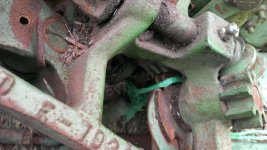
First thing to do is replace the wire wound on the wiper arm shaft with washers, really shims ie different thickness washer/s to give a firm fit without end play but not so tight as to impede the rotation of the wiper arm. The billhooks are usually really shiny, although I assume they have been cleaned up. If a smoother finish is needed use wet and dry paper of at least 400 grit and instead of dry or with water use a small quantity of lubricating oil on the carborundum paper, it may also be known as emery cloth. The oil helps give a very smooth finish.
The wiper should make a reasonably wide contact with the billhook. The video shows only a small contact not central to the centre line of travel on the billhook. The video shows contact to the left of centre.
Although filing is a last resort, I think that the wiper of the knife arm should be very gently filed to give a rounded profile to match the curved profile of thebillhook that the wiper traverses. The knife arm should be bent to give good contact of the wiper to the billhook and the wiper should not have any taper in the direction of travel such that twine would wedge under its leading edge.
You have asked the question in regard to knife clearance from the twine disc holders. The knife arm when fitted with the shims should not foul on the twine holder discs but does not have to be in very close proximity. The knife itself should be sharp and can be touched up with an oilstone to make it almost razor sharp.
In the passage of the knife arm toward the billhook to wipe the formed knot from the billhook, the knife passes the tightly tensioned strings and cut them only a moment before the wiper removes the formed knot from the billhook and can do so because the twine ends have just been cut leaving a small residue length of twine, about 1 inch long which falls out of the twine disc holder and the other end is already held in the next station of the twine disc which rotates ready for the next bale to be formed. That end which was held and cut off from the looped and just formed knot is the little bit of cut twine that appears on the top of the bale chute behind the knotters.
I like zzby6's use of two crescent spanners to achieve adjustment of the wiper arm. Much more controlled than my hit with a hammer.
After a few failed knots build up on the billhook, the knots pull very very tight on the billhook and are almost impossible to remove so the wiper has to jump over the growing bundle of knots and is bent away from the billhook just as zzby 6 says.
To get the build op of knots off the billhook, undo the knotter from its secured position and swing the knotter up as is shown in the video and flick the billhook tensioning arm off the billhook roller, this allows the billhook beak to open and gives you room to cut the sides of the knot tangle from the billhook with a sharp knife. Do not use something like a hacksaw blade because the teeth can damage the smooth surface of the billhook. Replace the billhook tensioning arm snugly over the billhook roller. Fold the knotter assembly back down and secure it in position.
Good luck with the fix, and happy baling.

Any thoughts on what to do?