Paving Private Rural Driveway

/ Paving Private Rural Driveway #1  

Pettrix

Platinum Member
Joined
Jan 17, 2012
Messages
622
Location
High Desert Southwest
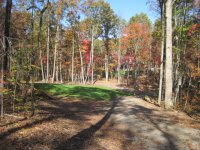
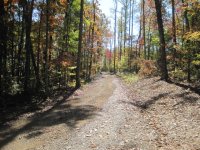
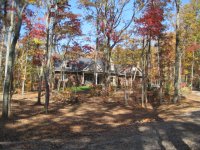
I am considering paving the private driveway to the home site. The road is currently cleared, graded, and useable but it is unpaved dirt with some spot of "AB" (about 1"-2"). The road is cleared 15 feet wide and is about 1,700 feet long. The home isn't built yet but I hope to pave the road after the home is built and after all heavy machinery is gone from the site. I am not a big fan of "dirt" roads because of the dust issues (Northern AZ) and constant upkeep after rains.

I was quoted a rough estimate of about $35k for an asphalt driveway that will be 3" thick and 10 feet wide by 1,700 feet long. The cost did NOT include the AB, which I was told I would need about 4"-6" thick, so that adds another $4k to the price.

1 - Is it possible to include the road paving costs into a new home construction loan?
2 - Is that bid reasonable or too high?
3 - Is 3" of asphalt OK for light car traffic?
4 - Is 10 feet wide a good width or should I go 12 feet wide?
5 - Is chipseal a better and cheaper alternative?
 
/ Paving Private Rural Driveway #2  
3 inches is pretty good. Most driveways and light duty roads are only two inches thick. Ten feet width is perfect. Wider is just throughing money away. Be sure to compact the road base before they do anything. I've found that it takes a lot of water on it to get it to really lock together properly. If you just spread it and roll it without water, you might have issued depending on usage, soil conditions and how well it was compacted.

Most roads are priced per square foot. At $2 a square foot, I'm thinking that's pretty decent. It was half that ten years ago, and the cost of fuel and oil has trippled since then.

I don't know enough to reply to your other questions.

Eddie
 
/ Paving Private Rural Driveway #3  
Funny I just posted a question about my driveway Paved 16 years ago with 3.5 inches of Dense Binder.
Mine is on a clay subbase with a couple of feet of bankrun on it . Compacted for a couple of years by 18 wheelers hauling more bankrun. Its 11'3" wide and 600' long 10' would have been ok. Knowing what I know now I would have put down geotextile on the subbase maybe 15' wide and then maybe a foot of bankrun over that. IT will NEVER settle. The dense binder is rough on the surface but has held up to truck traffic for 16 years. I am thinking about 1" of top mix at some point. Not yet. The dense binder was put down over 3-4 inches of crushed stone. I think that was to get it level.
 
/ Paving Private Rural Driveway #4  
I would get a good base in there first and drive over it for a while. a NEW asphalt drive will not hold up all that well over time if the base is soft or even wet...

Mark
 
/ Paving Private Rural Driveway #5  
Re: question #1, yes, it can be priced into the construction loan. We have a $14K asphalt driveway allowance in our building contract, which we may or may not use. But at least it's on the books under the construction loan if we want it. Our driveway is about 550 feet long.

I would suggest getting some initial road base down that can be compacted with construction traffic. You will be amazed how much a cement truck can mash everything down! May as well take advantage of that to get the base established.
 
/ Paving Private Rural Driveway #6  
Have you considered crushed ashpalt? It is offered here buy some local pits (road grindings) and it will bind together over time, especially in Arizona. There is no dust issue. I had a friend put some down and he loved it. Application is important though because it will really bind and a box blade is pretty much worthless after a few years. Start with a good compacted base and get it rolled.

I had a 50/50 mix (asphalt w/ 5/8 dirty) topping put down on my drive this summer and I like the way it's holding up. This was after I watched a parking lot on the base with the same product perform very well, even with sailors using it. :)
 
/ Paving Private Rural Driveway #7  
1 - Is it possible to include the road paving costs into a new home construction loan?
2 - Is that bid reasonable or too high?
3 - Is 3" of asphalt OK for light car traffic?
4 - Is 10 feet wide a good width or should I go 12 feet wide?
5 - Is chipseal a better and cheaper alternative?

I just did this, our road is probably a tad longer, but similar. It was previously paved, so we had to mill it in place and redo it due to rocks poking through. The cost was just over $40,000, which would be the same as if it had been being done newly assuming the roadbed was already made. It was 10' wide, similar in length to yours with a 4" base and 3" pavement. The previous version of it was done the same way and lasted well over 30 years through harsh winters in poor soil (wet & rocky) conditions. To answer your questions: I believe paving costs can be put in a construction loan (just like site improvements), Bid seems good, 3" is good - you can read online for various ratings and thickness, 10' is a good width, I would stick with asphalt VS other alternatives. I did asphalt millings (crushed asphalt, grindings) at a building I have and it was cheaper, but didn't work out particularly well and looked terrible, it does bind together over time, but doesn't do so in the level fashion you would like and is never really smooth (think Gravel, but sticky)
 
/ Paving Private Rural Driveway
  • Thread Starter
#8  
Thanks for all the info and advice! It's a tough pill to swallow ($35k) to pave the long driveway but that is one of the factors of living out in rural areas. Sure, some leave their roads dirt based but I am not a big fan of that, especially since I like keeping my cars clean and hate the dust (dry) and mud (wet). Rolling the costs into a new home construction loan makes it somewhat more tolerable since it's spread across 30 years. $35K over 30 years @ 5% = $188 month. I will most likely pay the entire home loan off PRIOR to 30 years but the initial hit is not as bad.

I've seen that recycled asphalt stuff and sometimes it looks OK and other times it doesn't.

I will take the advice and get 4" of AB down prior to construction and let the heavy machinery compact it. I've had fully loaded dump trucks go through and they really compact the material. The concrete trucks will really pack it down and I might save some $$ by having the AB compacted prior to the asphalt company coming out. Less work for them and they won't have to use the roller as much. Probably just get the AB flat and level but the compaction will be done by the numerous cement truck visits.

So is 4" of AB good or is 6" worth the extra $?
 
/ Paving Private Rural Driveway #9  
Why not just put down ABC, aka road base gravel, and be done with it? The part of our driveway we use everyday is over 600 feet long, then we have another 1000 feet of private road/driveway before the road becomes somewhat public for another 1,200 feet and finally hits pavement. All of this is gravel. Dust is a function of speed as well as moisture. When I see the dust kick up, I slow down since a neighbors house is close to the road. Dust is only kicked up when people drive too fast. Drive slow and there is no dust. From our gate to our house, I drive in second and maybe third gear which is not fast and I don't see dust. Certainly by the time I get to the driveway any dust is gone because I am in first or second gear.

Put down gravel, drive slow, and save a lot of money. :laughing:

Later,
Dan
 
/ Paving Private Rural Driveway #10  
So is 4" of AB good or is 6" worth the extra $?

Depending on where you are and how cold it gets dictates how much rock you need. 4 inches is the minimum for it to lock together and create a solid base. 6 inches is always going to be better. It will be stronger, last longer and require less maintenance. There are places that require a foot, so knowing your soil is also important.

Eddie
 
/ Paving Private Rural Driveway
  • Thread Starter
#11  
Why not just put down ABC, aka road base gravel, and be done with it? The part of our driveway we use everyday is over 600 feet long, then we have another 1000 feet of private road/driveway before the road becomes somewhat public for another 1,200 feet and finally hits pavement. All of this is gravel. Dust is a function of speed as well as moisture. When I see the dust kick up, I slow down since a neighbors house is close to the road. Dust is only kicked up when people drive too fast. Drive slow and there is no dust. From our gate to our house, I drive in second and maybe third gear which is not fast and I don't see dust. Certainly by the time I get to the driveway any dust is gone because I am in first or second gear.

Put down gravel, drive slow, and save a lot of money. :laughing:

Later,
Dan

I currently have AB in some areas and it works for now but I don't like it because of the constant upkeep. Every time it rains, or the amount of vehicles that drive on it, the AB gets eroded & removed and requires adding more AB every couple of years. Rainfall takes away the top layer AB and the sides of the AB on the road. I also have an area that is more steep of a grade and the car tires dig in and cause ruts & washboards as it attempts to gain traction while climbing the grade. If it snows, that area becomes very difficult to navigate. Then add the dust issues and then the constant weed spraying, it becomes a maintenance issue.

A nearby neighbor has the AB road base for the main road and it develops serious ruts and requires calling in the big dump trucks to drop numerous tons of AB every 2 years or so to fill in the constant erosion. Then one has to spread it with a box blade.

I hear you about saving money and agree but if I wanted to really save money, I would just continue living in the big city. It's cheaper, houses are less expensive, the roads are all paved already, and one can get a new home for around $70 sqft, finished with a warranty. Rural living and rural home building is not a cheap endeavor. For instance, it currently costs me $150 a month for the city sewer, water and trash. To dig and install a well will cost me $10,000 and to install a septic system will cost me $5,000. To recoup those costs will take me 8 1/2 years.

I know if I don't pave the road I will always regret not doing. If I don't incorporate it into the home loan, I will never be able to pave the road later on because I would have to pay the $35k all cash out of pocket. Is it worth adding an extra $188 a month in the mortgage payment? I believe so but overall building rural is not being done for ROI, it's being done for a different lifestyle and personal satisfaction. If I look at it as a simple financial endeavor, then the numbers tell me to stay put in the city where I am currently at.
 
/ Paving Private Rural Driveway
  • Thread Starter
#12  
Depending on where you are and how cold it gets dictates how much rock you need. 4 inches is the minimum for it to lock together and create a solid base. 6 inches is always going to be better. It will be stronger, last longer and require less maintenance. There are places that require a foot, so knowing your soil is also important.

Eddie

I will probably go the 6" because the soil can be expansive. Going from 4" to 6" is probably around $2K in AB.
 
/ Paving Private Rural Driveway #13  
I will probably go the 6" because the soil can be expansive. Going from 4" to 6" is probably around $2K in AB.

Having done it i think more base is cheap insurance. Ours was 4" originally and it heaved and had rocks push through requiring total replacement in 30 years. Now we've got the original base plus the ground in place old surface and new gravel, so should have at least 8" base now and the road is noticable smoother and doesn't heave at all in the winter. My hope is that in 30 more years i can scarify and resurface vs replace.
 
/ Paving Private Rural Driveway #14  
We did our 2500 foot drive some years ago. I had a good base from the 1.2 million pounds of modified that had been the driveway. To save some money, we went 8 1/2' wide. This has been wide enough, even for the tractor trailers delivering things. We went with what was called "airport mix". which is basically asphalt made with modified. We had 3-4" thick put down, and after 10 years it is holding up well.

paul
 
/ Paving Private Rural Driveway #15  
I currently have AB in some areas and it works for now but I don't like it because of the constant upkeep. Every time it rains, or the amount of vehicles that drive on it, the AB gets eroded & removed and requires adding more AB every couple of years. Rainfall takes away the top layer AB and the sides of the AB on the road. I also have an area that is more steep of a grade and the car tires dig in and cause ruts & washboards as it attempts to gain traction while climbing the grade. If it snows, that area becomes very difficult to navigate. Then add the dust issues and then the constant weed spraying, it becomes a maintenance issue.

A nearby neighbor has the AB road base for the main road and it develops serious ruts and requires calling in the big dump trucks to drop numerous tons of AB every 2 years or so to fill in the constant erosion. Then one has to spread it with a box blade.

I hear you about saving money and agree but if I wanted to really save money, I would just continue living in the big city. It's cheaper, houses are less expensive, the roads are all paved already, and one can get a new home for around $70 sqft, finished with a warranty. Rural living and rural home building is not a cheap endeavor. For instance, it currently costs me $150 a month for the city sewer, water and trash. To dig and install a well will cost me $10,000 and to install a septic system will cost me $5,000. To recoup those costs will take me 8 1/2 years.

I know if I don't pave the road I will always regret not doing. If I don't incorporate it into the home loan, I will never be able to pave the road later on because I would have to pay the $35k all cash out of pocket. Is it worth adding an extra $188 a month in the mortgage payment? I believe so but overall building rural is not being done for ROI, it's being done for a different lifestyle and personal satisfaction. If I look at it as a simple financial endeavor, then the numbers tell me to stay put in the city where I am currently at.

It is certainly cheaper for me to live in the country. My tax bill is at least half of what it would be in a similar house in the city I used to live. Actually I think we are 25% cheaper tax wise and there is no way I could even own an acre back in the city.

From reading TBN over the years, it is obvious that different areas call gravel different names. ABC in NC is rock from about 2-3 inches in sizes down to the dust aka fines. The fines lock the larger rock together. Just putting down, say 67 stone, that is rock 2-3 inches in size does not lock together. The fines/dust lock the rock. No fines and the rock is almost like driving on marbles.

The neighbor is using AB but he is adding more rock and having ruts. That makes me wonder if the AB out there has the fines. If the road is rutting that sounds like a problem with the type of soil. Our soil is clay. When it gets wet there are spots on our place that I could bury the tractor. There are ruts in the woods from logging that happened 70-80 years ago and I think those ruts will be here for twice that long. Our driveway does not rut nor does our road. The driveway does not rut because I put down geotextile fabric. The road is not rutting because the water flows off and there is enough gravel. The road did rut when we had part of the land timbered and we had rain. Once I repaired the road with the box blade, it has been fine for 12 years. I did not add one bit of stone to the road.

Gravel does not disappear, it just gets pushed into the soil. A tractor with a box blade can easily pull the gravel back up and lay it back down. I have only had to do this on the public part of our road 2-3 times in 12 years. It took maybe four hours each time. With fuel at $4.05 a gallon and the tractor burning 1GPH, it cost less than $20 to redo the road every few years. $20 every three years is pretty cheap compared to $188 a month on a mortgage.

The private part of the road I have not touched in 12 years. The driveway where I used geotextile fabric does not need regarding except in one area where I did not put down enough gravel. The area only has 2-3 inches of ABC at most and is at the same level as the grade so water can get on the driveway. We had planned to add gravel after the house was built and we had a line item in the budget to do so, but the driveway held up perfectly under the dump trucks, concrete trucks, brick trucks, etc, so we spent the money elsewhere. Someday I will add that bit of gravel but the fabric is working as expected. The majority of the driveway where I added enough ABC over fabric to keep the driveway higher than the natural ground is rock solid and is perfect.

Later,
Dan
 
/ Paving Private Rural Driveway #16  
I have to agree with Dan....unless money is no object for you then you can have a really nice road that looks and drives just like concrete for a whole lot less money than asphalt...and especially now, asphalt is at all time highs...in any event I would wait for it to come down...

If you put eh geotextile fabric down and then 4 inches of Crusher Run...order it wet...the truck will roughly spread it on your road over the geotextile fabric then you grade it down with your box blade and smooth it out...if you can roll it that would even be better...it will set up like concrete...I have done it on many roads and they set up strong....and last forever....like Dan said a box blade with scaraficers will groom it easy but it is rarely needed and I never had a dust problem.
 
/ Paving Private Rural Driveway #17  
I don't know how well it is going to hold up yet but I just tried a experiment on 400 foot section of my driveway. The section has a steep incline to it so I put 3" of crushed concrete down than came back and put 3 inches of 3 sack stabilized sand on top of it. Than took my 6 foot tiller on the back of my tractor mixed it together real good and then smoothed it out and packed it in good. If anyone else has tried this let me know how it worked out.

Regards,
Tim
 

Attachments

  • image-3141743306.jpg
    image-3141743306.jpg
    403.1 KB · Views: 258
Last edited:
/ Paving Private Rural Driveway #18  
I agree with Dan and Bob, I could find better ways to use $188/mo or $35K, than on asphalt. Yes, you probably will spend money every couple of years to maintain gravel until it has really packed in and stabilized, but it will be a very small amount by comparison. I can top dress my 550 ft drive with 36 yards of 1" minus, which I do every 2-3 years when the bank run starts showing. My bank run is very gnarly, the scarifier/box blade approach isn't going to work on that.

You will need to put sealer on the asphalt every 6-8 years to keep it in good shape and water tight, so it is not maintenance free either. If you live in snow territory, you will scrape off some sealer every winter.
 
/ Paving Private Rural Driveway #19  
Please let me apologize up front because I'm going to be a little hard on you but with good intentions.

I I know if I don't pave the road I will always regret not doing. If I don't incorporate it into the home loan, I will never be able to pave the road later on because I would have to pay the $35k all cash out of pocket. Is it worth adding an extra $188 a month in the mortgage payment?

If your budget is such that you could never save up $35K - 40K and pay cash, then I would have to say that a $40K paved driveway would be unwise in your circumstances. If you have the money and want to splurge then that's fine but that doesn't sound like your situation. To put things in perspective, you can put one of your kids through college for that much money. A paved drive as long as yours is a luxury. Financing luxuries with debt is not a path that leads to success in life.

And "now or never" is just not true. If you can "afford" $35K in debt, then you can affort $35K in cash. It just depends on priorities and willingness to delay gratification. Cash is almost always less expensive than debt. That $35K driveway financed at 5% for 30 years is going to cost you $68,000 ( Amortization Schedule Calculator ).

We have a 600 ft gravel driveway. Gravel doesn't impress broke yuppies but I don't really care what they think. Life is too short to worry about what foolish people think. Dust from our gravel driveway has not been noticeable for us but we don't live in AZ.

attachment.php


IMG_2125.JPGIMG_2103.JPGIMG_2123.JPG

I would put in a gravel driveway and only pave the approach to your garage if you want the clean look of the asphalt. Drive a reasonable speed on the gravel and dust may not be an issue. You can always pave it later if dust is a problem.

Obed
 

Attachments

  • IMG_3452.JPG
    IMG_3452.JPG
    205.3 KB · Views: 165
  • IMG_3453.JPG
    IMG_3453.JPG
    214 KB · Views: 157
  • IMG_3490.JPG
    IMG_3490.JPG
    157.6 KB · Views: 179
  • IMG_2102.JPG
    IMG_2102.JPG
    202.5 KB · Views: 171
Last edited:
/ Paving Private Rural Driveway #20  
Obed, You make good points. I wouldn't take on debt for asphalt, I consider it a "luxury" of sorts. Life has surprises, not all good ones. The amortized value of the asphalt, which won't outlast the mortgage, is more than I could stand to think about.

Edit:
I just thought of what it is that really bothers me about borrowing money for asphalt- you cannot resell it unless you sell your entire property. Once the money is put into it, it's there for good, unlike a tractor or something that can be sold if it becomes necessary.
 
Last edited:
 
Top